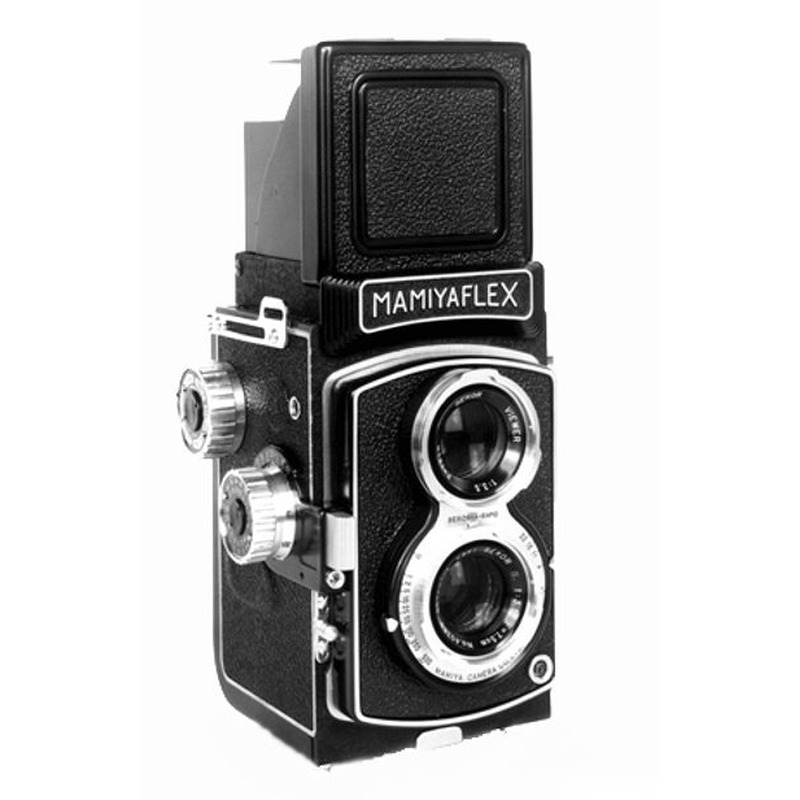
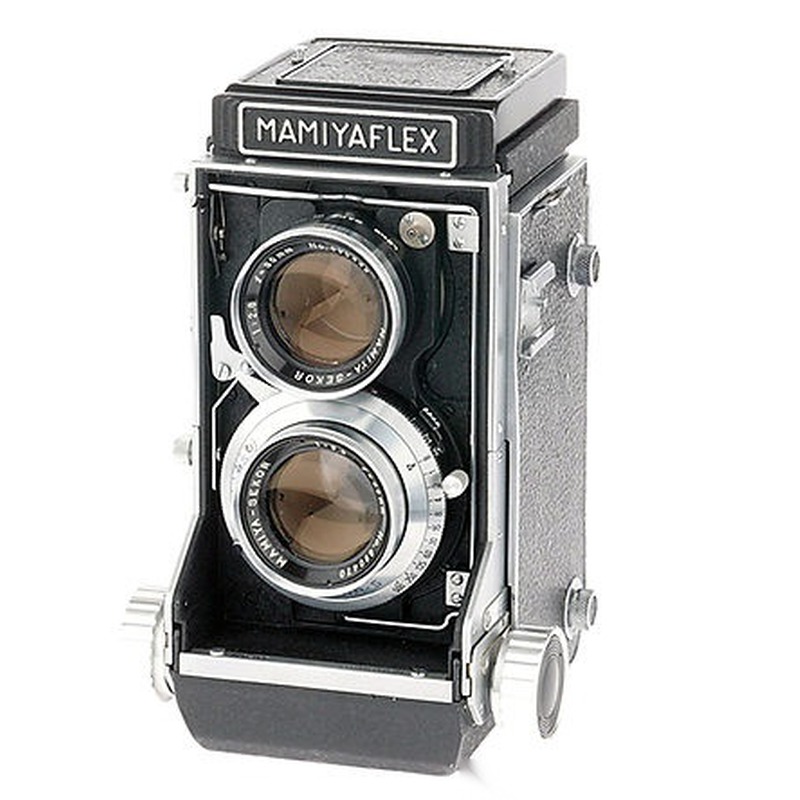
Mamiyaflex Automat B II
Mamiya · Japan · 1956
Introduced in 1956, the Mamiyaflex Automat B II represents a significant evolution in Mamiya's line of twin-lens reflex (TLR) cameras, building upon the success of the earlier Automat models. As a medium format camera, it utilized 120 film to produce 6x6 cm negatives, a format prized for its high image quality and square aspect ratio. The Automat B II incorporated several user-friendly features characteristic of the series, including a coupled rangefinder for precise focusing and an automatic aperture control mechanism (the "Automat" feature) that linked the aperture ring to the shutter speed dial, simplifying exposure settings for photographers. Constructed with metal bodies and offering a bright, waist-level finder with a flip-up magnifier, the camera provided a robust and practical tool for both professional and serious amateur photographers working in the era before 35mm SLRs dominated advanced photography. Its design emphasized reliability and ease of use within the popular TLR form factor.
While not achieving the iconic status of cameras like the Leica M3 or Nikon F, the Mamiyaflex Automat B II holds notable importance as a workhorse medium format camera. Mamiya consistently improved their TLR line, and the B II likely featured refinements such as a more advanced shutter mechanism or improved viewfinder components over its predecessors. It stood as a competitive offering in the TLR market alongside established brands like Rollei, providing Japanese engineering and often a more accessible price point. Its production period and specific features cement its place as a representative example of mid-20th century TLR technology, contributing to the widespread adoption of medium format photography during that time.
 Enjoy this museum? Support on Ko-fi