Pricing
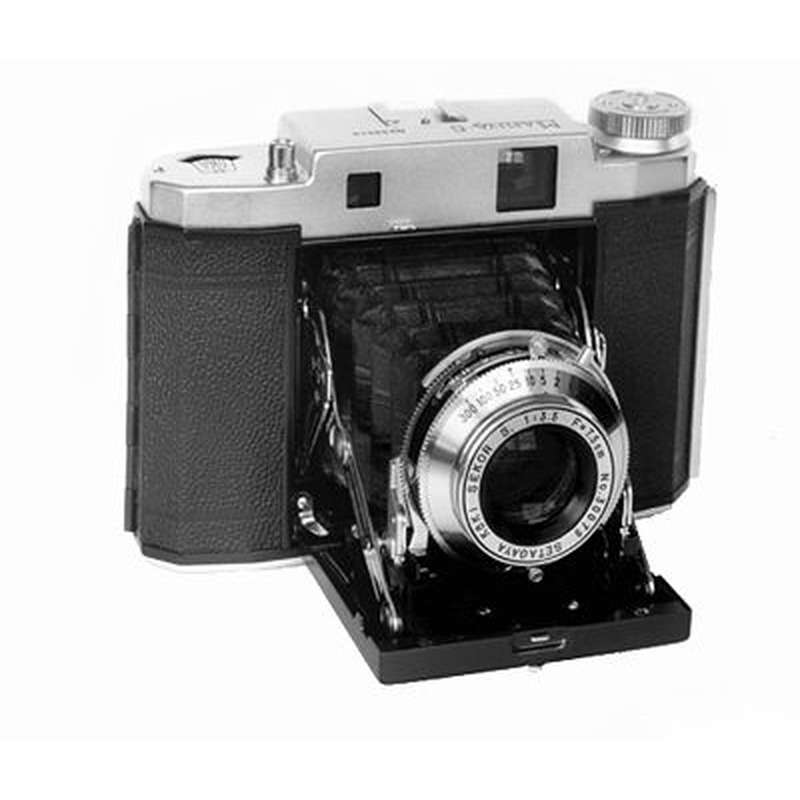
Mamiya-6 K II
Mamiya · Japan · 1956
The Mamiya-6 K II, introduced in 1956, represented a refined iteration in Mamiya's line of medium format folding cameras, building upon the foundation of the earlier Mamiya-6 model. Its most significant improvement was the incorporation of a much-improved coupled rangefinder viewfinder, offering a brighter image and easier focusing compared to the predecessor's simpler finder. This enhancement addressed a key usability challenge, making the camera significantly more practical for photographers while retaining the characteristic folding bellows design that made Mamiya folders compact and portable. The camera maintained the ability to produce crisp 6x6 cm negatives on 120 film, positioning it as an excellent alternative for photographers who wanted medium format quality without the bulk of larger twin-lens reflex cameras. Constructed with quality materials and precision mechanisms typical of Mamiya's folders, the K II exemplified the manufacturer's commitment to usability and engineering in the post-war Japanese camera market.
While not achieving legendary status among photography enthusiasts, the Mamiya-6 K II was a technically accomplished camera that served serious photographers well. It successfully bridged the gap between simplicity and performance, offering a robust yet portable solution for those working in the 6x6 format. The improved rangefinder system made it significantly more user-friendly than its predecessor, addressing critical usability points without compromising the camera's commitment to image quality. For photographers of the era who valued portability without sacrificing medium format capabilities, the Mamiya-6 K II represented a thoughtful balance of design and function.
 Enjoy this museum? Support on Ko-fi