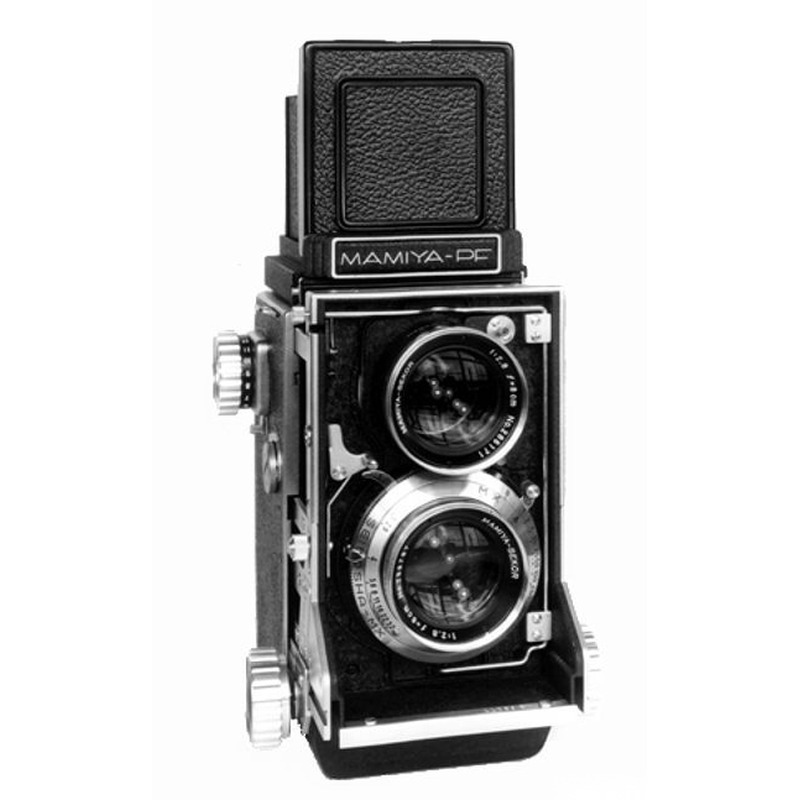
Mamiyaflex PF
Mamiya · Japan · 1957
The Mamiyaflex PF represents a significant step forward for Mamiya in 1957, marking the introduction of their first medium format twin-lens reflex (TLR) camera featuring a truly interchangeable lens system. Building upon their earlier fixed-lens TLR models, the PF allowed photographers to swap the standard 80mm lens for optional 75mm and 120mm wide-angle and telephoto options, vastly expanding creative possibilities for professionals and serious enthusiasts. This innovation positioned the Mamiyaflex PF as a more versatile and modern competitor to established players like the Rolleiflex, appealing particularly to Japanese studio and commercial photographers seeking a robust, domestically-produced medium format system camera. Its introduction coincided with the growing reputation of Japanese optics and manufacturing, cementing Mamiya's presence in the professional medium format market.
While sharing the classic TLR design concept with its predecessors, the Mamiyaflex PF incorporated practical refinements. It featured Mamiya's characteristic metal construction and focusing mechanisms, known for reliability, along with a brighter focusing screen compared to some contemporaries. The inclusion of the interchangeable lens mount was its defining feature, providing greater flexibility than the Rollei models it competed with and setting the stage for the highly successful Mamiyaflex C series that followed. The PF offered a solid, functional tool for professionals seeking a high-quality medium format option without the premium cost of European imports, contributing to the diversification and accessibility of medium format photography in the late 1950s.
/main.jpg)
 Enjoy this museum? Support on Ko-fi