Pricing
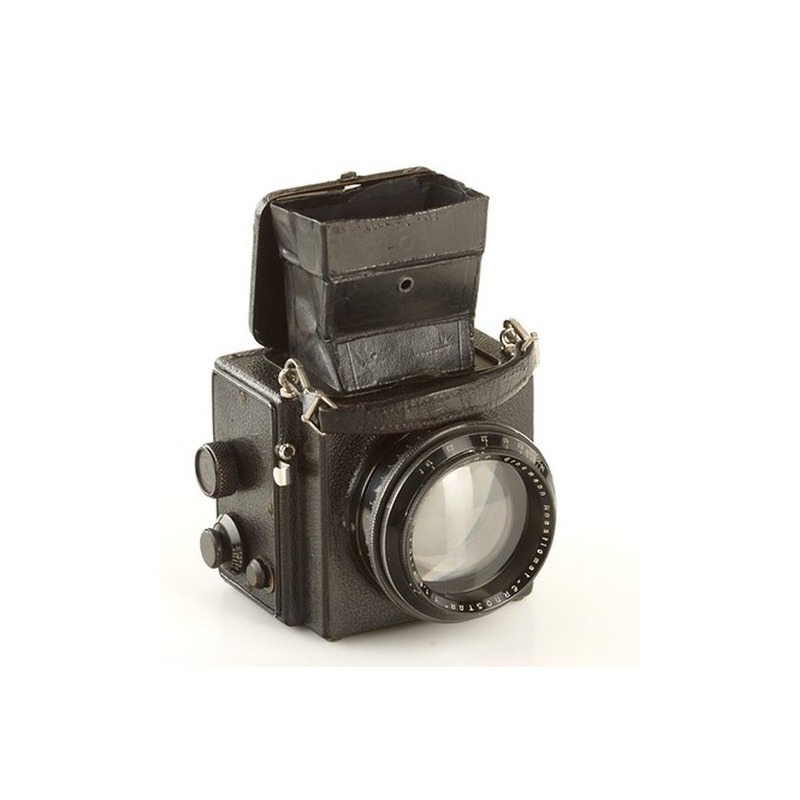
Ernemann Ermanox Reflex
Ernemann · Germany · 1926 · 135 film
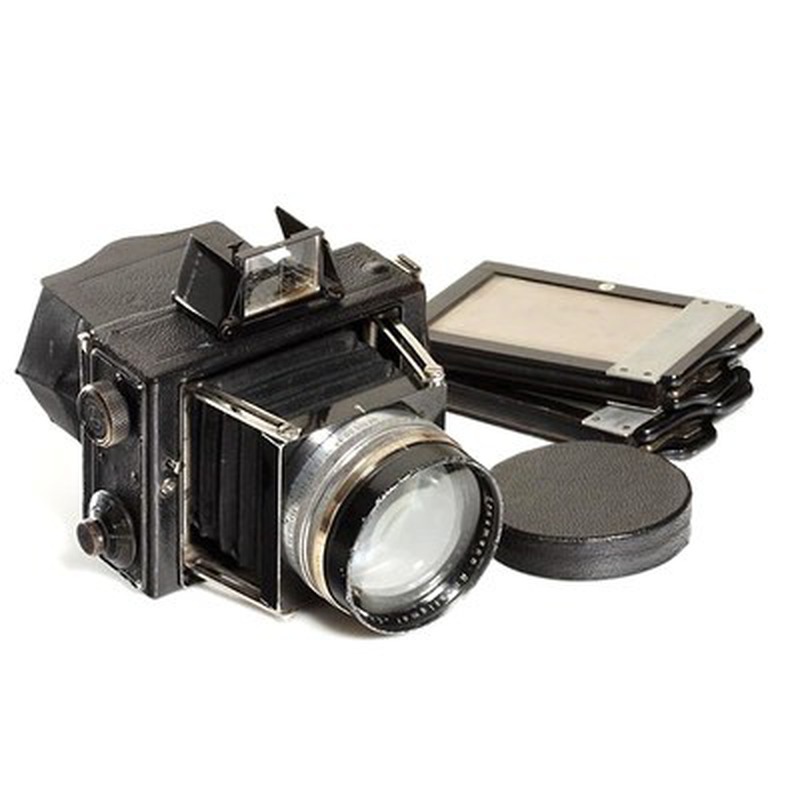
The Ermanox Reflex, introduced in 1926 by the German manufacturer Ernemann, represents a significant milestone in the evolution of 35mm photography. As one of the earliest and most sophisticated 35mm cameras to feature a reflex viewing system, it embodied the transition from cumbersome glass plates or medium roll film towards the compact, high-quality format that would eventually dominate professional and amateur photography. Its design centered around a coupled reflex viewfinder and a focal plane shutter, offering precise framing and exposure control unobtrusively, a crucial advancement for candid and action photography. While overshadowed by the contemporary Leica I (also introduced in 1925), the Ermanox Reflex built upon Ernst Leitz's pioneering work with its own innovative engineering, catering to a segment of photographers demanding greater viewfinder reliability and flexibility. It was famously employed by pioneering photojournalists like Alfred Eisenstaedt, who utilized its relatively fast lenses (like the 50mm f/2 Ernostar) for low-light and high-speed capture, cementing its reputation as a serious instrument for serious photographers during the early years of modern photojournalism.
Comprising a die-cast body with polished metal fittings, the Ermanox Reflex was built to high standards, reflecting Ernemann's reputation for precision optics and mechanical engineering. It utilized the now-standard 135 (35mm) cassette format, making film loading and use more convenient than earlier systems. The camera's key features included its reflex viewing system, which provided a bright, parallax-free image directly through the taking lens, and a variable focal plane shutter offering speeds from 1 second to 1/1000th. Paired with its signature fast, high-quality Ernostar or other interchangeable lenses, the Ermanox was capable of remarkable performance for its era, particularly available light photography. However, its complex mechanisms and reliance on relatively large and heavy focal plane shutters, compared to the simpler rangefinder design of the Leica, meant it was bulkier and arguably less robust for intensive field use, limiting its widespread adoption despite its technical sophistication.
Specifications
| Film Format | 135 |
/main.jpg)
/main.jpg)
 Enjoy this museum? Support on Ko-fi