Pricing
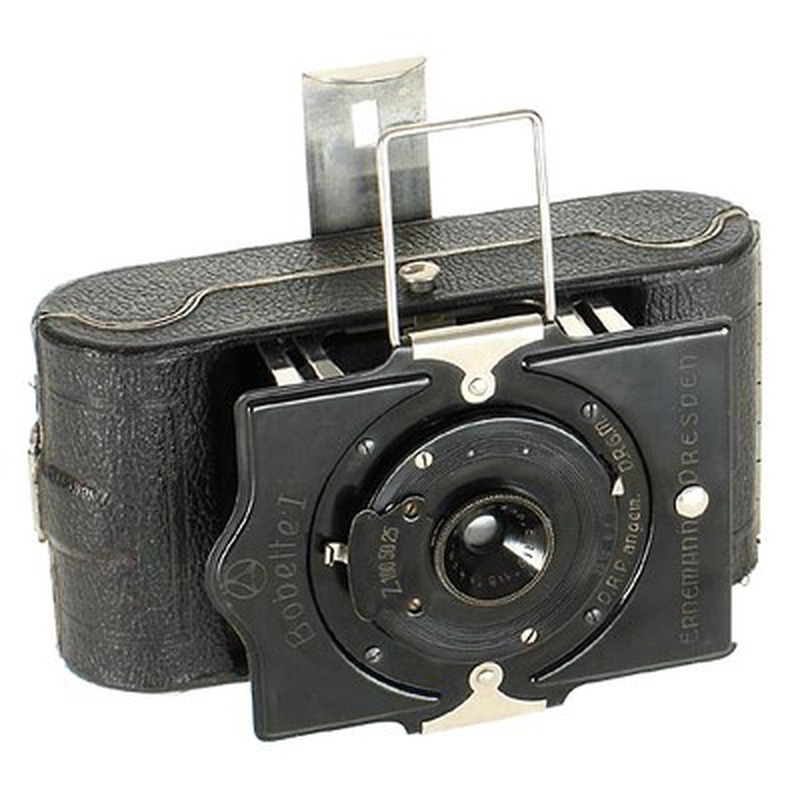
Ernemann Bobette I
Ernemann · Germany · 1925–1926 (1 years) · 135 film
The Bobette I represents Ernemann's brief foray into the burgeoning 35mm film format market during a period of significant transition for the company. Produced only in 1925-1926, this camera utilized the then-novel 135 cartridge film. As a relatively simple, folding bellows camera designed for amateur photographers, it shared the basic compact and portable form common to mid-range 35mm models of its era. Its construction likely prioritized affordability and ease of use over advanced features or rugged build quality, fitting squarely within the consumer segment rather than professional or innovative niches. Its short production run suggests it faced stiff competition and may not have achieved widespread market penetration.
Although it holds the distinction of being one of the earliest 35mm cameras produced by a major German optical manufacturer transitioning towards Zeiss Ikon, the Bobette I itself is not considered historically groundbreaking. It lacked the technical innovations or iconic status that defined the Leica I's earlier success or the later Leica III. Its primary significance lies as a representative example of 35mm camera design and manufacturing during a formative period for small-format photography, illustrating the move away from larger roll films and towards the compact 35mm cartridge that would eventually dominate the industry. It serves as a footnote in the broader story of 35mm photography's development.
Specifications
| Film Format | 135 |
/main.jpg)
/main.jpg)
/main.jpg)
/main.jpg)
 Enjoy this museum? Support on Ko-fi