/main.jpg)
Pricing
Ernemann Ermanox 6.5x9 (collapsible)
Ernemann · Germany · 1925 · 135 film
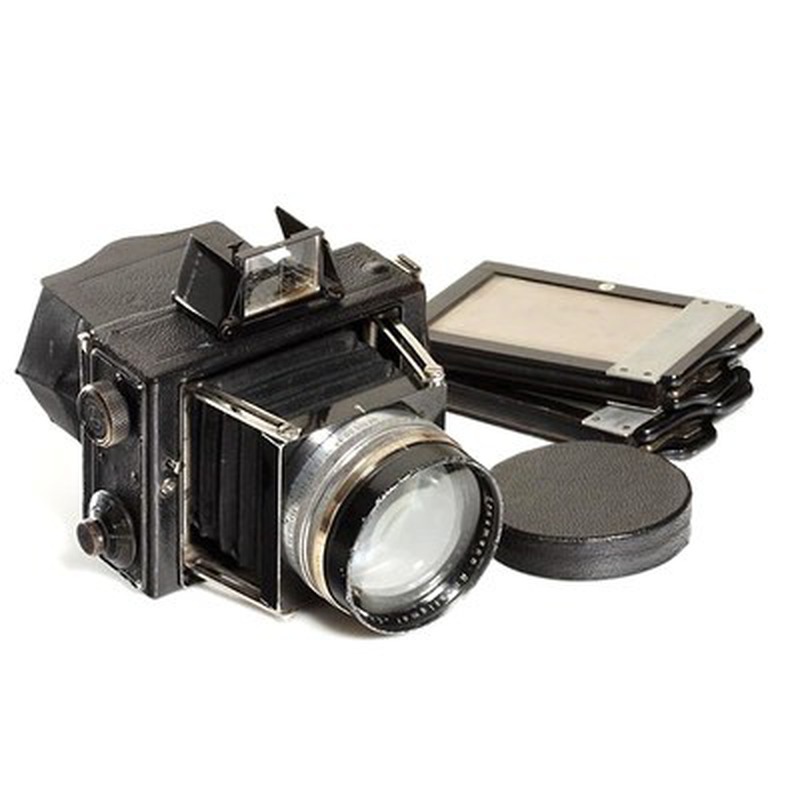
The Ermanox 6.5x9 (collapsible), introduced by Ernemann in 1925, stands as a significant early entrant into the world of 35mm still photography. Representing the transition from cumbersome glass plates and roll films to compact, high-quality miniature formats, this camera embodied Ernemann's engineering prowess. Its collapsible design prioritized portability, a key advantage for photographers embracing the new smaller format. The camera's most notable feature was the f/2.0 Ernostar lens, a groundbreaking high-speed optic for its era. This exceptional light-gathering capability revolutionized available-light photography, enabling sharp, candid image capture in challenging conditions without the need for flash or lengthy exposures, paving the way for a more spontaneous approach to photojournalism and portraiture.
While surpassed in fame by the contemporaneous Leica I, the Ermanox 6.5x9 held its own as a professional tool. It gained particular renown in the hands of pioneering press photographers like Erich Salomon, who utilized its quiet operation and fast lens to unobtrusively capture candid moments in high society and politics, contributing significantly to the rise of candid photography. The camera's robust metal construction and precision engineering reflected Ernemann's reputation for quality, aimed squarely at discerning amateurs and professionals seeking a compact yet capable alternative to larger formats. Its production marked a crucial step in the acceptance and development of 35mm as a serious format for serious photography.
Specifications
| Film Format | 135 |
/main.jpg)
/main.jpg)
/main.jpg)
 Enjoy this museum? Support on Ko-fi