/main.jpg)
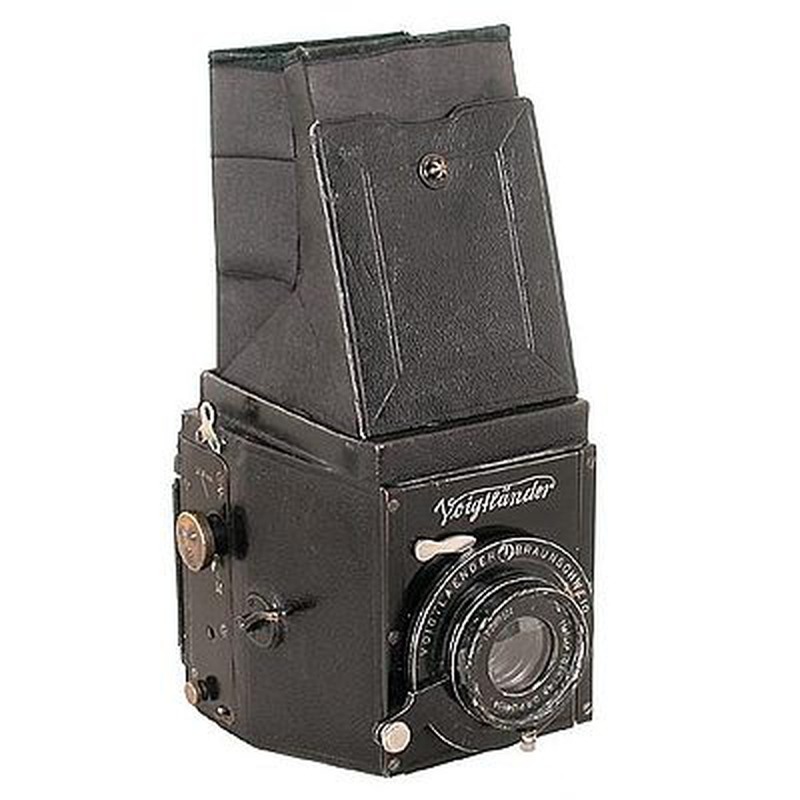
Voigtlander Scheren-camera (scissors)
Voigtlander · Germany · 1903 · 135 film
Voigtlander's Scheren-camera, introduced in 1903, represents one of the earliest experiments with 35mm still photography, predating the more celebrated Leica I by over two decades. This innovative camera featured a distinctive folding mechanism reminiscent of scissors, which likely facilitated compact storage while maintaining rigidity when in use. As an optical company founded in 1756, Voigtlander brought their engineering expertise to this format adaptation, utilizing perforated motion picture film that would later become standardized as 135 film. The camera's name directly references its unique scissor-like folding design, which would have been practical for photographers of the era who needed portable equipment despite the limitations of early emulsions.
While precise details about its production numbers or market reception are not well-documented, the Scheren-camera's existence underscores the transitional period in photographic technology between glass plates and flexible film. Voigtlander's early entry into what would become the dominant format for decades demonstrates their forward-thinking approach, even if this particular model didn't achieve widespread recognition. The camera's basic construction would have been functional rather than luxurious, reflecting the practical engineering solutions of early 20th-century photography when reliability and portability were valued more than elaborate features.
Specifications
| Film Format | 135 |
/main.jpg)
 Enjoy this museum? Support on Ko-fi