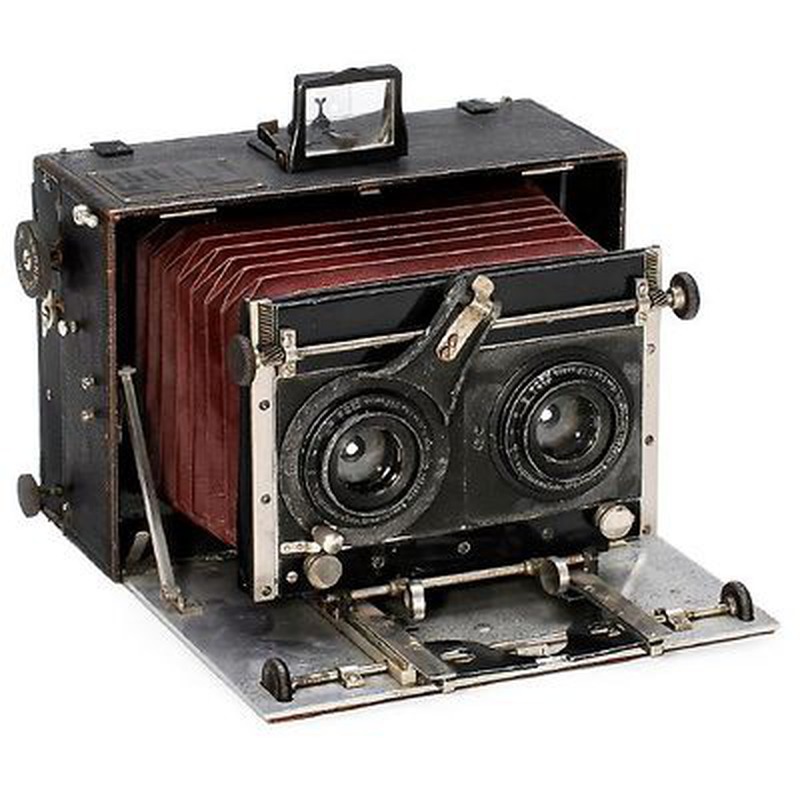
Voigtlander Stereo Folding
Voigtlander · Germany · 1905 · 135 film
The Voigtlander Stereo Folding, introduced in 1905, stands as an early and significant application of the 135 (35mm) format to a portable camera design. While predating the much more famous Leica I by nearly two decades, it represents Voigtlander's experimentation with this smaller, perforated film stock originally developed for motion pictures. As a folding camera, it offered compactness when not in use, a key advantage for travel and field photography at the time. Its specific designation as "Stereo" suggests it was likely designed for creating stereoscopic views, a popular format for three-dimensional images during the early 20th century. This places it within a niche but historically important category of cameras seeking new photographic applications alongside the move towards miniature formats.
Although the exact mechanics of its design are unspecified without further detail, the camera embodies the transitional period in photography between large, cumbersome plate/film cameras and the smaller, more convenient roll-film and eventually miniature cameras that would dominate the mid-20th century. Voigtlander, a long-respected German optical manufacturer, leveraged its expertise to adapt the 35mm format for still photography in this folding configuration. While not achieving the widespread adoption or iconic status of later miniature cameras, the Stereo Folding documents Voigtlander's pioneering role in exploring the possibilities of smaller formats and portable design, contributing to the technological evolution that paved the way for the handheld 35mm revolution.
Specifications
| Film Format | 135 |
/main.jpg)
/main.jpg)
 Enjoy this museum? Support on Ko-fi