Pricing
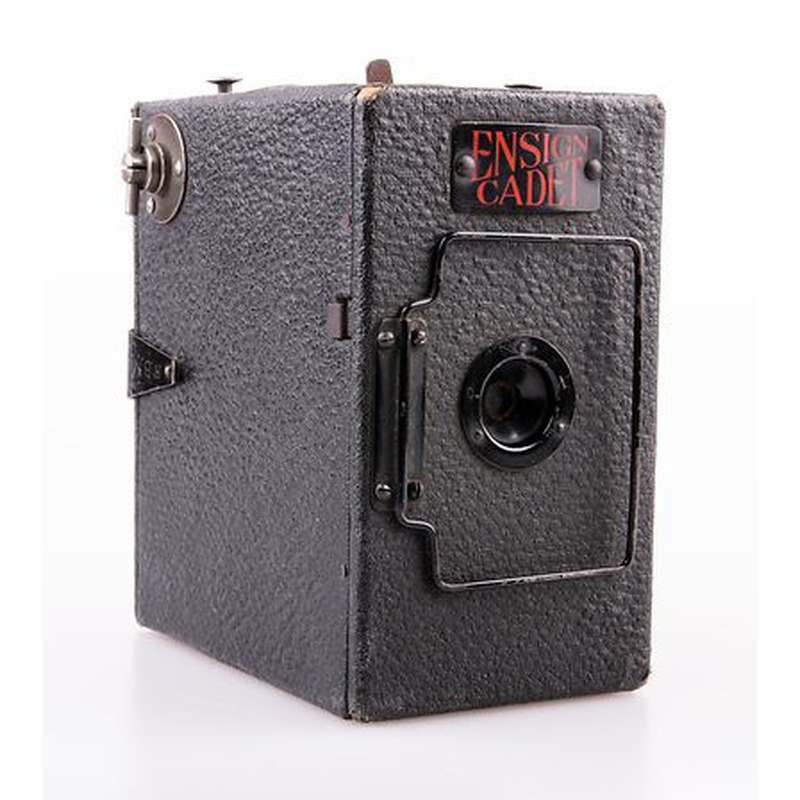
Houghton Ensign Cadet
Houghton · UK · 1924 · 135 film
The Ensign Cadet represents an early and practical entry into the nascent 35mm camera market by the British manufacturer Houghton, introduced in 1924. As one of the first dedicated 35mm cameras available to the public, predating the iconic Leica I by a year, it holds a place in the evolution towards portable photography. Designed as a simple, box-shaped folding camera, it featured a basic meniscus lens and a straightforward shutter mechanism, making 35mm film more accessible to amateur photographers seeking compact equipment. Its construction utilized pressed metal and wood, emphasizing affordability over luxury. The Cadet demonstrated Houghton's effort to capitalize on the emerging small-format trend, albeit with less technological sophistication than later German offerings.
While not revolutionary in design or performance, the Ensign Cadet provided a functional and affordable option for photographers experimenting with 35mm film before its dominance. Its significance lies primarily in its timing and nationality, offering a British perspective on a format soon dominated by German manufacturers. The camera embodies a transitional period where 35mm was still establishing itself beyond cinematic and experimental use, serving as a practical tool for enthusiasts rather than a benchmark for professional imaging.
Specifications
| Film Format | 135 |
/main.jpg)
/main.jpg)
/main.jpg)
 Enjoy this museum? Support on Ko-fi