Pricing
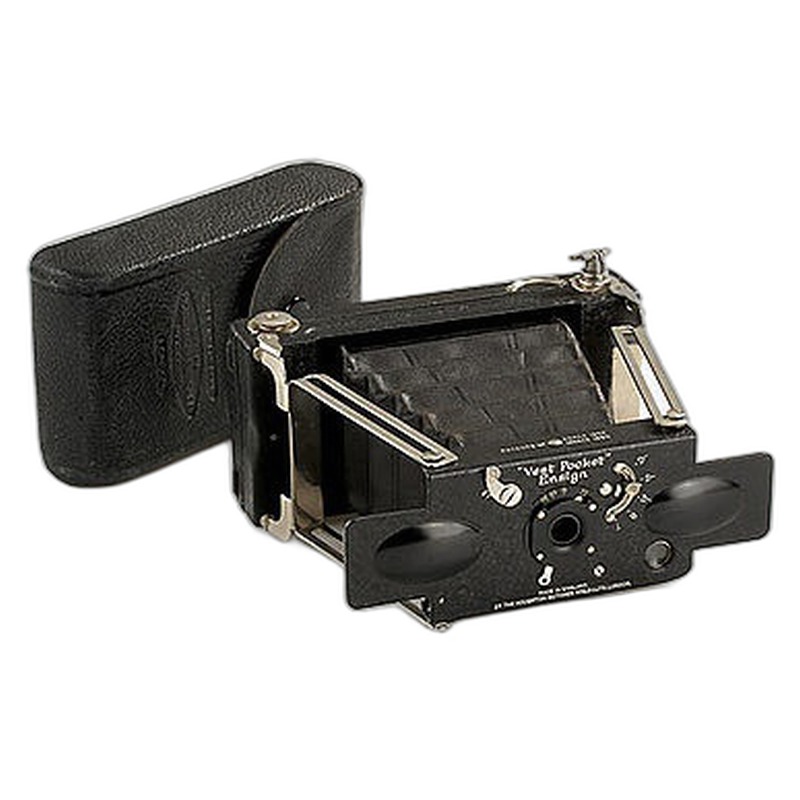
Houghton Vest Pocket Ensign
Houghton · UK · 1923 · 135 film
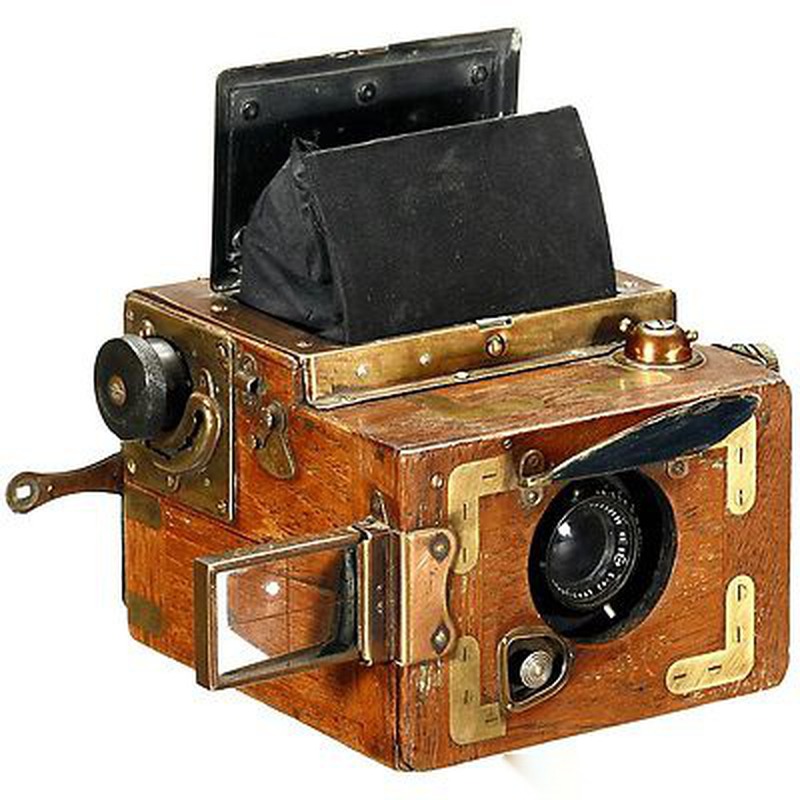
The Vest Pocket Ensign represents an early attempt by British manufacturer Houghton to enter the burgeoning 35mm camera market in 1923, coinciding with the rise of this format but predating Leica's full commercialization. As a "vest pocket" model, its defining characteristic was compactness, designed to be portable enough for a jacket vest pocket – a significant portability achievement for the era. It utilized the 135 film format (initially for movie film, later repurposed for stills) and likely featured a simple, box-like construction with a basic lens and shutter mechanism typical of early amateur 35mm cameras. Its introduction placed Houghton among the pioneers exploring miniature photography before the format became mainstream, though it lacked the technical innovations or iconic status of later landmark models.
Production of the Vest Pocket Ensign was likely limited, and it served primarily as an entry-level 35mm option for enthusiasts seeking a smaller alternative to larger roll-film cameras. Its historical importance lies in its contribution to the early adoption and diversification of the 135 format, demonstrating Houghton's commitment to the miniature concept during a formative period. While it captured the spirit of the "small camera revolution," its impact was overshadowed by contemporaries like Leica, and it did not achieve widespread acclaim or adoption by influential photographers, securing its place as a notable but not revolutionary artifact in camera history.
Specifications
| Film Format | 135 |
/main.jpg)
/main.jpg)
 Enjoy this museum? Support on Ko-fi