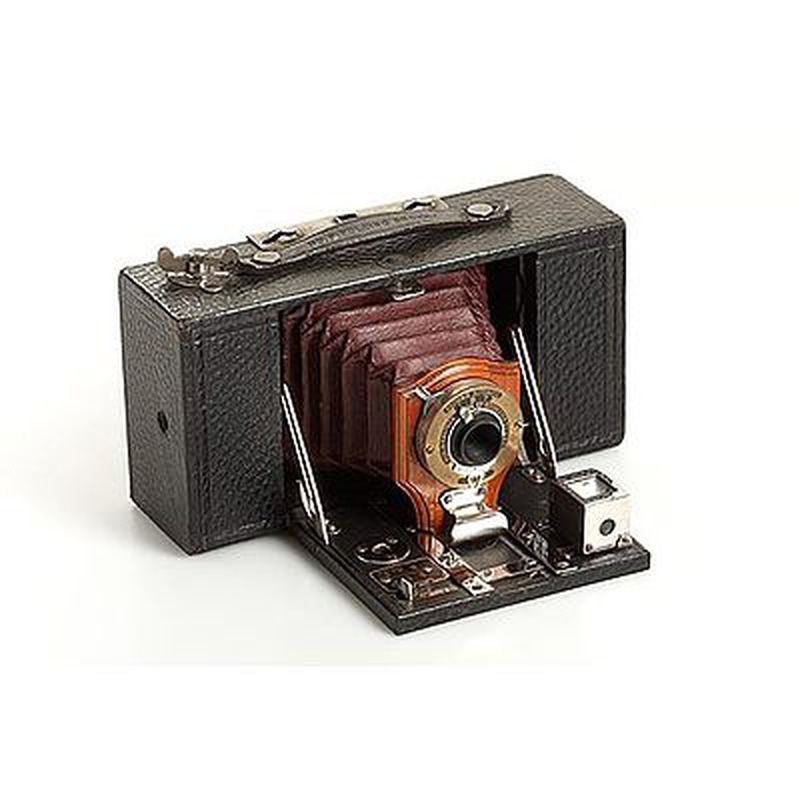
Kodak Folding Film Pack Hawk-Eye No.2
Kodak · USA · 1923 · 135 film
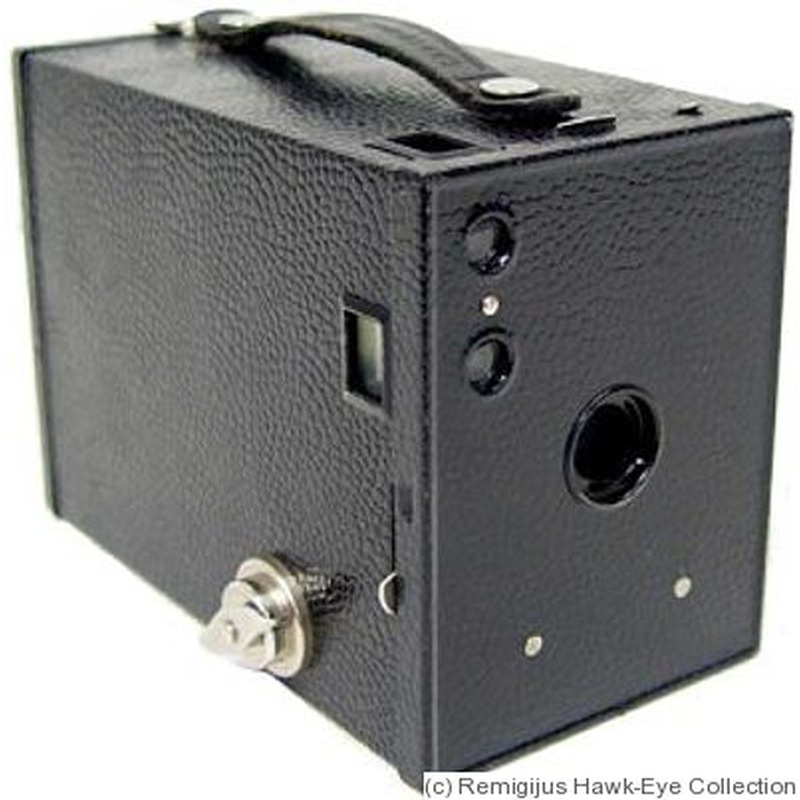
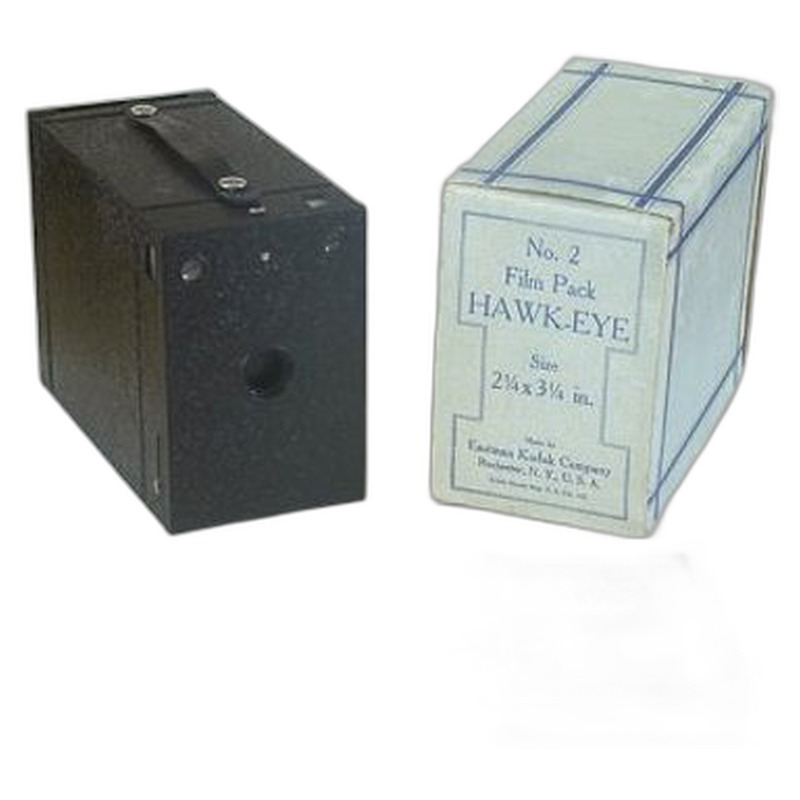
The Kodak Folding Film Pack Hawk-Eye No.2, introduced in 1923, holds a significant position in the history of photography as one of the earliest cameras specifically designed for the 35mm film format, predating the iconic Leica I by three years. Kodak developed this model to capitalize on the emerging popularity of 35mm movie film repurposed for still photography, aiming to offer a more compact and affordable alternative to bulkier roll-film cameras. While not the very first 35mm camera, its introduction by the dominant Kodak played a crucial role in establishing the 35mm format as a viable option for serious amateur photographers, paving the way for the miniature revolution that would later dominate the industry. Utilizing Kodak's proprietary Film Pack inserts (containing 3.25x5.25 cm exposures), it represented Kodak's attempt to bring the convenience and smaller size of 35mm to the mass amateur market, though Film Packs were ultimately superseded by individual cassettes.
Designed as a simple folding camera, the Hawk-Eye No.2 featured a body that collapsed into a compact form for portability, typical of Kodak's folding pocket camera lines of the era. Its construction was primarily metal, focused on practicality rather than intricate craftsmanship. The lens system was straightforward, usually a simple meniscus or rapid rectilinear lens coupled with a single-speed shutter and aperture. Controls were minimal, typically focusing on basic exposure settings and frame winding via a knob. While innovative for its time in adopting 35mm, it was a basic instrument aimed at ease of use rather than high image quality or advanced features. Its historical importance lies primarily in being Kodak's significant early entry into the 35mm still camera market, contributing to the format's adoption, even if its design and Film Pack system were soon eclipsed by more sophisticated developments like the Leica and Contax systems using individual cassettes.
Specifications
| Film Format | 135 |
 Enjoy this museum? Support on Ko-fi