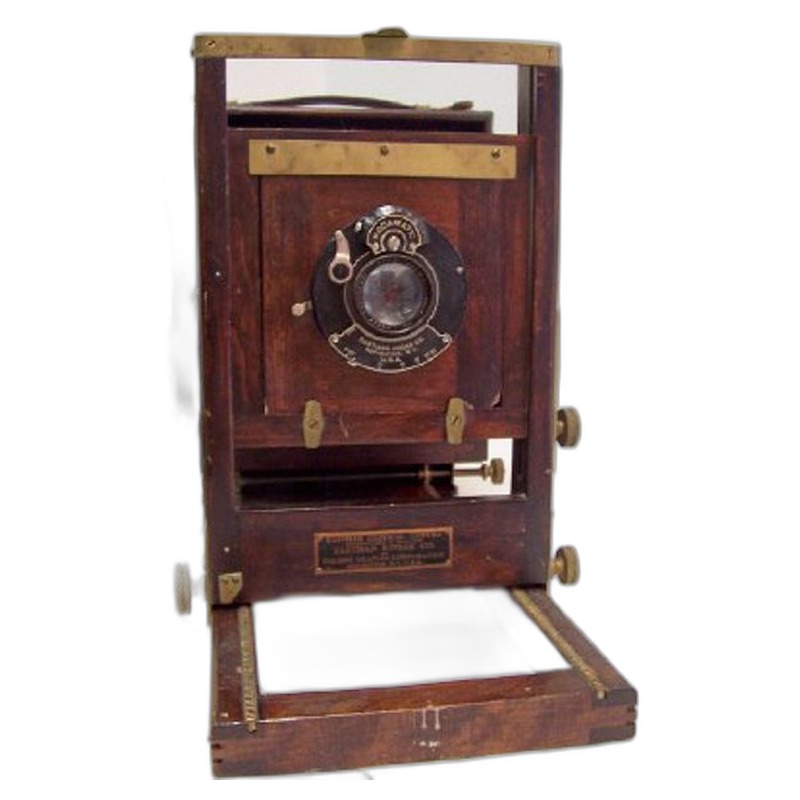
Kodak Clinical Viewcamera
Kodak · USA · 1923–1930 (7 years) · 4x5 film
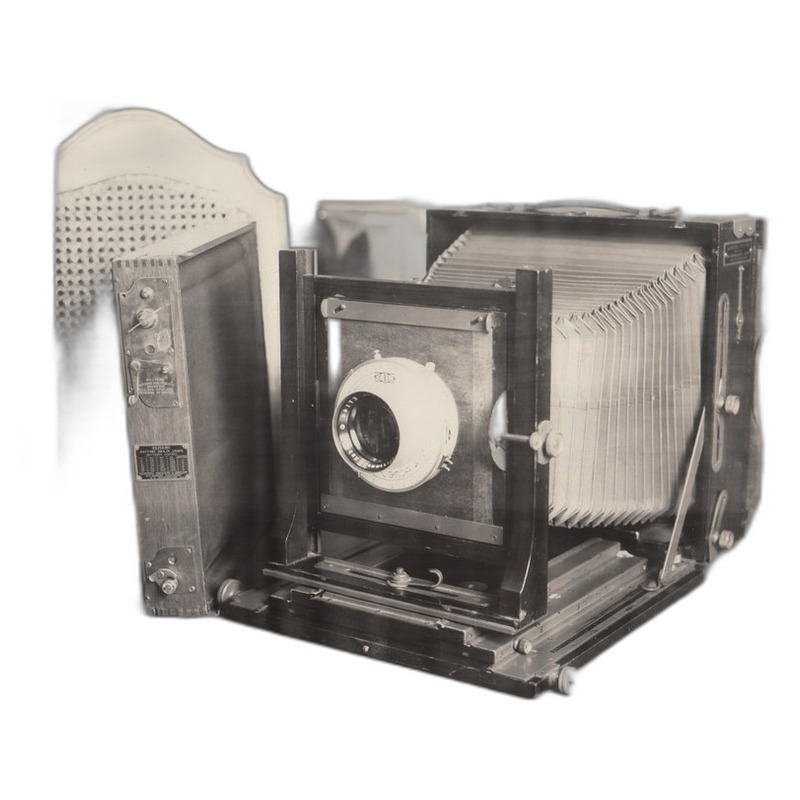
The Clinical Viewcamera represents Kodak's entry into the specialized realm of medical and dental photography during the 1920s. Designed as a rigid-bodied 4x5 view camera, it was engineered primarily for precision close-up work in clinical settings, where accurate reproduction and stability were paramount. Its construction likely featured a robust, often metal framework to minimize vibration and a standardized bellows system for critical focusing adjustments necessary for capturing detailed images of teeth, tissues, or anatomical structures. Kodak's involvement leveraged their expertise in producing reliable photographic equipment and film, making this camera a practical tool for professionals in the medical field seeking standardized high-quality documentation.
While sharing the core principles of large format view cameras, the "Clinical" designation implies features tailored to its niche. This could include integrated illumination systems for consistent lighting on the subject, specialized bellows extensions for extreme magnification, and possibly accessories designed to position the camera precisely within a clinical environment. Produced from 1923 to 1930, it filled a specific need before advancements in smaller format medical cameras emerged, serving as a workhorse instrument for dentists, dermatologists, and other specialists requiring high-resolution images for diagnosis and records.
Specifications
| Film Format | 4x5 |
 Enjoy this museum? Support on Ko-fi