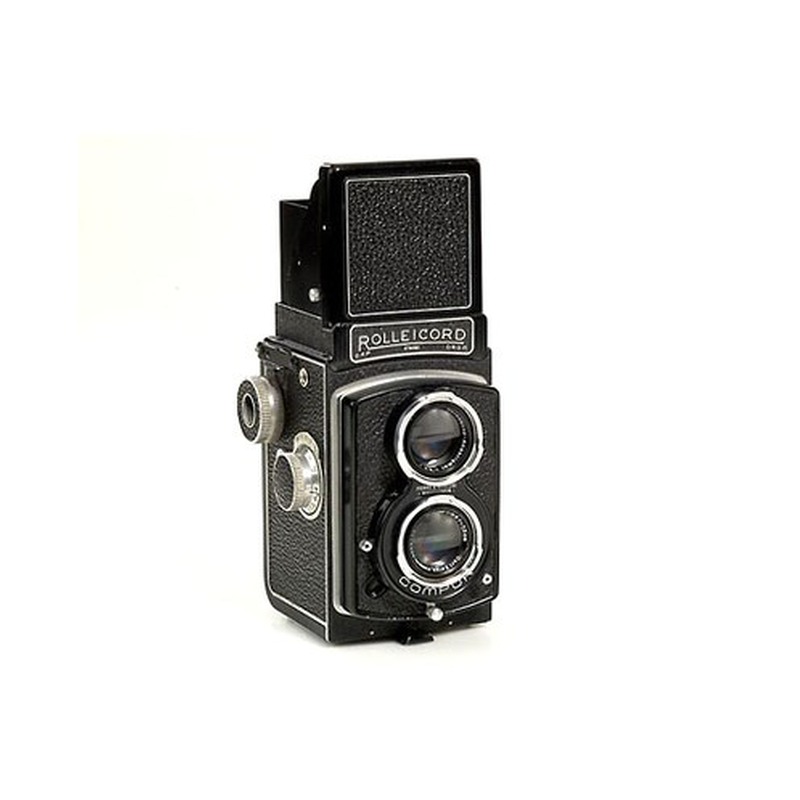
Rolleicord II Philips
Rollei · Germany · 1936–1937 (1 years) · 120 film
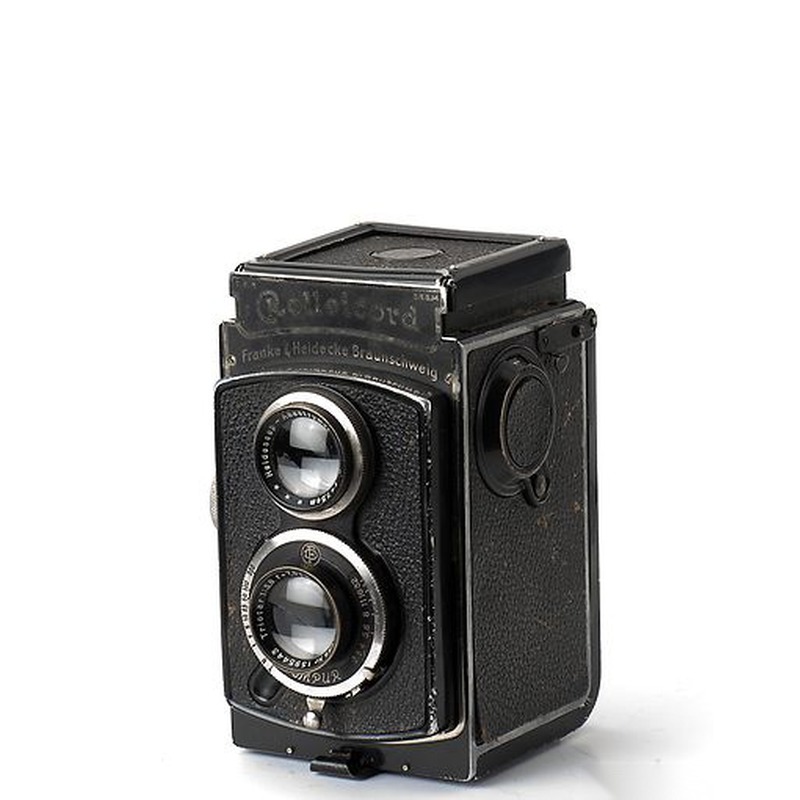
The Rolleicord II Philips represents Rollei's strategic effort to democratize medium format photography during the 1930s. As a more affordable alternative to the sophisticated Rolleiflex twin-lens reflex (TLR) cameras, the Rolleicord series shared the fundamental twin-lens design principle – using one lens for viewing and focusing and another for taking the picture – but utilized simpler materials and fewer features. Produced specifically in 1936-1937, the "Philips" designation often indicated a specific variant or distribution channel, perhaps reflecting a retail partner or a minor aesthetic update, though the core functionality remained consistent with standard Rolleicord models of the era. It enabled a wide range of amateur photographers to experience the advantages of medium format negatives (6x6 cm on 120 film), offering superior image quality and a waist-level viewing experience compared to smaller cameras, albeit at a more accessible price point than the professional Rolleiflex. Its role was crucial in popularizing the TLR form among enthusiasts and serious amateurs before the war.
While sharing the iconic Rollei aesthetic and handling, the Rolleicord II Philips lacked the Rolleiflex's advanced features like wind-on levers, parallax correction markers, or interchangeable lenses. Constructed primarily from Bakelite and metal, it provided a sturdy yet utilitarian build tailored for regular use. As a key model in the Rolleicord lineage, which evolved significantly over decades, this specific 1936-37 variant represents a foundational step in making medium format photography viable beyond professional studios and wealthy hobbyists, cementing the TLR design as a practical tool for image-making.
Specifications
| Film Format | 120 |
/main.jpg)
/main.jpg)
/main.jpg)
/main.jpg)
/main.jpg)
 Enjoy this museum? Support on Ko-fi