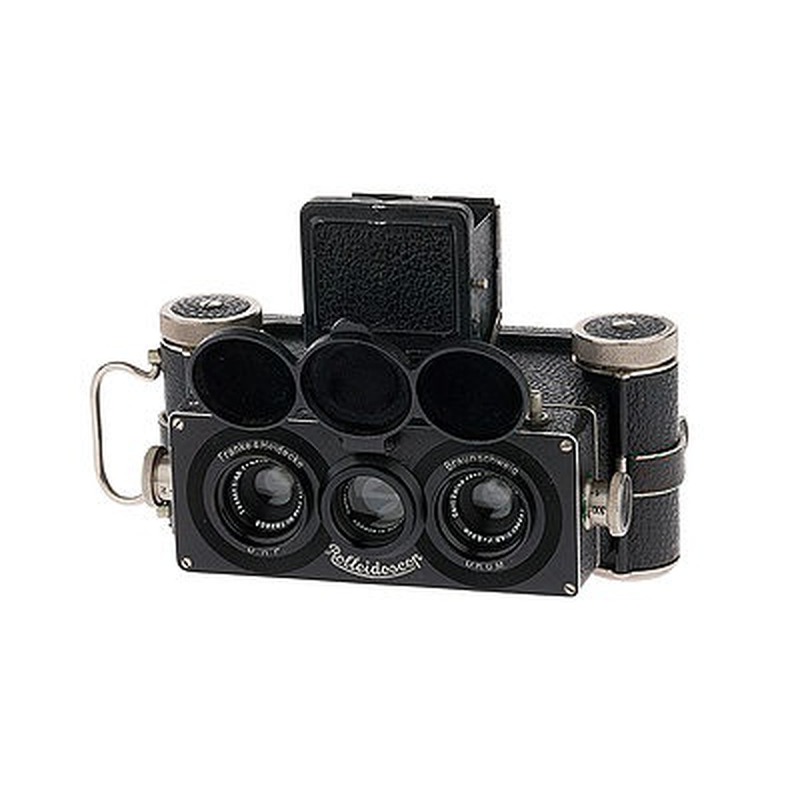
Rolleidoscop
Rollei · Germany · 1926–1941 (15 years) · 135 film
The Rolleidoscop represents an early, though relatively obscure, entry into the burgeoning 35mm format market by Rollei. Produced for nearly two decades from 1926 to 1941, it utilized standard 135 (35mm) film cartridges, positioning it alongside other emerging miniature cameras of the era. As Rollei's initial foray into this format, it predated their more famous twin-lens reflex Rolleiflex models. Designed as a roll-film camera, it likely shared Rollei's characteristic attention to mechanical construction and precision assembly, reflecting the company's engineering focus during that period. Its specific design details, such as lens configurations and shutter systems, remain less documented compared to Rollei's later iconic products.
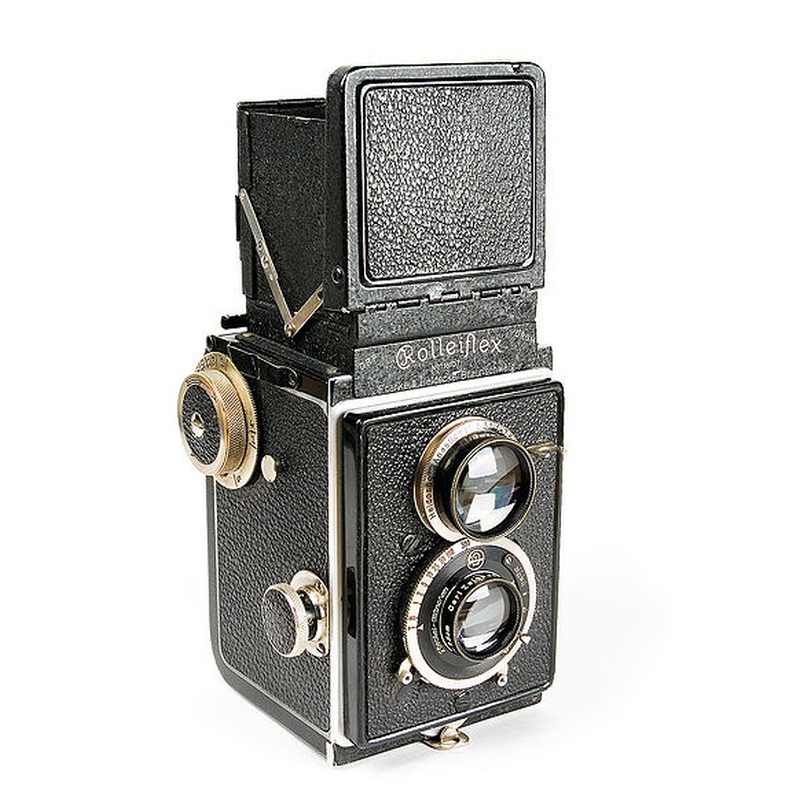
The camera emerged during a pivotal time when manufacturers were experimenting with smaller, more portable designs. While it shared the 35mm format with contemporaries like the early Leicas, the Rolleidoscop did not achieve the same level of widespread acclaim or revolutionary impact. Its production spanned a significant period, including the challenging years of the 1930s and early 1940s, which may have influenced manufacturing consistency and material availability. Primarily of historical interest to collectors studying Rollei's development or the early evolution of the 35mm format, the Rolleidoscop serves as a testament to the company's early diversification beyond their established TLR camera line.
Specifications
| Film Format | 135 |
/main.jpg)
_(rollfilm)/main.jpg)
/main.jpg)
/main.jpg)
/main.jpg)
 Enjoy this museum? Support on Ko-fi