/main.jpg)
Pricing
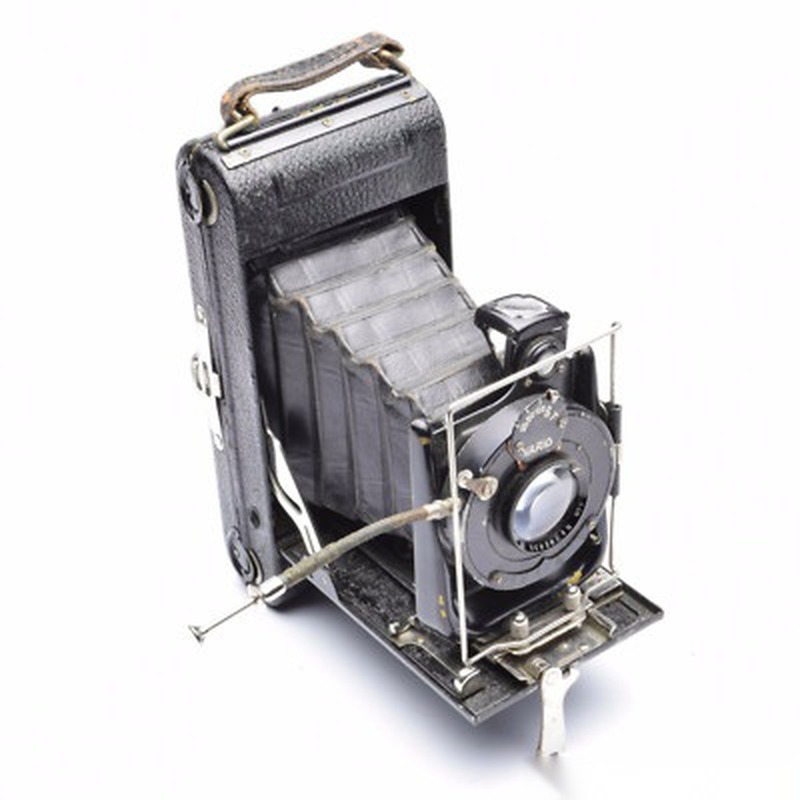
Houghton Ensign Roll Film Reflex Tropen (Tropical)
Houghton · UK · 1920 · 135 film
The Ensign Roll Film Reflex Tropen, introduced by Houghton in 1920, represents an early and specialized implementation of the reflex principle in the burgeoning 35mm format. This camera utilized a ground glass viewing screen for precise focusing, representing a significant step toward the reflex cameras that would dominate photography decades later. The "Tropen" designation specifically indicates its adaptation for tropical conditions, featuring enhanced sealing against humidity and dust—practical refinements addressing the harsh environments for which it was designed. By incorporating the reflex viewing system into a more portable 35mm format, the Ensign Roll Film Reflex Tropen offered photographers a compact alternative to the larger plate and roll film cameras prevalent at the time, marking an important transitional moment in camera design.
Though innovative for its period, the camera's production run was relatively limited compared to later mass-market 35mm offerings. Its significance lies primarily in its early application of reflex viewing technology to a compact format, particularly suited for challenging climates. While it did not achieve the widespread recognition or groundbreaking impact of later iconic models like the Leica or Canon rangefinders, the Ensign Roll Film Reflex Tropen represents a specialized contribution to the evolution of 35mm photography, demonstrating how manufacturers were beginning to explore smaller formats and advanced viewing systems in the early 20th century.
Specifications
| Film Format | 135 |
/main.jpg)
/main.jpg)
/main.jpg)
/main.jpg)
/main.jpg)
 Enjoy this museum? Support on Ko-fi