Pricing
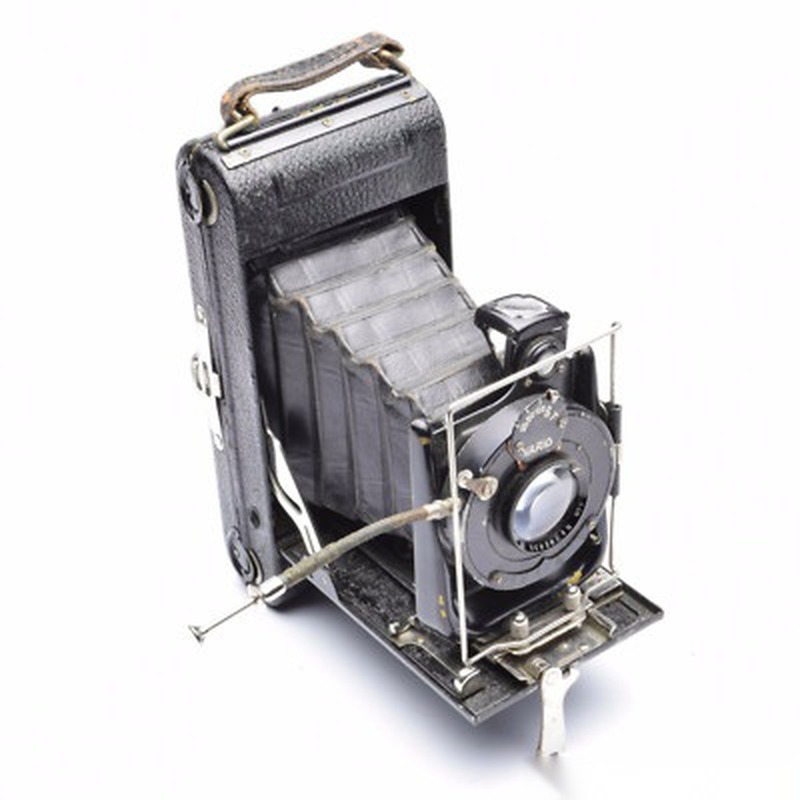
Houghton Ensign Carbine
Houghton · UK · 1920 · 135 film
The Ensign Carbine, introduced by British manufacturer Houghton in 1920, holds a distinct place in the history of small-format photography as one of the very earliest cameras designed for the then-emerging 135 (35mm) perforated cine film. Appearing predating the groundbreaking Leica I by several years, the Carbine represents a significant, though perhaps less widely recognized, attempt at creating a compact, portable still camera using the miniature format that would eventually dominate photography. Houghton, known for producing medium and large format cameras, demonstrated foresight in exploring this smaller format, acknowledging the potential advantages of reduced bulk and the ability to take numerous exposures on a single roll.
Utilizing the 135 format, the Carbine was designed as a strut-folding camera, likely featuring a simple, box-like body with a lens at the front and a viewfinder. It probably employed a simple focal plane shutter or a basic between-the-lens shutter common for the era, offering a limited range of speeds. Its primary innovation lay not in advanced mechanics but in its early adoption of 35mm film for still photography, aiming to offer a more affordable and manageable alternative to larger plate cameras. While it may not have achieved the widespread acclaim or influence of later, more refined 35mm cameras, the Ensign Carbine stands as an important historical artifact, showcasing the formative stages of the small-format revolution and the pioneering efforts of manufacturers like Houghton.
Specifications
| Film Format | 135 |
Pricing
Editorial Ratings
More from Houghton
/main.jpg)
Houghton Ensign All Distance Twenty (box, 1920s)
1920
/main.jpg)
Houghton Ensign Carbine (rangefinder)
1920
/main.jpg)
Houghton Ensign Roll Film Reflex (2 1/4 B, horizontal)
1920
/main.jpg)
Houghton Ensign Roll Film Reflex (2 1/4 B, vertical)
1920
/main.jpg)
Houghton Ensign Roll Film Reflex Tropen (Tropical)
1920
/main.jpg)
Houghton Ensignette No.2 (aluminum)
1920
 Enjoy this museum? Support on Ko-fi