/main.jpg)
Petri Kokka Hand (new)
Petri · Japan · 1932 · 135 film
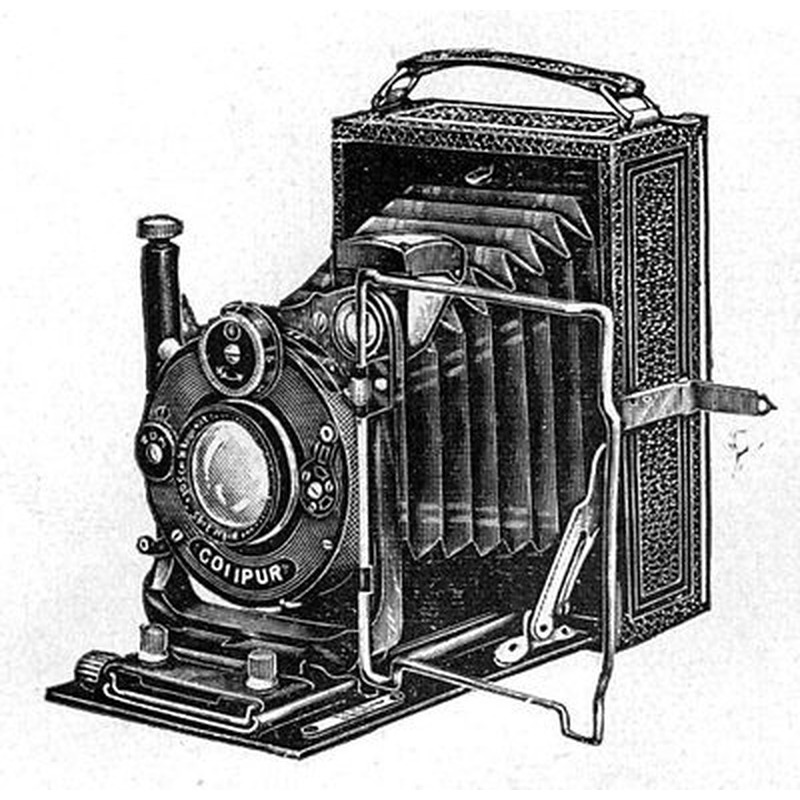
The Kokka Hand (new) represents a significant early Japanese entry into the burgeoning 35mm still camera market. Introduced by Petri in 1932, just a few years after the revolutionary Leica I and Contax I had established the format, this camera positioned Petri among the early adopters aiming to offer a more affordable alternative. It was a compact, handheld device utilizing the emerging 135 cartridge film, catering to enthusiasts seeking portability and the advantages of small-format photography. While not known for groundbreaking innovations, it featured a simple leaf shutter and likely a basic range-finder or scale focusing system, embodying the practical, functional approach typical of its era and manufacturer. Its introduction placed Petri alongside other Japanese makers beginning to challenge the dominance of German brands in the 35mm space, contributing to the diversification of options available to photographers.
As a product of the early 1930s, the Kokka Hand (new) shared the fundamental design principles common to contemporary 35mm cameras: a body constructed from pressed metal or possibly bakelite, a coupled rangefinder for focusing, and a focal-plane or leaf shutter mechanism. It typically accepted interchangeable lenses, though likely with a more limited range than flagship European models. Its significance lies in its timing and origin – a Japanese 35mm camera demonstrating the country's nascent capability in this demanding market segment shortly after its inception. It served as a stepping stone for Petri and the broader Japanese photographic industry, predating their later, more complex and renowned models, marking a modest but noteworthy chapter in the global evolution of 35mm photography.
Specifications
| Film Format | 135 |
/main.jpg)
 Enjoy this museum? Support on Ko-fi