Pricing
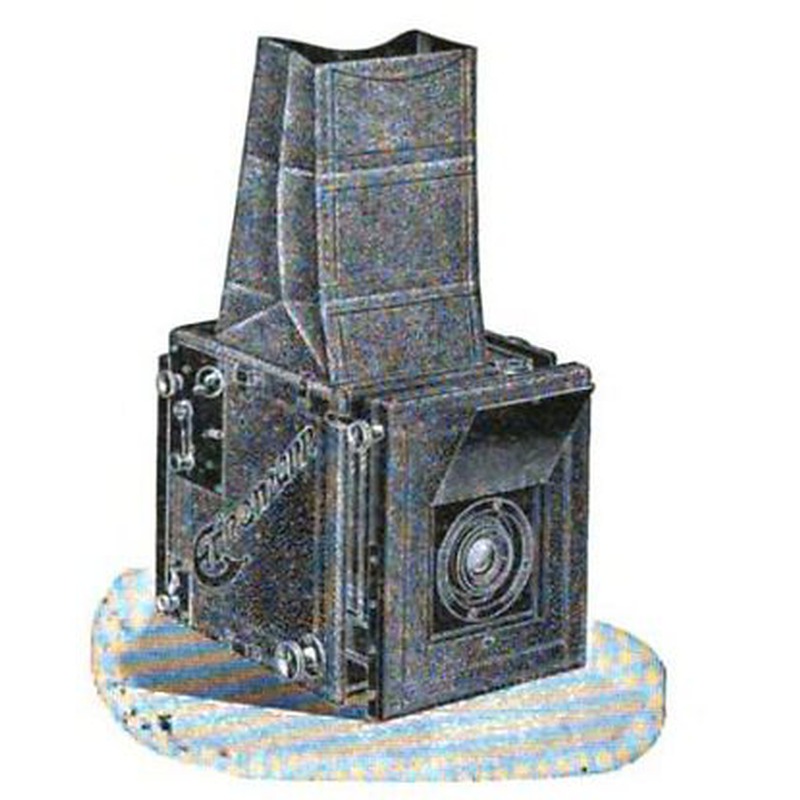
Ernemann Spiegel-Reflex
Ernemann · Germany · 1907–1918 (11 years) · 135 film
The Spiegel-Reflex by Ernemann stands as an interesting early iteration of 35mm photography, a format that would later revolutionize the industry. Produced from 1907 to 1918, this camera represents the experimental phase of what would become the 35mm standard. As a single-lens reflex (SLR) design, it featured a reflex mirror system that allowed photographers to compose through the lens itself rather than through a separate viewfinder, providing greater precision and framing accuracy. The 35mm format, later popularized by the Leica in 1925, was still in its developmental stage when the Spiegel-Reflex was manufactured, making it a pioneering effort in miniature photography. Ernemann, known for quality German engineering, produced this camera during a period when the company was establishing itself as a serious manufacturer before merging into Zeiss-Ikon in 1926. The camera likely appealed to professionals and advanced amateurs who appreciated the technical innovation and portability that the 35mm format offered compared to larger contemporary cameras.
While the Spiegel-Reflex represents an important technical development, it didn't achieve the widespread recognition or lasting impact of later cameras like the Leica. Its production period coincided with the tumultuous years leading up to and including World War I, which may have limited its market reach and manufacturing capabilities. The camera's specific technical details, including lens options, shutter mechanisms, and exact production volumes, remain less documented than those of more historically prominent models. Nevertheless, the Spiegel-Reflex holds significance as evidence of the early experimentation with 35mm SLR design that preceded more successful commercial ventures in the post-war years, contributing to the evolutionary path of 35mm photography.
Specifications
| Film Format | 135 |
/main.jpg)
/main.jpg)
_(Tropical)/main.jpg)
 Enjoy this museum? Support on Ko-fi