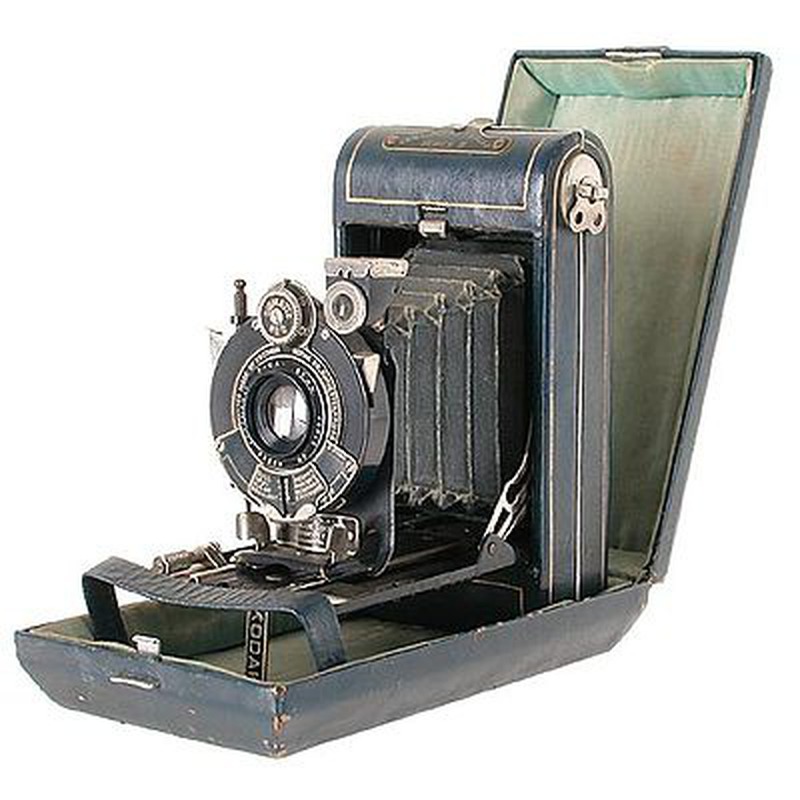
Kodak Vanity Kodak
Kodak · USA · 1928–1933 (5 years) · 135 film
The Vanity Kodak is an early 35mm camera produced by Kodak from 1928 to 1933, representing the company's significant entry into the burgeoning small-format amateur market. Utilizing the now-standard 135 film cassette it helped popularize, the camera was designed as a compact and user-friendly option for enthusiasts seeking higher quality than roll film offered. Characterized by its Art Deco influenced styling, often featuring leatherette covering and nickel-plated metal, the Vanity Kodak emphasized portability and simplicity for its time. It featured a fixed or limited-range lens, a simple shutter mechanism, and basic viewfinders, catering to photographers stepping up from box cameras while remaining accessible to a broad audience. Kodak leveraged its vast distribution network and brand recognition to introduce many amateurs to the advantages of 135 film through this model.
Though not groundbreaking in technology, the Vanity Kodak holds importance as a tangible representation of Kodak's strategic shift towards 35mm and its role in normalizing this format for consumer photography. It embodies the period's transition, offering a bridge between larger formats and the compact cameras that would dominate later. Its production span a crucial phase in photography's development, cementing the 135 cassette's dominance. While its specific features were functional rather than innovative, its widespread availability and association with Kodak made it a common sight in the hands of amateur photographers throughout the late 1920s and early 1930s, contributing to the democratization of smaller format picture-taking.
Specifications
| Film Format | 135 |
/main.jpg)
/main.jpg)
 Enjoy this museum? Support on Ko-fi