Pricing
Kodak Hawk-Eye Special No.2
Kodak · USA · 1928–1930 (2 years) · 135 film
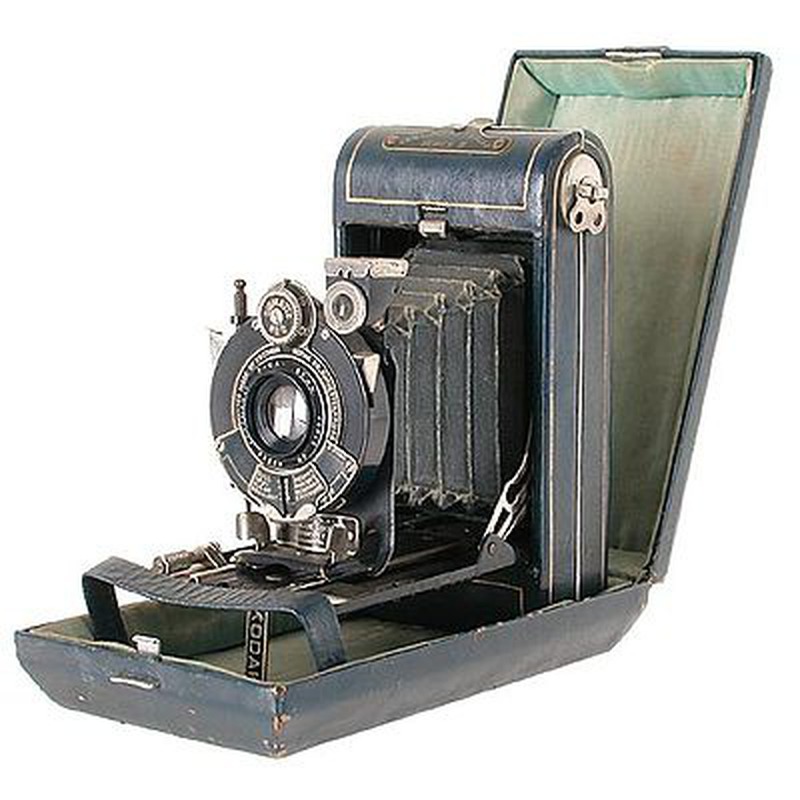
The Kodak Hawk-Eye Special No.2 represents a significant entry in the company's early foray into the 35mm photography market. Produced between 1928 and 1930, this camera emerged during a transitional period when 35mm was establishing itself as a viable format beyond movie photography. As one of Kodak's first dedicated 35mm cameras, it helped democratize the format for American photographers, complementing European innovations like the Leica that had debuted a few years earlier. The Hawk-Eye Special No.2 featured a compact design with a collapsible lens system that made it more portable than larger roll-film cameras of the era, though it likely maintained Kodak's characteristic user-friendly approach to simplify operation for amateur photographers.
In terms of specifications, the camera probably offered basic functionality typical of entry-level 35mm models of its time. It likely featured a fixed or limited-range lens with moderate shutter speeds, sufficient for general snapshots but not advanced work. Kodak's involvement in this format was important as it helped standardize 35mm film cartridges and processing in the American market, establishing the foundation for the format's eventual dominance. While not technologically groundbreaking like some contemporaneous European cameras, the Hawk-Eye Special No.2 played a crucial role in making 35mm photography accessible to mainstream American consumers, contributing to the format's growing popularity in the late 1920s and early 1930s.
Specifications
| Film Format | 135 |
/main.jpg)
/main.jpg)
 Enjoy this museum? Support on Ko-fi