Pricing
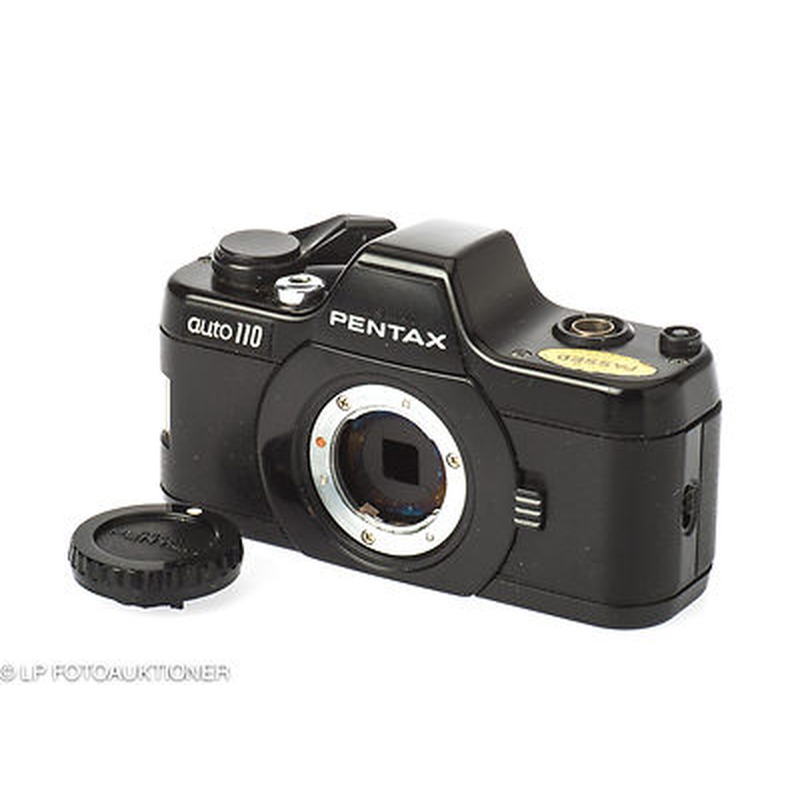
Pentax Auto 110
Pentax · Japan · 1979–1983 (4 years) · 135 film
The Pentax Auto 110, produced from 1979 to 1983, represents Pentax's entry into the competitive market of compact 35mm cameras. Distinguished by its rectangular, pocketable form factor, it aimed for convenience and simplicity. Key features include a fixed 32mm f/2.8 lens, a built-in pop-up flash, and an early autofocus system utilizing a passive rangefinder method. Design prioritized portability, resulting in a small, lightweight body primarily constructed of plastic. It targeted the casual photographer seeking an easy-to-use point-and-shoot alternative to bulkier models, competing with cameras like the Olympus XA. While not technically groundbreaking, it successfully delivered reliable autofocus and flash photography in a remarkably small package for its era.
Its significance lies in being a practical, mass-market solution embodying the trend towards compactness in 35mm photography during the late 1970s and early 1980s. The autofocus system, though rudimentary by later standards, was a notable feature for its time in this class of camera. The Auto 110 offered an accessible way for users to capture snapshots without complex controls or the need for interchangeable lenses, solidifying Pentax's presence beyond its traditional SLR market. It remains a representative example of the era's compact camera design philosophy focused on ease of use and portability.
Specifications
| Film Format | 135 |
/main.jpg)
/main.jpg)
/main.jpg)
 Enjoy this museum? Support on Ko-fi