Pricing
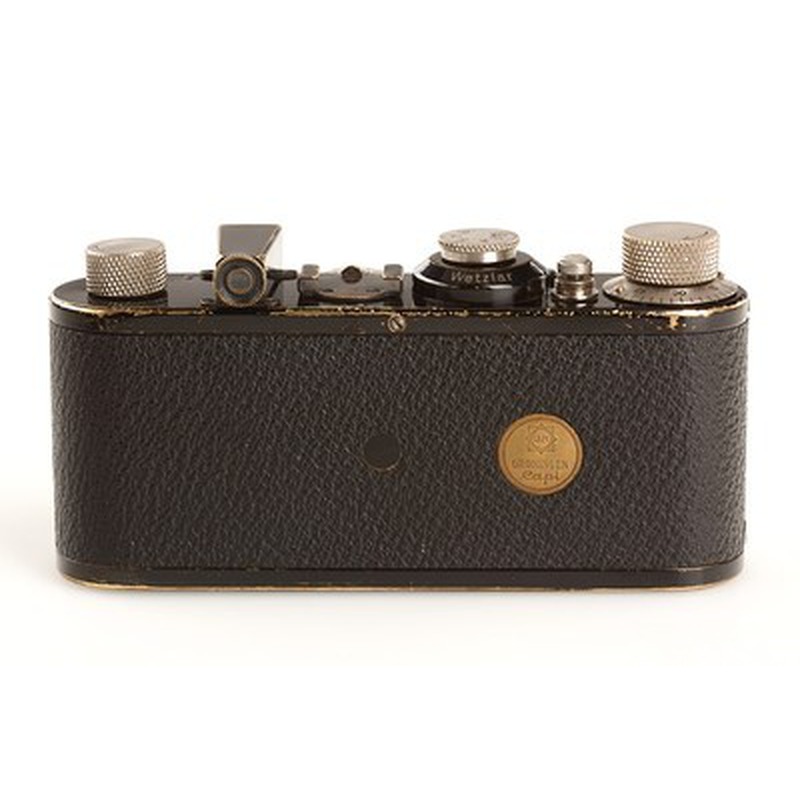
Leica I Mod A 'Capi Groningen'
Leica · Germany · 1930 · 135 film
The Leica I Mod A 'Capi Groningen' represents an important transitional model in Leica's early production, appearing in 1930 as an evolution of the original Leica I introduced in 1925. This camera maintains the foundational 35mm format that revolutionized photography by enabling portability and discrete image capture. The Mod A variant introduced several improvements over earlier models, including a coupled rangefinder for more accurate focusing and the transition from screw to bayonet lens mount, which would become a Leica hallmark. The "Capi Groningen" designation suggests a special relationship with Capi, a Dutch photo equipment distributor, indicating this example may have been part of a specific regional distribution or customization program.
While technically advanced for its time, the Mod A retained Leica's characteristic precision engineering and robust construction with its brass body and leather covering. The camera featured a focal plane shutter with speeds ranging from 1 to 1/500 second, coupled with a viewfinder that also served as a frame counter. Unlike later Leica models, the Mod A still employed the interchangeable film cassettes rather than the more convenient reloadable film cartridges that would appear in subsequent iterations. This camera represents a critical moment in photographic history as professional photographers began embracing the 35mm format for its practical advantages and potential for candid, unobtrusive image-making.
Specifications
| Film Format | 135 |
/main.jpg)
/main.jpg)
/main.jpg)
/main.jpg)
/main.jpg)
/main.jpg)
 Enjoy this museum? Support on Ko-fi