/main.jpg)
Pricing
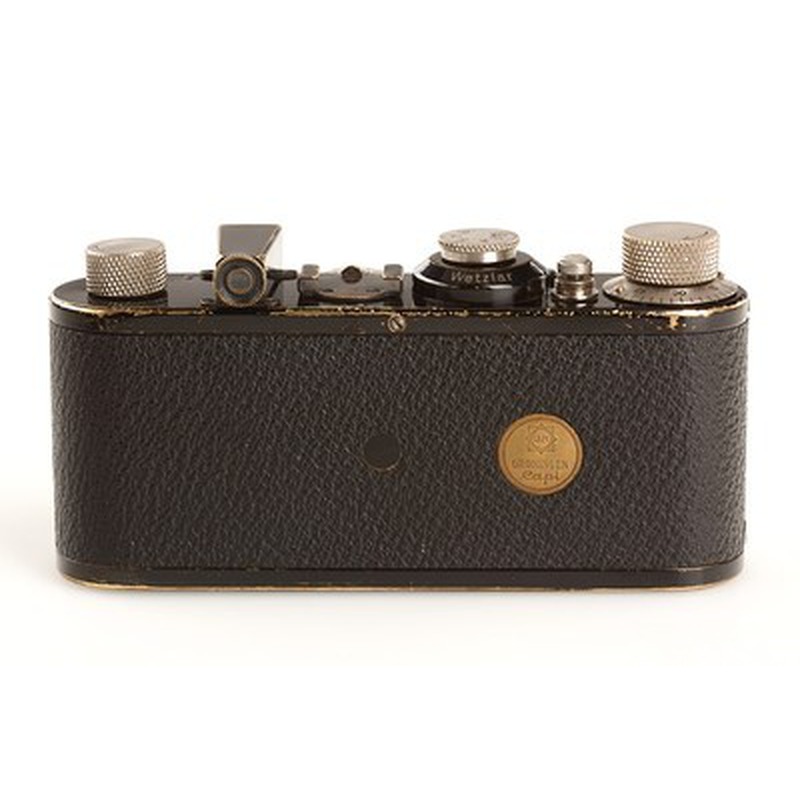
Leica I Mod A 'Calfskin' (Kalf Leather, bright)
Leica · Germany · 1930–1931 (1 years) · 135 film
Produced during 1930-1931, the Leica I Mod A 'Calfskin' (Kalf Leather, bright) represents a significant refinement in the iconic Leica lineage that fundamentally altered photography. Emerging directly from the revolutionary Leica I (1925), the Mod A variant addressed early practical concerns, notably introducing a coupled rangefinder for critical focusing accuracy – a crucial advancement enabling photographers to capture decisive moments precisely. It cemented Leica's pioneering role in establishing the 35mm format as a viable and high-quality system, moving beyond its initial hobbyist reputation to professional legitimacy. This camera, like its stablemates, embodied a new era of portable, unobtrusive photography, liberating photographers from bulky equipment.
Design-wise, the Mod A 'Calfskin' exemplifies Leica's commitment to precision engineering and premium materials in its compact form factor. Sharing the characteristic body dimensions and controls of the basic Leica I series, it featured a focal-plane shutter with speeds typically ranging from 1/20th to 1/500th second, coupled with a removable lens (often the excellent 50mm f/3.5 Elmar). The defining aesthetic is its covering of bright, soft calfskin leather (kalfleder), chosen over the standard black lacquer or early brown finishes for a distinctively luxurious and tactile feel. This superior finish marked it as a more desirable variant within the modest Mod A production run, reflecting Leica's early understanding of market segmentation and aesthetic appeal alongside its technical prowess. Its core features – coupled rangefinder, 35mm format, precision build – formed the template upon which decades of Leica excellence were built.
The Leica I Mod A, and specifically the desirable 'Calfskin' variant, holds immense historical weight as a foundational tool that enabled the documentary and street photography revolutions. Its compact size and precise focusing made it indispensable to pioneers like André Kertész and the young Henri Cartier-Bresson, who famously used similar Leica models for his "Decisive Moment" philosophy. By providing a truly portable camera system capable of high-quality negatives, the Leica line, including the Mod A, democratized professional-level photography and fostered a new generation of image-makers who captured the unposed reality of the 20th century. The 'Calfskin' finish, while a cosmetic choice, is an artifact of the era's craftsmanship and represents the pinnacle of early Leica luxury, making it a tangible link to the genesis of modern reportage and candid photography.
Specifications
| Film Format | 135 |
/main.jpg)
/main.jpg)
/main.jpg)
/main.jpg)
/main.jpg)
 Enjoy this museum? Support on Ko-fi