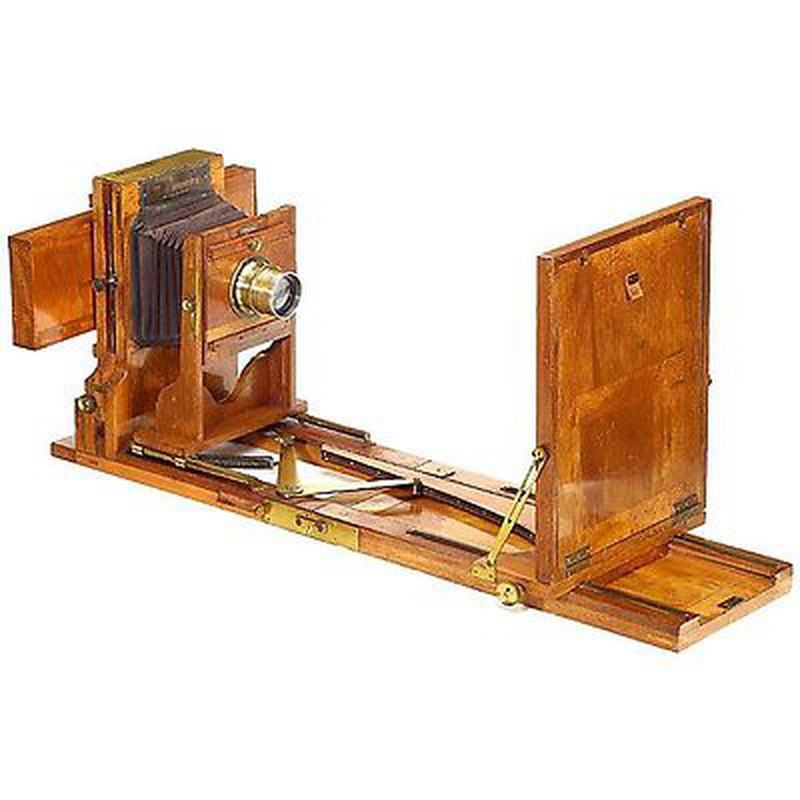
Goerz Three-Color Camera
Goerz · Germany · 1900 · 135 film
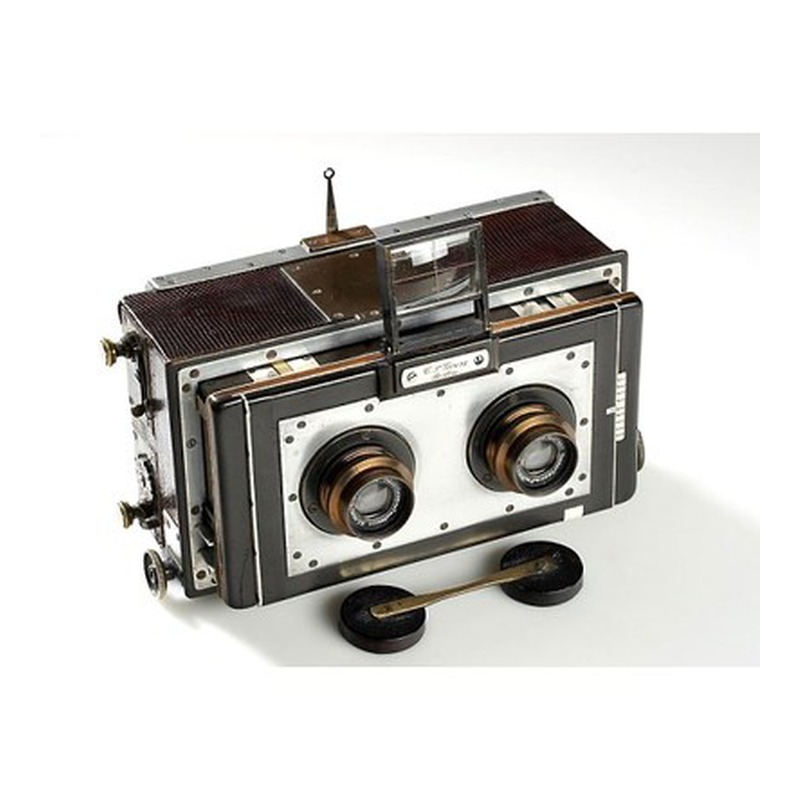
The Goerz Three-Color Camera of 1900 stands as a pioneering, albeit lesser-known, milestone in the evolution of miniature photography. While predating the iconic Leica by over two decades, this German-made camera represented an ambitious early application of the 35mm format (then emerging from cinema film) to still photography. Its primary innovation lay in its complex mechanism designed for autochrome color photography, utilizing a rotating filter wheel with red, green, and blue filters to capture sequential exposures onto a single roll of film. This approach, cumbersome by later standards, was a significant technical step towards practical color photography decades before color film became mainstream. Manufactured by the respected Berlin optics firm C.P. Goerz, it reflected the company's reputation for precision engineering, targeting professional and advanced amateur photographers interested in experimental color processes.
Though not achieving widespread commercial success, the Three-Color Camera holds considerable historical significance as one of the first cameras specifically engineered for 35mm still photography and a practical demonstration of additive color principles in a portable format. Its existence highlights the rapid technological experimentation characterizing the late 19th and early 20th centuries, bridging the gap between large format plate cameras and the eventual compact 35mm revolution led by Leica. While surviving examples are exceptionally rare today, the camera serves as a tangible artifact of an era when the foundations of modern color photography were being actively, if precariously, laid. Its design underscored the challenges and ingenuity involved in translating cinematic technology and nascent color theory into a still camera format.
Specifications
| Film Format | 135 |
/main.jpg)
/main.jpg)
/main.jpg)
 Enjoy this museum? Support on Ko-fi