/main.jpg)
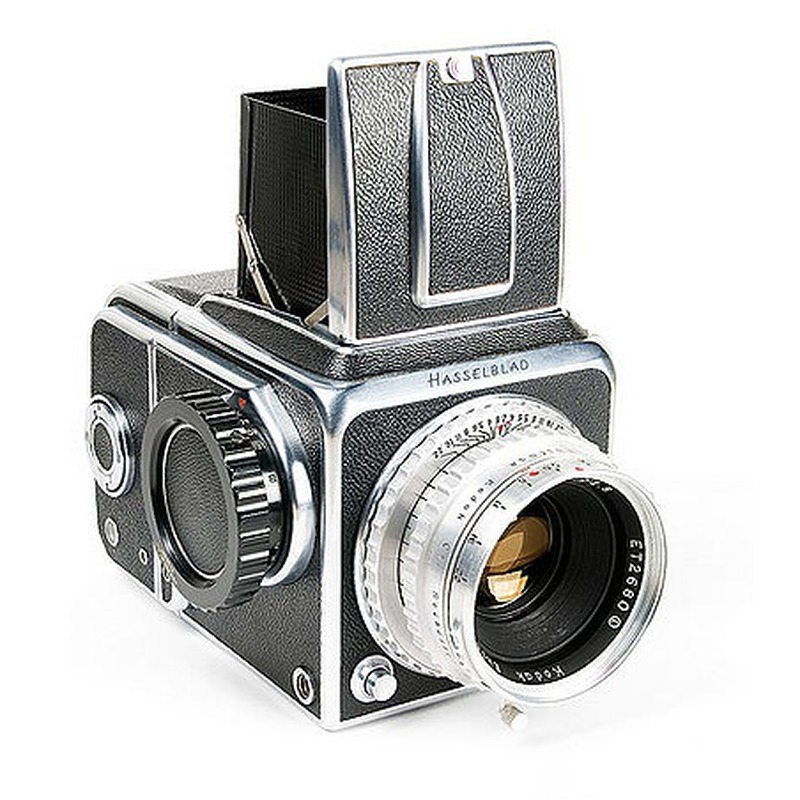
Hasselblad Super Wide C E (SWC E)
Hasselblad · Sweden
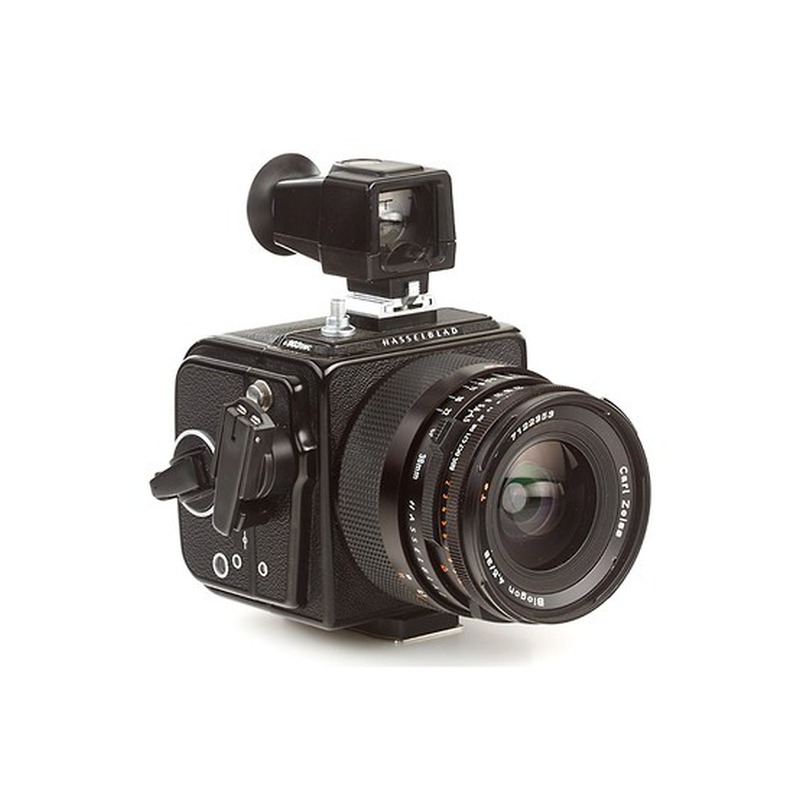
The Super Wide C E (SWC E) represents a pinnacle of Hasselblad's engineering for extreme wide-angle photography. Evolving directly from the original 1954 Super Wide Camera (SWC), the SWC E refined the groundbreaking formula into a highly specialized and iconic tool. Its core innovation remains the integrated, fixed 38mm Biogon lens by Zeiss, providing an exceptionally rectilinear 90° field of view with virtually no distortion – a revolutionary capability at the time for medium format film. Designed primarily for architectural and landscape photographers demanding uncompromising perspective control, the SWC E dispensed with the modular system approach typical of Hasselblad SLRs. Instead, it features a streamlined, waist-level viewfinder design, prioritizing mechanical simplicity and optical purity. Its robust, all-metal construction, featuring a black leatherette covering and Hasselblad's signature reliable shutter mechanism (a Synchro-Compur leaf shutter), ensured durability in demanding professional environments, becoming a trusted instrument for photographers like Pål-Nils Nilsson who captured the stark geometry of modern architecture.
While sharing the foundational Biogon lens and core purpose with its predecessor, the SWC E incorporated subtle refinements, such as improved viewfinder brightness and ergonomics, solidifying its reputation as a precision instrument for the discerning photographer who required absolute optical fidelity and a unique visual perspective distinct from the standard 6x6 format. Its existence underscores Hasselblad's commitment to pushing optical boundaries beyond the constraints of interchangeable systems, offering a dedicated solution for a demanding photographic niche. Its legacy is cemented by its association with influential architectural photographers and its role in defining the visual language of mid-century modernism through the lens of medium format. It remains a testament to the power of specialized design in photography.
/main.jpg)
 Enjoy this museum? Support on Ko-fi