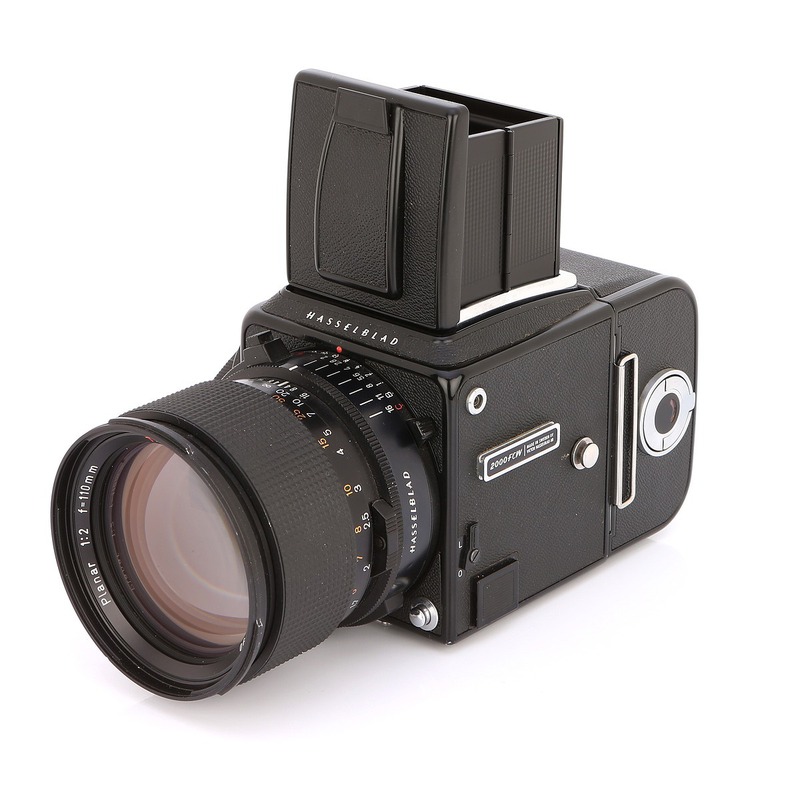
Hasselblad 2000 FCW
Hasselblad · Sweden
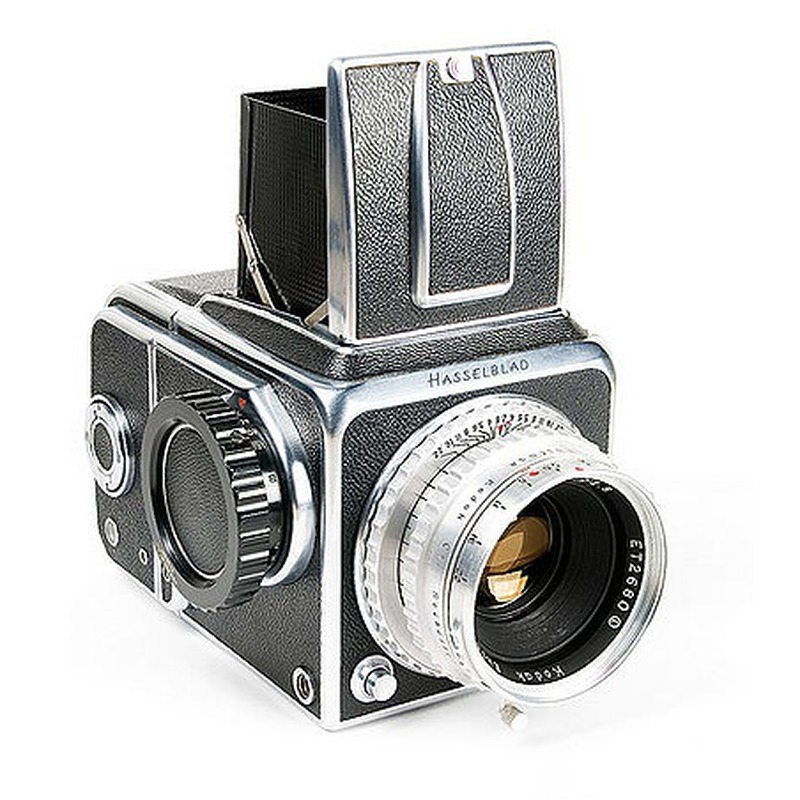
The Hasselblad 2000 FCW represents a significant evolution in the Swedish manufacturer's classic V-system medium format lineup. Introduced in the early 1980s, it succeeded the earlier 2000 FC, incorporating crucial improvements that enhanced its professional capabilities. The 'W' suffix denotes the integration of a focal plane shutter with a maximum speed of 1/1000th second and a faster X-sync speed of 1/90th second, a notable upgrade over the FC's slower 1/60th sync and 1/500th max. This design maintained the modular flexibility central to the V-system, allowing for interchangeable film magazines, viewfinders, and interchangeable lenses via the standard C-mount, while introducing the improved shutter mechanism that made it more competitive in demanding professional environments. It retained the Hasselblad tradition of robust, all-metal construction and precise engineering, relying on the superb Carl Zeiss optics.
Although not as revolutionary as the original 500C or as iconic as the later EL/M series, the 2000 FCW occupies an important place in Hasselblad's development timeline. It offered photographers the combination of high build quality and advanced shutter technology that was becoming essential for fast-paced work like fashion or reportage, complementing the leaf-shutter lenses with its focal-plane shutter versatility. While the introduction of the electronic 2003 FCW (with auto-exposure) shortly after would further modernize the line, the 2000 FCW stood as a reliable, high-performance mechanical workhorse during a period of significant change in professional photography. Its key significance lies in bridging the gap between the purely mechanical predecessors and the more electronically integrated models that followed.
/main.jpg)
 Enjoy this museum? Support on Ko-fi