/main.jpg)
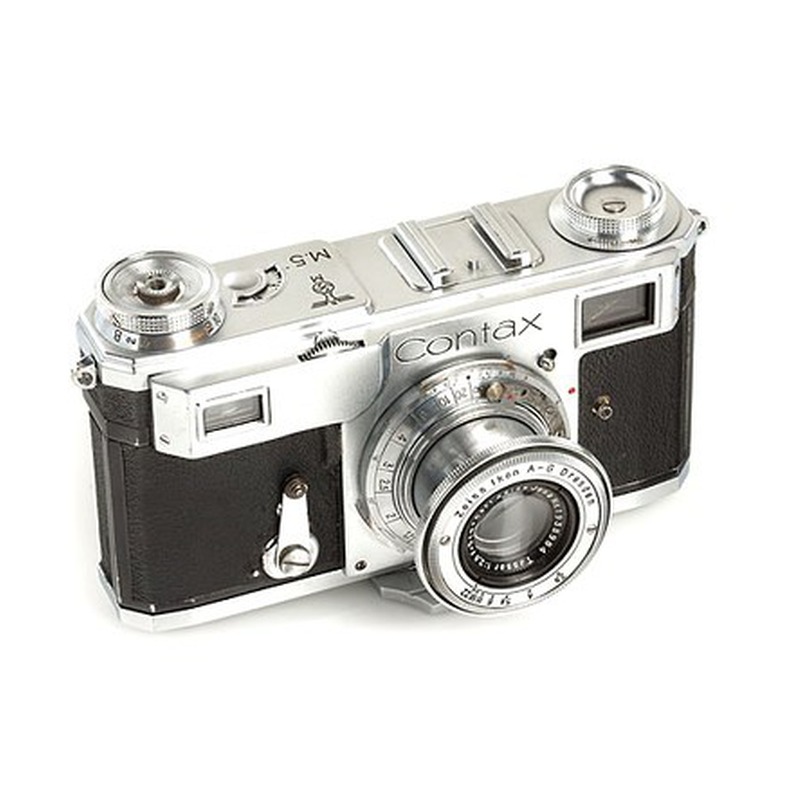
Zeiss Contax II (for China)
Zeiss · Germany · 1942–1962 (20 years) · 135 film
The Contax II (for China) represents a unique chapter in Zeiss Ikon's storied history, specifically adapted for distribution in the Chinese market during the tumultuous years spanning World War II and the early Cold War (1942-1962). Based on the iconic pre-war Contax II design developed by Zeiss, this iteration was likely modified to suit different conditions, materials, or specifications demanded by the Chinese market. Sharing the core mechanical brilliance of the original Contax II, including its renowned coupled rangefinder system for precise focusing and the robust metal body construction, it embodied the high engineering standards expected from Zeiss. Contax II cameras, in general, were renowned for their advanced features for their time, such as the integrated coupled rangefinder offering coincident image focusing and the interchangeable lens system, which utilized high-quality Zeiss lenses like the fast Sonnar optics that set benchmarks in performance. These cameras were tools of serious photographers, particularly photojournalists and documentarians, capturing pivotal moments across Asia and Europe during their production run. The specific "for China" variant underscores the global reach and adaptability of Zeiss Ikon amidst geopolitical shifts.
While sharing the fundamental engineering excellence of its predecessors and contemporaries, the Contax II (for China) occupies a distinct niche. Its production period, overlapping the end of WWII and the early PRC era, suggests it served both professional and potentially institutional needs within China, reflecting the camera's reliability and capability in demanding environments. As part of the prestigious Contax lineage, it inherited a legacy of precision and technological innovation in 35mm photography, competing directly with cameras like the Leica III series. The presence of Zeiss Sonnar lenses remained a key feature, delivering exceptional image quality that was the hallmark of the brand. Though the full extent of its documented use by specific famous individuals within China may be less documented globally than its European counterparts, its significance lies in being a tangible piece of photographic history representing German engineering distributed and utilized in a specific historical and geographical context outside its primary European market. It stands as a testament to the durability and adaptability of Zeiss design principles under varied conditions.
Specifications
| Film Format | 135 |
/main.jpg)
/main.jpg)
 Enjoy this museum? Support on Ko-fi