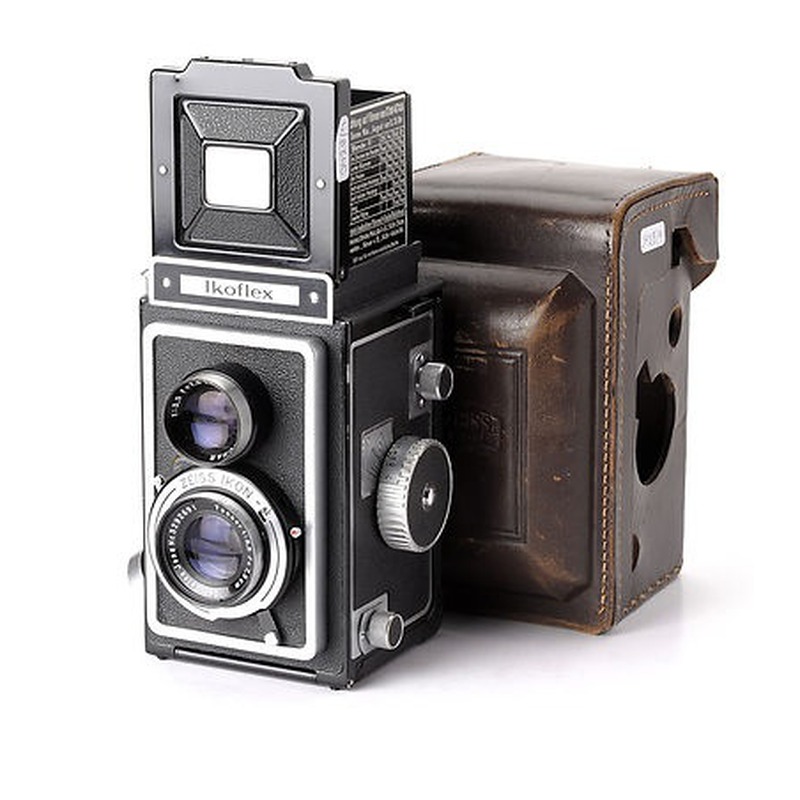
Zeiss Ikoflex I
Zeiss · Germany · 1939–1951 (12 years) · 135 film
The Zeiss Ikoflex I represents a significant yet relatively modest contribution to 20th-century photography during a turbulent era. Produced continuously from 1939 through 1951, it was a straightforward twin-lens reflex (TLR) camera utilizing 120 roll film (the listing's "135" format is incorrect for the Ikoflex series). Designed as a more affordable alternative to Zeiss's sophisticated Ikonta TLRs, the Ikoflex I aimed for the enthusiast and serious amateur market. Its core design featured a coupled rangefinder focusing system and a simple leaf shutter, providing reliable operation for photographers seeking medium format quality without the complexity or cost of top-tier models. Construction typically utilized metal and synthetic materials common for the period, prioritizing functionality over luxury. Its production spanned the disruption of World War II and the immediate post-war years, reflecting Zeiss's efforts to maintain camera manufacturing despite immense challenges, and it served a practical role for countless users needing dependable imaging equipment. While lacking the groundbreaking status of contemporaries like the Leica, the Ikoflex I holds importance as a workhorse example of Zeiss engineering during a difficult period, embodying accessible medium format photography.
Specifications
| Film Format | 135 |
/main.jpg)
/main.jpg)
/main.jpg)
/main.jpg)
 Enjoy this museum? Support on Ko-fi