/main.jpg)
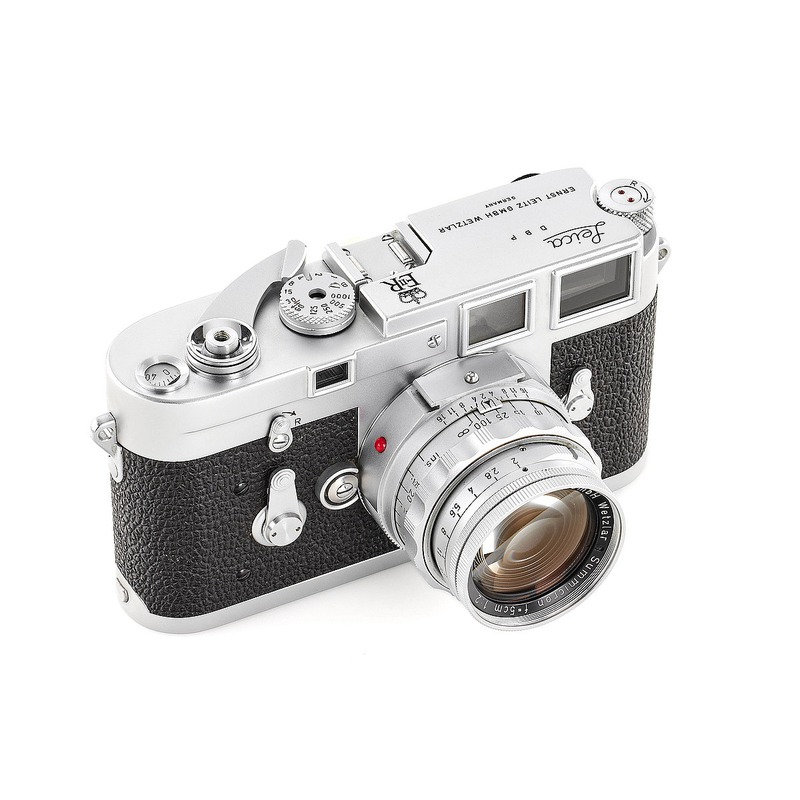
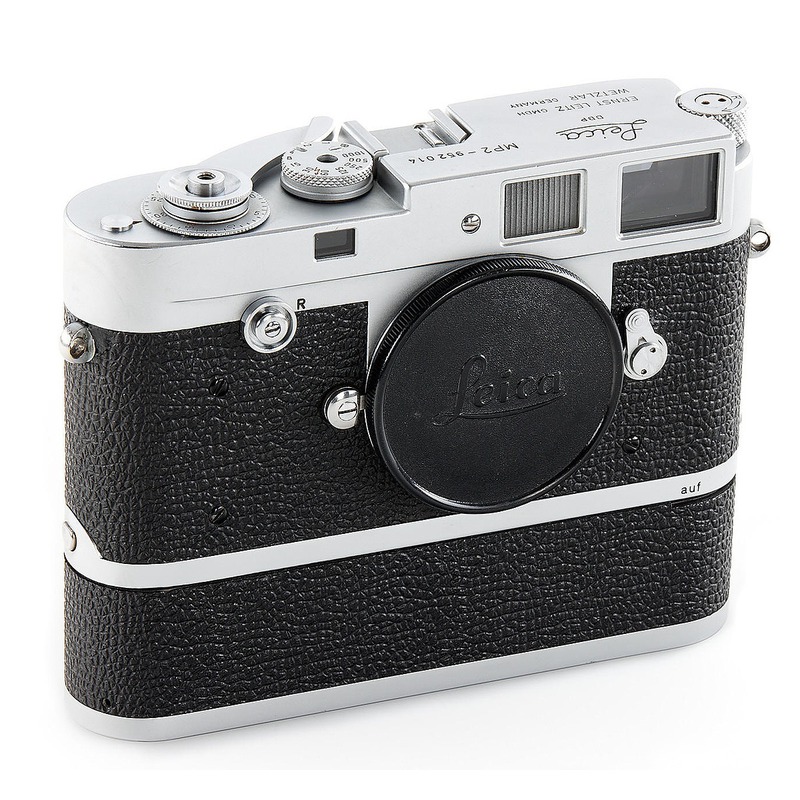
Leica M3 Betriebskamera (MP, Leicavit)
Leica · Germany · 1958 · 135 film
The Leica M3 Betriebskamera (MP, Leicavit) represents a specialized variant of the legendary Leica M3, first introduced in 1954 as Leica's first M-mount rangefinder camera. The M3 itself was a revolutionary design that introduced a bright, coupled rangefinder with automatic parallax correction and a viewfinder showing frame lines for 50mm, 90mm, and 135mm lenses—a significant departure from the interchangeable viewfinders of earlier models. The "Betriebskamera" designation suggests this was a purpose-built version for industrial or professional applications, potentially for scientific, medical, or technical photography where precision and reliability were paramount. The inclusion of the Leicavit rapid-winder indicates this camera was configured for fast shooting, possibly for photojournalistic or documentary purposes where capturing fleeting moments was critical.
Leica cameras have always been synonymous with precision engineering and exceptional build quality, and the M3 Betriebskamera exemplifies this reputation. Crafted from magnesium alloy with a chrome finish, the camera features Leica's characteristic durability and meticulous attention to detail. The M-series rangefinder system offered unmatched focusing accuracy for its time, while the coupled selenium light meter (if equipped) provided reliable exposure assistance. This specialized variant would have been particularly valuable in controlled environments where the camera needed to perform consistently under specific conditions, maintaining Leica's status as the preferred choice for professionals who demanded uncompromising quality in their equipment.
The M3 platform was used by numerous renowned photographers throughout its production run, including Henri Cartier-Bresson, who famously used Leica cameras for his "decisive moment" photography. The camera's compact size, quiet operation, and superb optics made it ideal for documentary and street photography, capturing images without drawing attention to the photographer. While the specific "Betriebskamera" variant may not have been widely documented in mainstream photographic history, its association with the prestigious M3 lineage places it within the pantheon of historically significant cameras that helped shape the course of photographic practice in the mid-20th century.
Specifications
| Film Format | 135 |
/main.jpg)
 Enjoy this museum? Support on Ko-fi