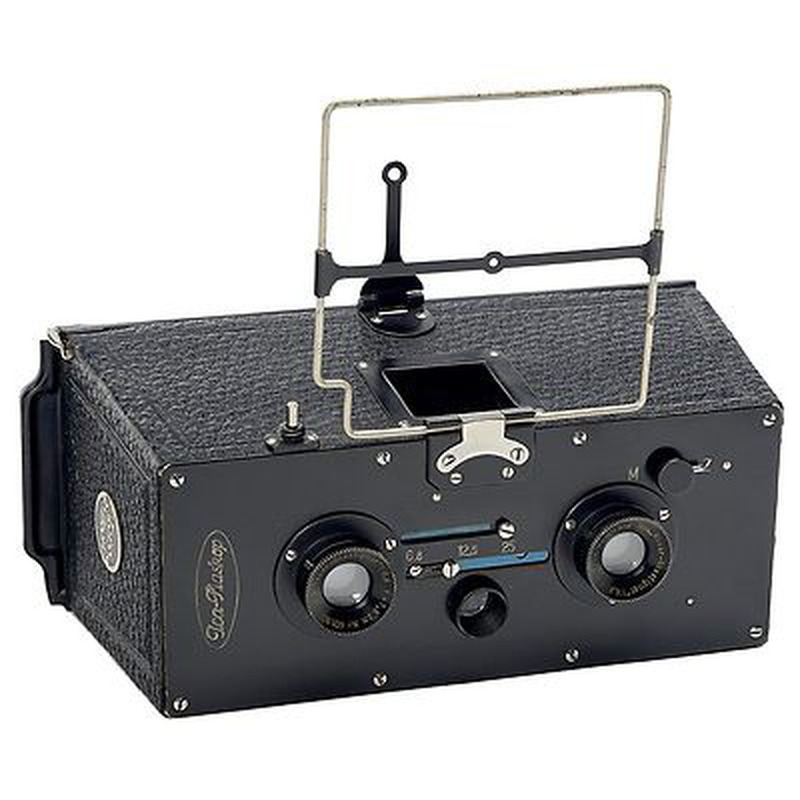
Zeiss Plaskop 603/4
Zeiss · Germany · 1927–1930 (3 years) · 135 film
The Plaskop 603/4 represents Zeiss Ikon's significant, if not pioneering, entry into the burgeoning 35mm still camera market during the late 1920s. Produced from 1927 to 1930, it arrived shortly after Leica had established the 35mm format's viability with their Model I, positioning Zeiss as a major competitor committed to the small-format revolution. While specific design details are scarce, the Plaskop nameplate typically denoted Zeiss Ikon's medium-range or specialized models, suggesting the 603/4 was a practical, well-engineered camera likely featuring a coupled rangefinder for focusing, a focal plane shutter with reasonable speeds for its era, and compatibility with the emerging 135 film cassette. Its construction would have reflected Zeiss's high standards, utilizing robust metal bodies and precision optics, though perhaps not featuring the most advanced innovations of Zeiss's flagship models of the period. The Plaskop 603/4 thus serves as an important artifact documenting the competitive landscape of early 35mm photography, showcasing a major German optical manufacturer leveraging their expertise to challenge the format's established leader and offer consumers a quality alternative.
The camera's existence underscores the rapid evolution and consolidation within the camera industry during the late 1920s. Zeiss Ikon, formed in 1926 from the merger of several German optical companies, utilized platforms like the Plaskop to integrate various technologies and market segments. The Plaskop 603/4, despite its relatively short production run, demonstrates Zeiss's recognition of 35mm film's potential and their commitment to developing cameras within this format beyond just miniature or specialized applications. It occupies a niche as a solid, mid-level representative of the transition from larger plate/film formats to the practicality of 135 film, embodying the engineering prowess and market positioning of Zeiss during this formative decade for small-format photography. Its legacy lies in its contribution to the diversification of early 35mm offerings, highlighting a key player's strategic response to the photographic landscape.
Specifications
| Film Format | 135 |
/main.jpg)
/main.jpg)
/main.jpg)
/main.jpg)
 Enjoy this museum? Support on Ko-fi