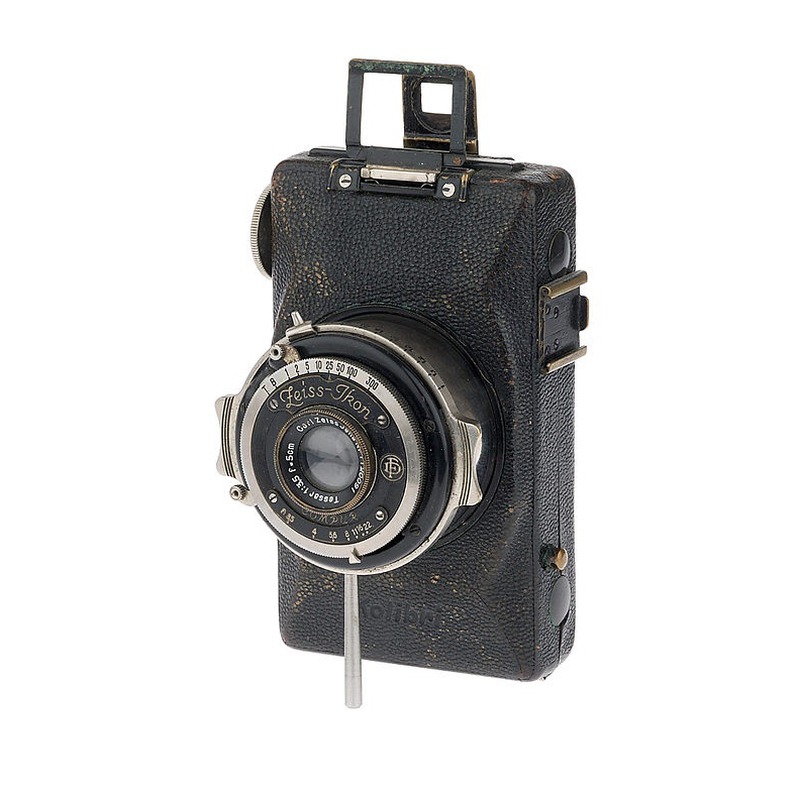
Zeiss Kolibri 523/18
Zeiss · Germany · 1930–1935 (5 years) · 135 film
The Kolibri 523/18 represents Zeiss's contribution to the early 35mm camera market during the 1930s. As one of Germany's most prestigious optical manufacturers, Zeiss entered the miniature camera arena during a period when Leica was establishing dominance in the format. Produced between 1930 and 1935, the Kolibri appears to be a more accessible model compared to Zeiss's sophisticated Contax series that debuted in 1932. The name "Kolibri" (hummingbird in German) suggests a design focused on compactness and portability, targeting photographers who wanted the advantages of 35mm film in a smaller package. While not as technologically groundbreaking as contemporaneous Leica models, the camera would have benefited from Zeiss's expertise in optical engineering, though specific lens details and mechanical features remain undocumented.
During its production run, the Kolibri 523/18 existed alongside more advanced cameras from competing manufacturers. It likely filled a specific niche in Zeiss's product line, offering a less expensive alternative to the Contax while still maintaining the company's reputation for quality. The camera's 135 format positioning positioned it at the forefront of photography's shift toward smaller, more portable equipment during the 1930s. This period was crucial in establishing 35mm as a viable format beyond specialized applications, and cameras like the Kolibri contributed to making miniature photography accessible to a broader audience of enthusiasts and professionals.
Specifications
| Film Format | 135 |
/main.jpg)
/main.jpg)
/main.jpg)
/main.jpg)
 Enjoy this museum? Support on Ko-fi