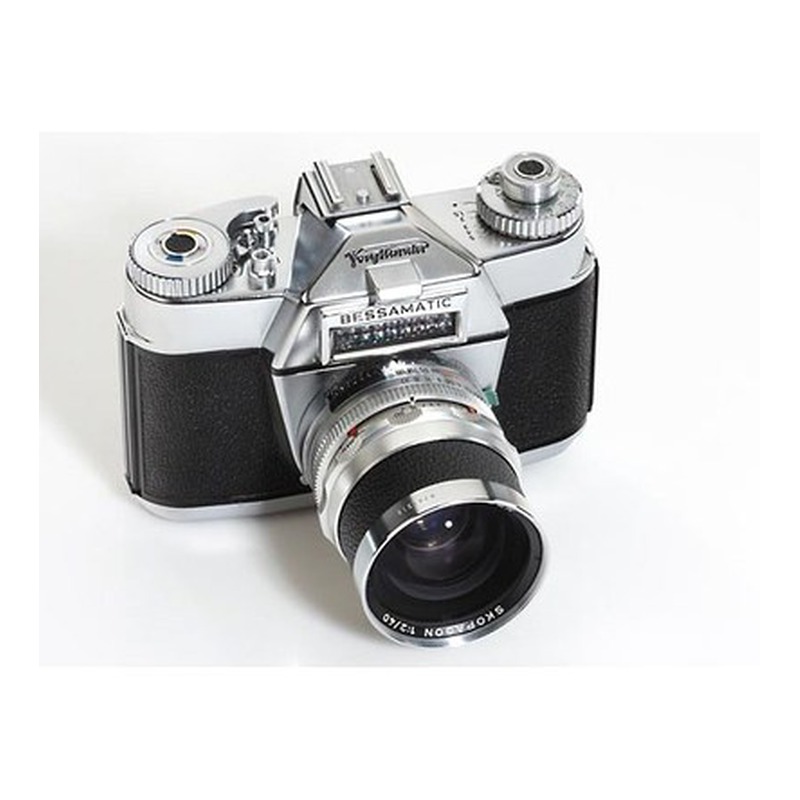
Voigtlander Bessamatic
Voigtlander · Germany · 1959–1962 (3 years) · 135 film
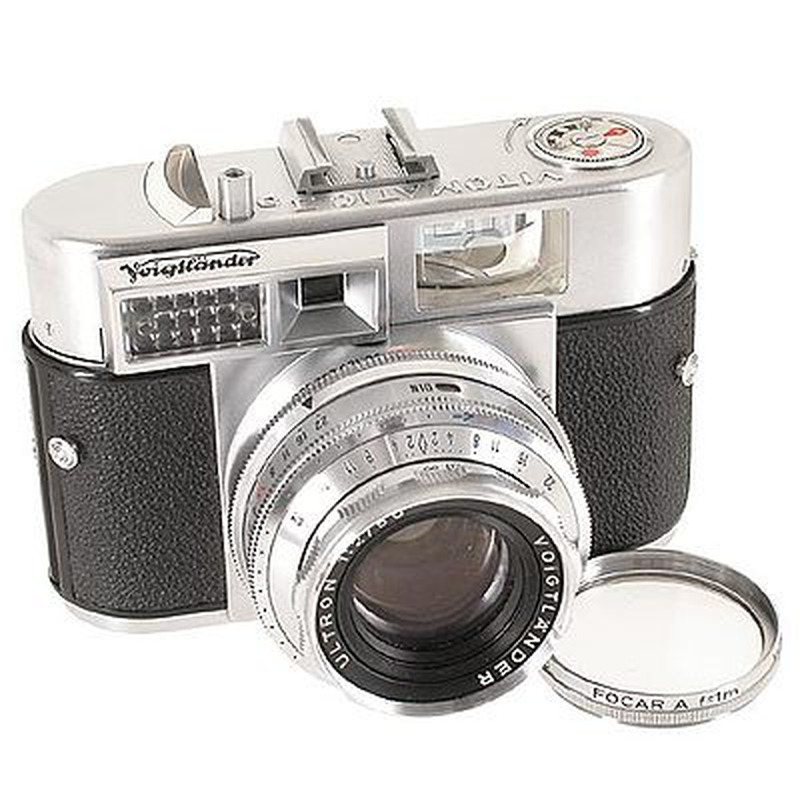
The Bessamatic represents Voigtlander's significant entry into the competitive 35mm single-lens reflex (SLR) market during the late 1950s. Produced from 1959 to 1962, it positioned itself as a sophisticated alternative to established SLRs, notably featuring a unique focal-plane shutter system rather than the then-common leaf shutters found in many contemporary models like the Voigtlander own earlier Prominent or Retina Reflex SLRs. This design choice aimed for faster shutter speeds and more versatility. The camera utilized Voigtlander's proprietary Skopar and Color-Skopar lenses, mounted in a bayonet system, offering a range of focal lengths. It incorporated a built-in coupled selenium meter visible through the viewfinder, aiding exposure accuracy for amateur and serious enthusiasts. The Bessamatic was constructed with Voigtlander's characteristic attention to mechanical refinement, featuring a solid metal body and precise controls, reflecting the German manufacturer's reputation for quality optics and engineering during this transitional period before the shift to Japanese dominance.
While not achieving the iconic status of contemporaries like the Nikon F or Pentax Spotmatic, the Bessamatic holds importance as a well-engineered European SLR that represented a viable option for photographers valuing German design and optics in the early 1960s. Its focal-plane shutter was a notable departure from Voigtlander's own leaf shutter tradition and offered practical advantages. The camera appealed to those seeking a reliable, feature-rich SLR with interchangeable lenses but was ultimately overshadowed by the rapid innovation and market capture of Japanese manufacturers later in the decade. It remains a representative example of mid-century European precision camera design.
Specifications
| Film Format | 135 |
/main.jpg)
 Enjoy this museum? Support on Ko-fi