/main.jpg)
Pricing
Leica M3 Prototype (dummy)
Leica · Germany · 1948 · 135 film
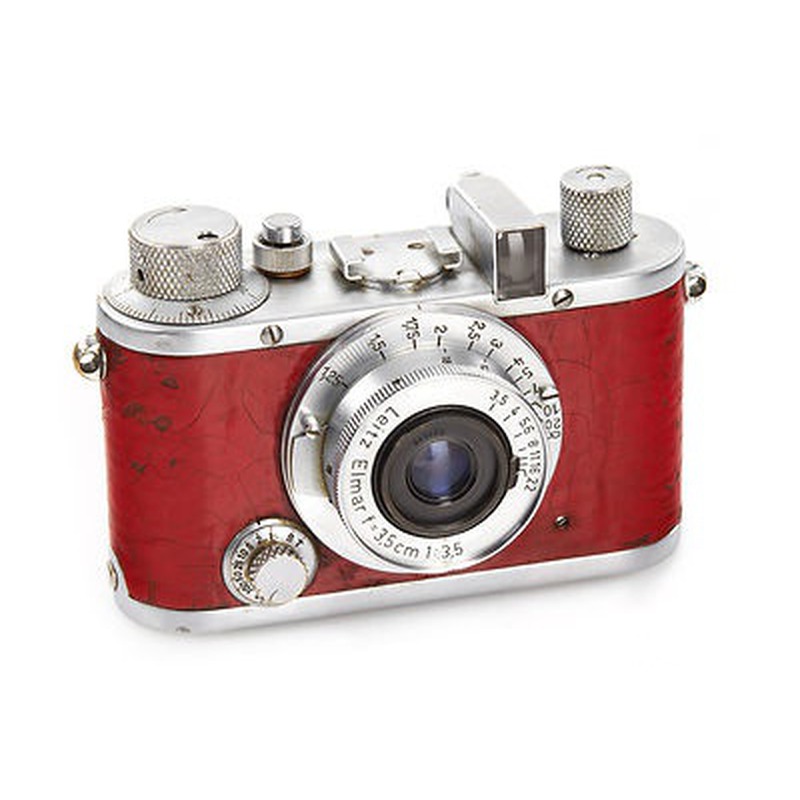
The M3 Prototype (dummy) of 1948 represents a crucial developmental stage in what would become one of photography's most legendary cameras. While not the finished Leica M3 that would revolutionize 35mm photography in 1954, this prototype demonstrates the engineering vision that would eventually transform photographic equipment. As a "dummy" model, it likely served as a mock-up for testing ergonomics and aesthetic decisions rather than a functional device, showcasing Leica's commitment to meticulous design even before the official release of their rangefinder masterpiece. This prototype exists within the historically significant context of post-war camera development, a period when manufacturers were pushing the boundaries of photographic technology and design following the limitations imposed by World War II. The Leica M3, which this prototype preceded, would ultimately become the gold standard for 35mm rangefinder cameras, influencing decades of photographic innovation and becoming the camera of choice for legendary photographers like Henri Cartier-Bresson. This prototype stands as a testament to Leica's design philosophy that blended precision engineering with intuitive user interface—a principle that would define their most celebrated products.
As a developmental artifact rather than a finished product, the M3 Prototype holds particular interest for collectors and historians studying the evolution of photographic equipment. The period immediately following World War II marked a renaissance for camera manufacturers, particularly in Germany where Leica had pioneered the 35mm format decades earlier. This dummy prototype likely represents the physical manifestation of ideas that would soon become the M3's revolutionary features, including its bright viewfinder with parallax-compensated frame lines and the quick-change bayonet lens mount that would become a Leica signature. While not a camera that saw actual use by photographers, its existence fills an important gap in understanding the design process behind arguably the most influential 35mm camera of the 20th century, standing as a silent witness to the engineering excellence that would make Leica a byword for photographic quality.
Specifications
| Film Format | 135 |
/main.jpg)
_(last_models)/main.jpg)
/main.jpg)
 Enjoy this museum? Support on Ko-fi