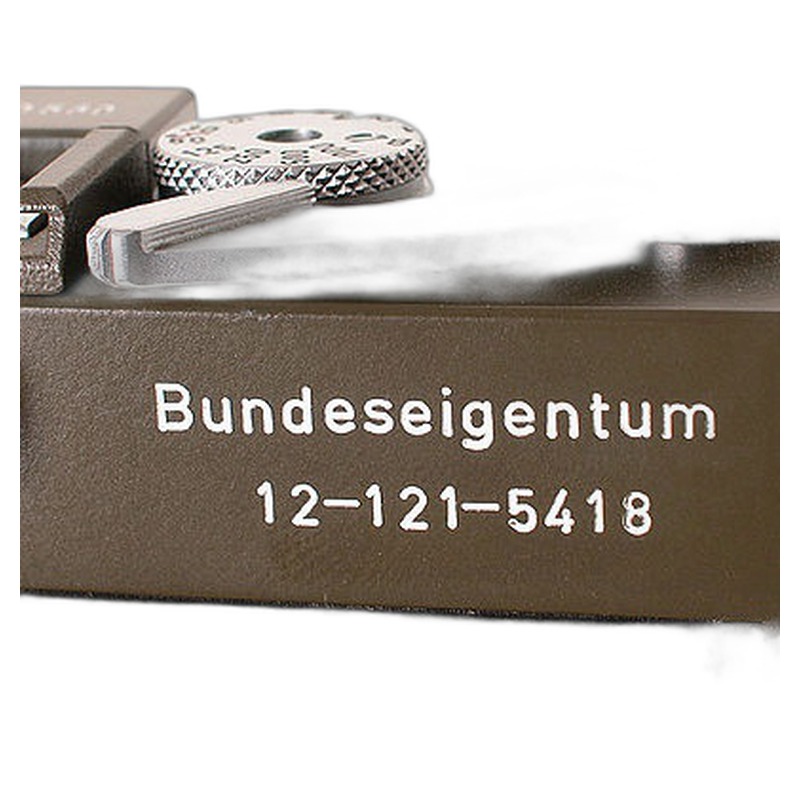
Leica M3 olive Bundeseigentum
Leica · Germany · 1955–1958 (3 years) · 135 film
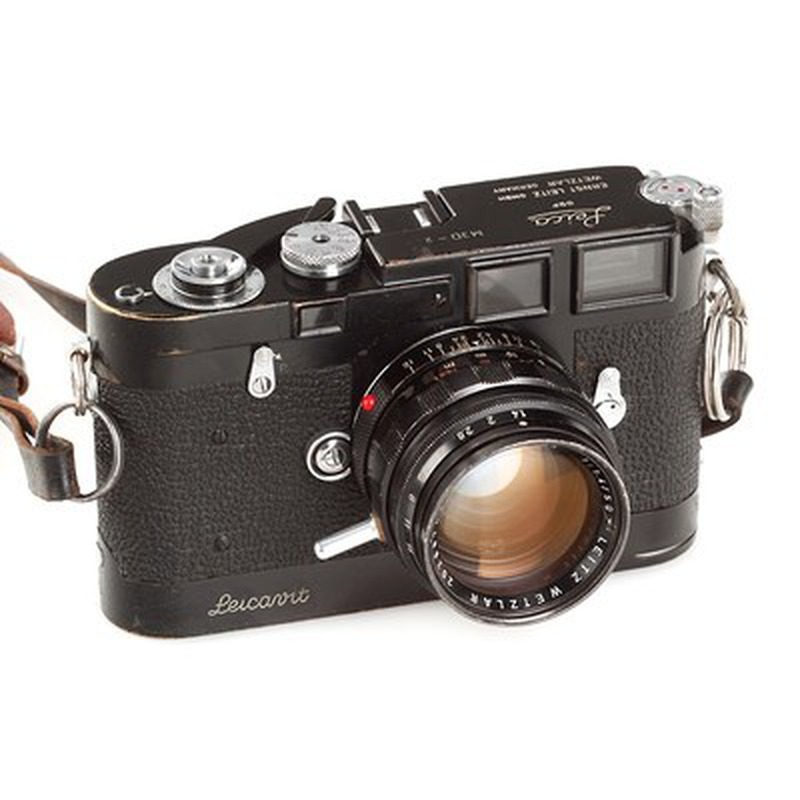
The Leica M3 olive Bundeseigentum represents one of the most significant chapters in 20th-century photography history. Produced from 1955 to 1958, this specific olive variant was manufactured exclusively for German government agencies (Bundeseigentum translates to "Federal Ownership"), denoting its official use. It is the original and most iconic version of the Leica M3, a camera that fundamentally transformed the 35mm format and established the foundation for the Leica M system. The M3 introduced the revolutionary bright-frame viewfinder with automatic parallax correction and integrated rangefinder, offering a significantly larger and brighter view than contemporary rangefinders. Its precision ground-glass viewfinder coupled with coupled rangefinder provided unparalleled focusing accuracy and visibility, a leap forward for reportage and street photography. Its robust magnesium alloy body covered in olive green leather, combined with Leica's legendary engineering and manufacturing tolerances, set the standard for mechanical camera durability and quality during the transition from film to the modern era. The M3's introduction solidified the rangefinder as a premier tool for serious photographers, attracting luminaries like Henri Cartier-Bresson, who famously relied on Leicas, and Robert Capa. The Bundeseigentum olive variant adds a layer of institutional history and scarcity, making it a particularly desirable piece for collectors interested in the intersection of government technology and photographic art.
Beyond its provenance, the M3's technical innovations were profound. It pioneered the Leica M bayonet mount, becoming the first camera to feature this now-standard mount, offering a secure and quick lens change mechanism. The camera featured a combined viewfinder/rangefinder window offering 0.92x magnification, the highest ever put into a production Leica rangefinder at the time, crucial for critical focusing with wide-angle and normal lenses. Its shutter speeds, ranging from 1 second to 1/1000th, were meticulously calibrated and proven reliable. The M3's design philosophy prioritized simplicity, precision, and minimalism, embodying the "form follows function" ethos that defined post-war German engineering. It became the benchmark against which all subsequent 35mm rangefinders were measured, influencing camera design for decades. The Bundeseigentum olive examples, while functionally identical to standard M3s, represent a unique historical artifact, serving as tangible links to a specific period of German institutional photographic practice during the Cold War era.
Specifications
| Film Format | 135 |
/main.jpg)
/main.jpg)
/main.jpg)
/main.jpg)
 Enjoy this museum? Support on Ko-fi