/main.jpg)
Pricing
Ernemann Ermanox 4.5x6 (Er-Nox)
Ernemann · Germany · 1924 · 135 film
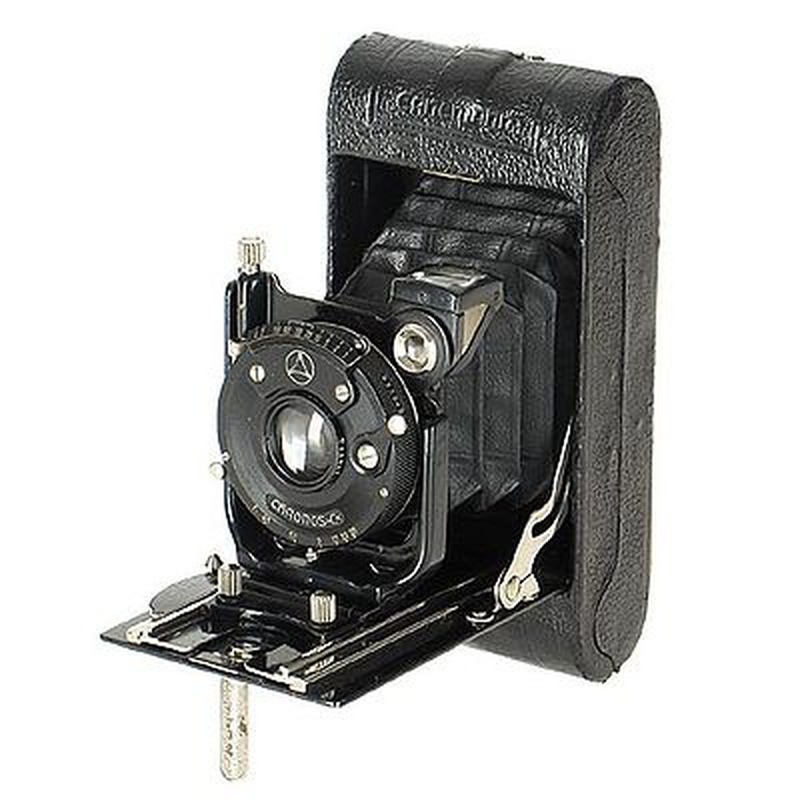
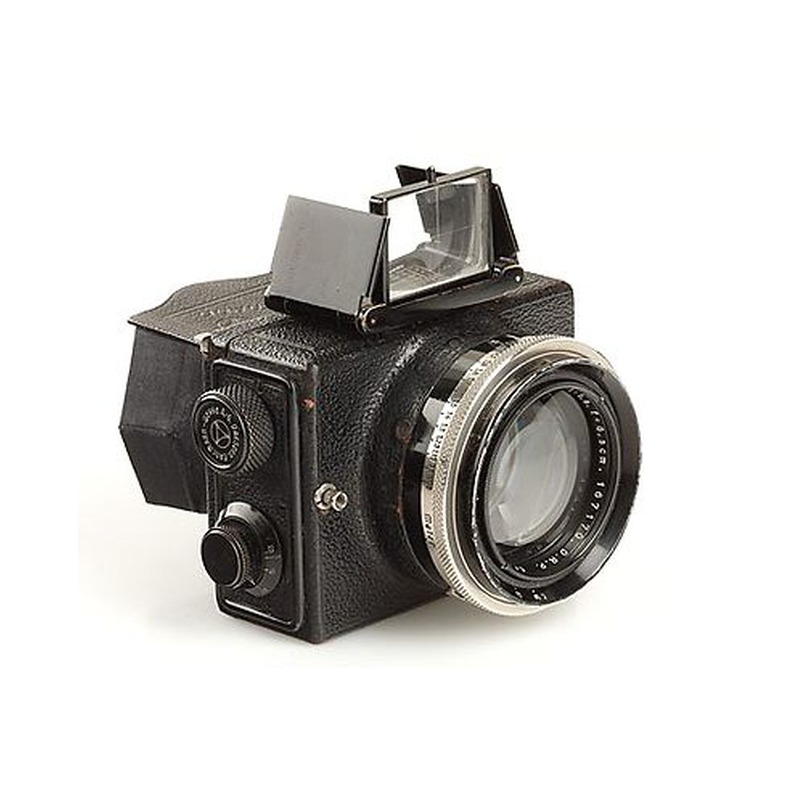
The Ermanox 4.5x6, affectionately known as the "Er-Nox," holds a pivotal place in photographic history as one of the first truly practical and popular 35mm cameras, introduced by Ernemann in 1924. Developed under the engineering leadership of Emanuel Goldberg, its significance stemmed from pioneering the use of 35mm cine film for still photography. Crucially, it utilized a specially designed double spool cassette system, effectively creating the 35mm still film format and its loading mechanism that became the industry standard, predating Leica's similar efforts. This innovation dramatically reduced the size and weight of cameras compared to plate and rollfilm formats, enabling unprecedented mobility for photographers. The camera's compact, box-like design, often featuring a coupled rangefinder, was practical and robust for its era, marking a significant leap towards handheld, candid photography.
The Ermanox's most revolutionary feature was its fast f/2.0 lens, typically a Zeiss Tessar derivative or similar high-speed design. This wide aperture allowed photographers to work in conditions previously impossible with conventional cameras, capturing moments in low light and freezing motion without a tripod. This capability was instrumental in the rise of candid photojournalism. The camera's impact was cemented by its adoption by pioneering photographers like Erich Salomon, whose work for Berliner Illustrierte Zeitung defined modern reportage. Salomon used the Ermanox's quiet, unobtrusive nature and low-light capability to capture candid moments of politicians and celebrities, earning it the nickname "Ermanox Secret." Its combination of compact size, fast lens, and reliable cassette system directly influenced the Leica I that followed just a couple of years later, making it a foundational model for 20th-century photography. While overshadowed by the Leica legend, the Ermanox was a true innovator and workhorse that proved the viability and potential of small-format photography.
Specifications
| Film Format | 135 |
/main.jpg)
/main.jpg)
 Enjoy this museum? Support on Ko-fi