Pricing
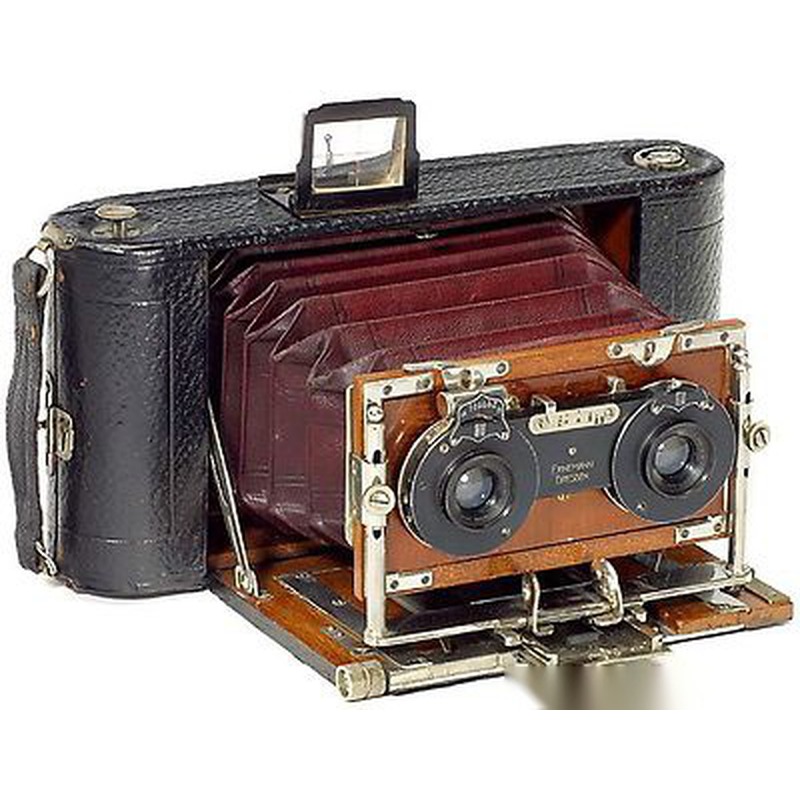
Ernemann Bob IV Stereo
Ernemann · Germany · 1905–1910 (5 years) · 135 film
The Ernemann Bob IV Stereo represents an early foray into 35mm format photography during a pivotal period for the industry. Produced by the Dresden-based firm between 1905 and 1910, it capitalized on the growing availability of 35mm film stock initially developed for motion pictures but increasingly adapted for still cameras. As a stereo camera, its primary function was to capture paired images designed for viewing in a stereoscope, creating a sense of depth – a niche application distinct from mainstream photography. The Bob IV Stereo embodies the experimental and transitional nature of pre-WWI cameras, utilizing the then-novel 35mm format in a specialized form factor. Ernemann, known for its technically competent medium and large format cameras, applied this engineering approach to the smaller format, though details on specific materials or mechanisms are scarce without deeper research. Its significance lies in its demonstration of 35mm's early adoption for specialized applications and Ernemann's role in diversifying the format's potential beyond motion picture capture.
While noteworthy for its format and stereo capability, the Bob IV Stereo did not achieve the widespread acclaim or groundbreaking innovation that would elevate it to legendary status. It remained a specialized tool for enthusiasts or professionals requiring stereo imagery, produced for a relatively short timeframe before Ernemann merged into Zeiss-Ikon in 1926. Its survival today underscores a period of camera history characterized by rapid technological evolution and the exploration of formats smaller than the standard glass plate or roll film of the era. It stands as a tangible example of the early steps towards the 35mm still camera revolution that would later explode in the mid-20th century.
Specifications
| Film Format | 135 |
/main.jpg)
_(Tropical)/main.jpg)
/main.jpg)
/main.jpg)
 Enjoy this museum? Support on Ko-fi