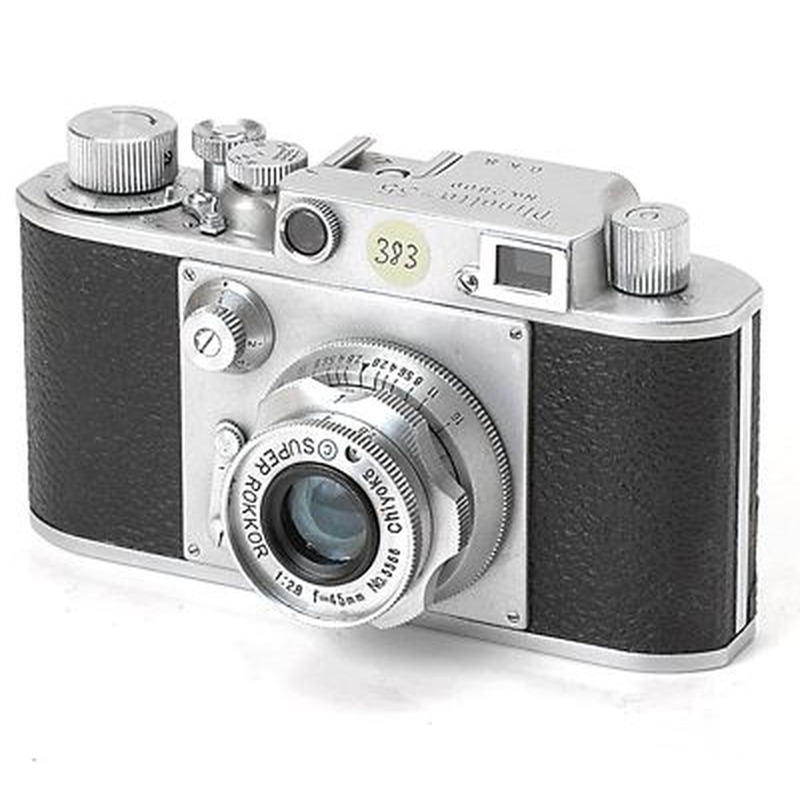
Minolta 35 Model B
Minolta · Japan · 1948 · 135 film
Introduced in 1948, the Minolta 35 Model B represents a significant early step for Minolta in the burgeoning post-war 35mm camera market. It was a straightforward, well-built rangefinder camera designed to offer accessible 135 format photography. Sharing the chassis and basic specifications of its predecessor, the Model A, the Model B refined the design by incorporating a coupled rangefinder for more accurate focusing, replacing the simpler split-image or ground-glass methods found on earlier budget models. This practical upgrade, combined with a reliable shutter mechanism (typically Prontor or Compur-synchronized) and a standard 50mm lens mount, positioned it as a competent, everyday user camera aimed at photographers seeking reliable results without excessive cost.
The Model B's significance lies in its role as a workhorse that helped establish Minolta's reputation in the 35mm arena during a critical period of recovery and growth. Its solid, metal construction (often with leatherette covering) reflected the era's standards for durability in mid-range consumer cameras. While not technologically revolutionary like some contemporaries, it provided reliable performance and a straightforward shooting experience, contributing to Minolta's eventual rise as a major camera manufacturer. It exemplifies the practical, capable cameras that made 35mm photography increasingly mainstream in the late 1940s and early 1950s.
Specifications
| Film Format | 135 |
/main.jpg)
/main.jpg)
/main.jpg)
 Enjoy this museum? Support on Ko-fi