Pricing
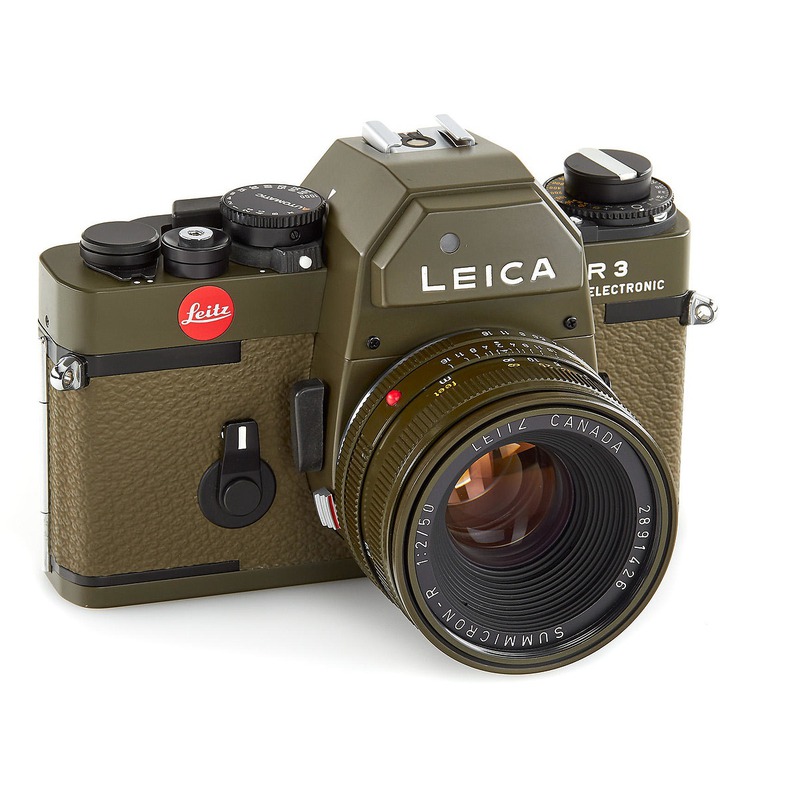
Leica R3 Safari
Leica · Germany · 1977 · 135 film
The Leica R3 Safari, introduced in 1977, was a variation of the standard Leica R3 single-lens reflex (SLR) camera, distinguished primarily by its olive drab painted finish reminiscent of military equipment. Sharing the core specifications of the base R3, it utilized Leica's R-mount lenses and operated on 135 (35mm) film. As an SLR, it featured a through-the-lens viewfinder system and a mirror mechanism. Technologically, the R3 represented a significant step for Leica into electronically controlled exposure automation. It offered both shutter-priority automatic exposure and manual modes, utilizing a CdS cell for light metering, providing users with a more automated shooting experience compared to earlier purely mechanical Leica SLRs like the R series predecessors. The build quality remained consistent with Leica's reputation for robustness, utilizing metal construction throughout, though the Safari's painted finish might be more susceptible to wear than the standard chrome or black versions. While functional and well-engineered, it was positioned as a professional-grade camera but faced stiff competition from established Japanese SLR makers like Nikon and Canon.
The Safari variant capitalized on a trend for specialized finishes, appealing to photographers seeking a distinct aesthetic, perhaps evoking an adventurous or utilitarian spirit. Functionally, it was identical to the standard R3, offering a reliable experience within the Leica R system ecosystem. Its significance lies less in technological innovation or widespread market impact, and more as a niche variation of a solid, mid-1970s Leica SLR that incorporated modern electronic features. It exemplifies Leica's efforts to adapt to the demands of automated photography during that era while maintaining their traditional build quality, though it never achieved the legendary status of some Leica models or the market dominance of its key competitors.
Specifications
| Film Format | 135 |
/main.jpg)
/main.jpg)
/main.jpg)
 Enjoy this museum? Support on Ko-fi