/main.jpg)
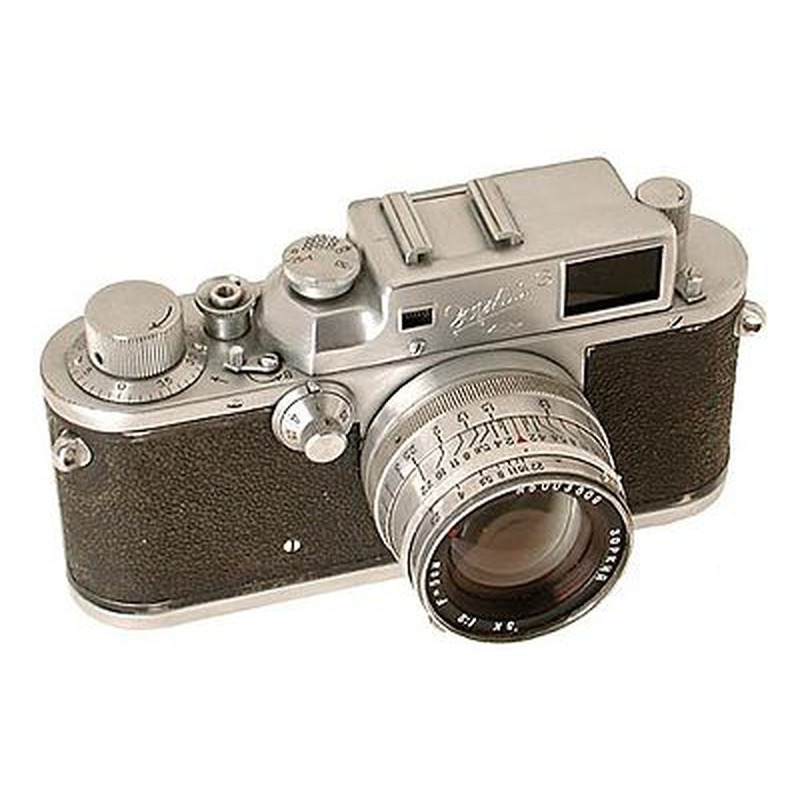
Zenit Zorki 3 (periscope)
Zenit · Russia · 1950 · 135 film
The Zorki 3 (periscope) represents a significant step in Soviet photographic manufacturing following World War II. As a 35mm rangefinder camera, it belongs to the lineage stemming from the FED, itself inspired by the pre-war Leica II. Introduced in 1950 by the Zenit factory in Krasnogorsk, it shared the basic design of its predecessor, the Zorki 2, but notably incorporated a combined viewfinder and rangfinder using a periscope-like prism arrangement, aiming to offer a brighter image and better eye relief compared to the simpler Zorki 2 finder. It was typically equipped with a coupled rangefinder and a threaded lens mount (commonly M39 screw mount), allowing for the use of various Soviet and imported lenses. Characterized by its utilitarian construction, often featuring metal bodies and controls that were functional but could be somewhat crude by Western standards, the Zorki 3 embodied the pragmatic industrial design of the early Soviet era, serving as a primary photographic tool for domestic consumers and professionals alike within the Eastern Bloc.
While not achieving global iconic status, the Zorki 3 holds historical importance as a representative mass-produced Soviet camera of the 1950s, demonstrating the USSR's ability to replicate and refine foreign camera technology on a large scale. Its production run was substantial, cementing it as a common sight in post-war Soviet photography. The "periscope" viewfinder variant is particularly noteworthy as a distinct evolutionary point within the Zorki series, showcasing attempts to improve usability within the constraints of Soviet manufacturing. Its legacy lies in its role as a workhorse camera and as a link between the FED/Leica heritage and later Soviet SLR developments like the Zenit cameras.
Specifications
| Film Format | 135 |
/main.jpg)
/main.jpg)
/main.jpg)
/main.jpg)
/main.jpg)
 Enjoy this museum? Support on Ko-fi