Pricing
Kiev II
Kiev · Ukraine · 1950–1955 (5 years) · 135 film
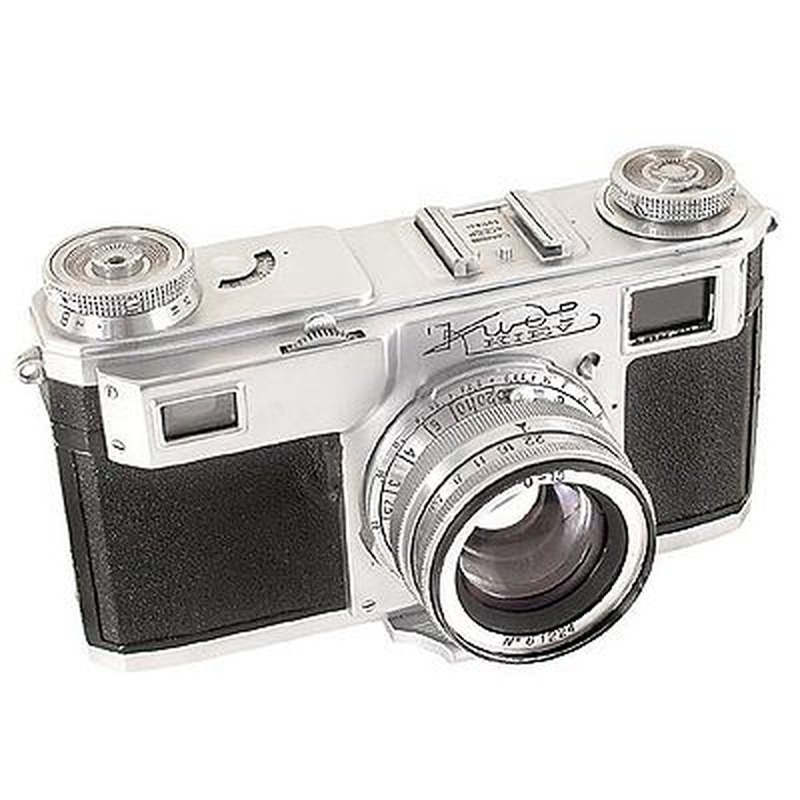
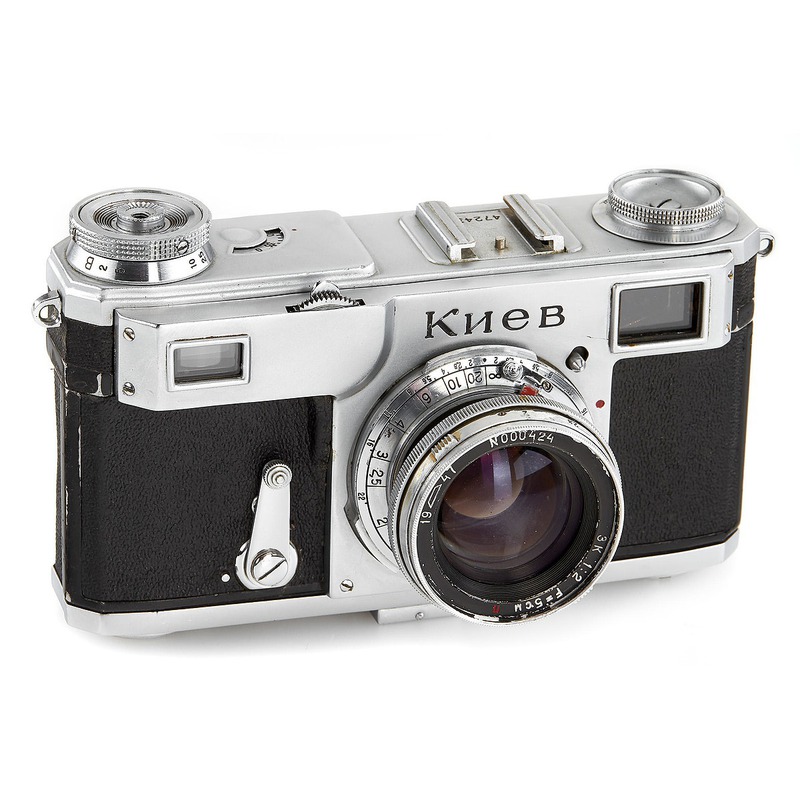
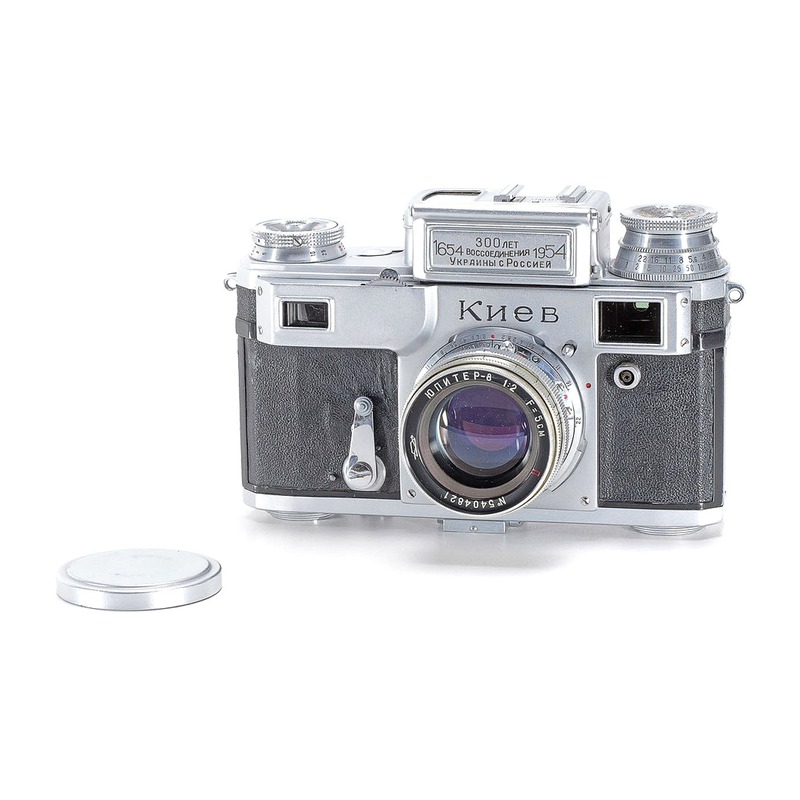
The Kiev II represents a significant chapter in Soviet photographic history, serving as the USSR's primary answer to the pre-war Zeiss Contax II and III. Produced at the Arsenal factory in Kiev from 1950 to 1955, this 35mm rangefinder camera was essentially a direct copy, adapted from plans acquired after WWII. While lacking the original German refinement and precision, it offered Soviet photographers and state entities access to a sophisticated interchangeable lens system at a fraction of the cost of Western equivalents. Its core design featured a coupled rangefinder for accurate focusing, a focal plane shutter with speeds from 1/25s to 1/1000s plus B, and a Contax-style bayonet lens mount, accommodating a range of domestically produced optics derived from the Zeiss designs. Characterized by a functional, utilitarian aesthetic and robust, albeit often heavy, construction, it became a workhorse for documentary, press, and amateur photographers throughout the Soviet bloc and beyond. Its production marked a crucial step in Soviet camera manufacturing capability, albeit heavily reliant on pre-war German engineering blueprints.
Offering Soviet users a professional-level camera system at an accessible price point, the Kiev II prioritized durability and operational reliability over finesse or advanced features. While its ergonomics were often criticized as cumbersome compared to contemporary Leica models, and build quality could be inconsistent, the camera fulfilled a vital role in democratizing advanced photography within the Eastern Bloc. It stood as a testament to both Soviet industrial ambition and the enduring legacy of pre-war German optical technology, providing a practical tool for capturing the realities of life and work during the early Cold War era.
Specifications
| Film Format | 135 |
/main.jpg)
/main.jpg)
/main.jpg)
/main.jpg)
 Enjoy this museum? Support on Ko-fi