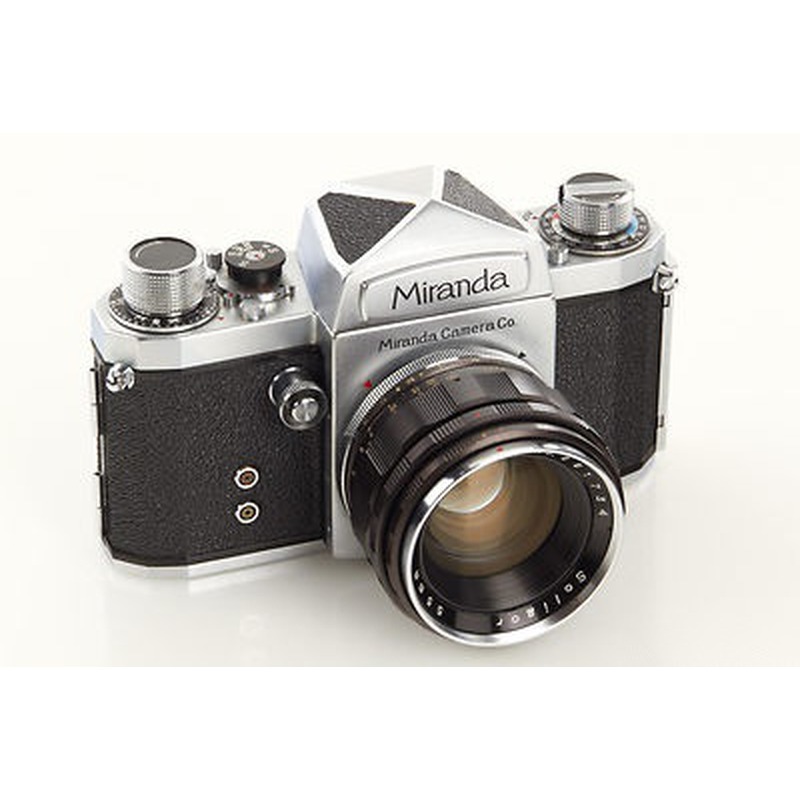
Miranda ST
Miranda · Japan
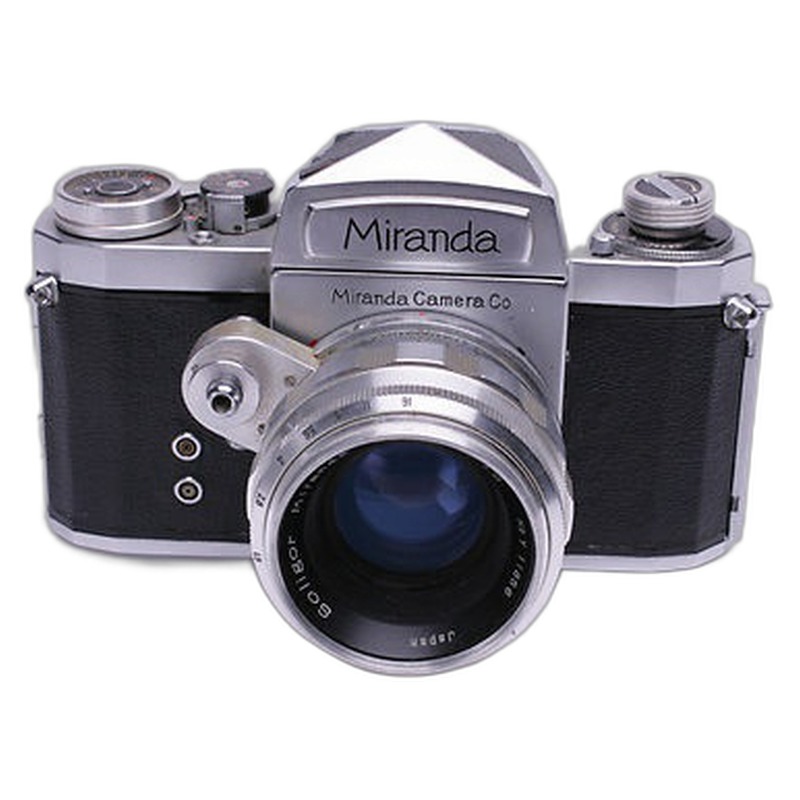
The Miranda ST represents an early and significant step in Japanese SLR camera development during the late 1950s. As one of Miranda's first models, it showcased the brand's ambition to compete in the burgeoning 35mm SLR market pioneered by European makers. Key to its design was an innovative modular concept, offering a removable pentaprism viewfinder and interchangeable focusing screens, providing flexibility previously uncommon in consumer-level SLRs. While utilitarian in appearance compared to contemporaries, the ST incorporated practical features like a reliable focal-plane shutter and a robust, though sometimes somewhat cramped, metal body construction. It positioned Miranda as a serious player, emphasizing functionality and offering photographers unique customization options at a competitive point, contributing to the diversification of SLR technology before the dominance of brands like Canon and Nikon.
While not achieving the legendary status of later icons, the Miranda ST holds a place as a notable, mid-range workhorse of its era. Its historical significance lies in demonstrating the successful implementation of modular design concepts in an affordable SLR and solidifying Miranda's reputation for innovation, particularly in interchangeable finders and screens. The camera served reliably for amateur and advanced amateur photographers, featuring a sturdy but not overly refined build characteristic of early Japanese SLRs. It stands as a representative example of the transitional period where Japanese manufacturers rapidly absorbed and improved upon European SLR technology, paving the way for their later global dominance, yet lacks the widespread adoption or groundbreaking status that elevates cameras like the Nikon F to legendary heights.
/main.jpg)
/main.jpg)
/main.jpg)
/main.jpg)
 Enjoy this museum? Support on Ko-fi