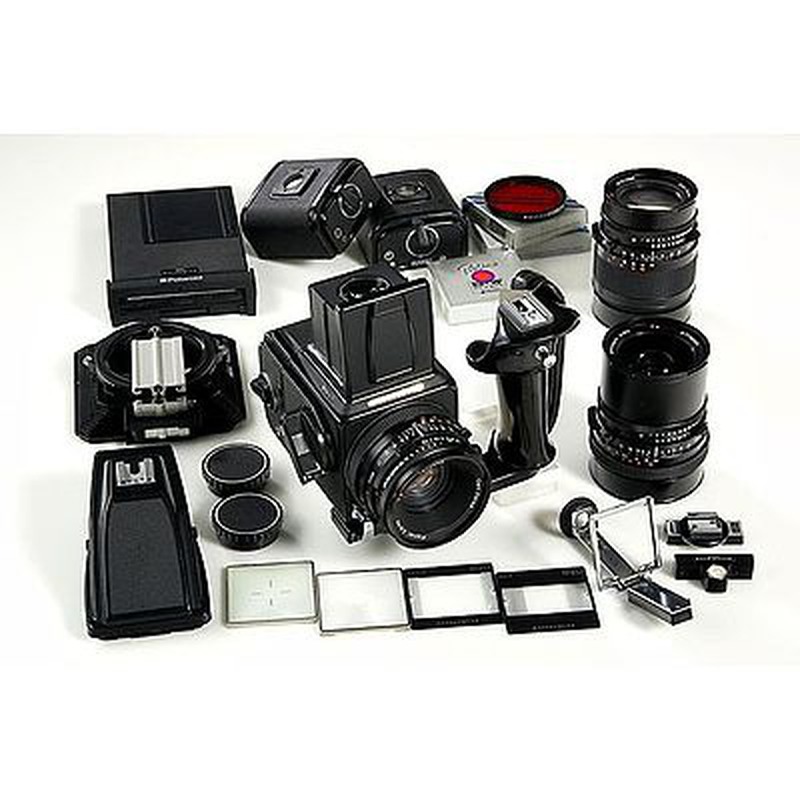
Hasselblad 503 CX Outfit
Hasselblad · Sweden · 1989–1994 (5 years) · 120 film
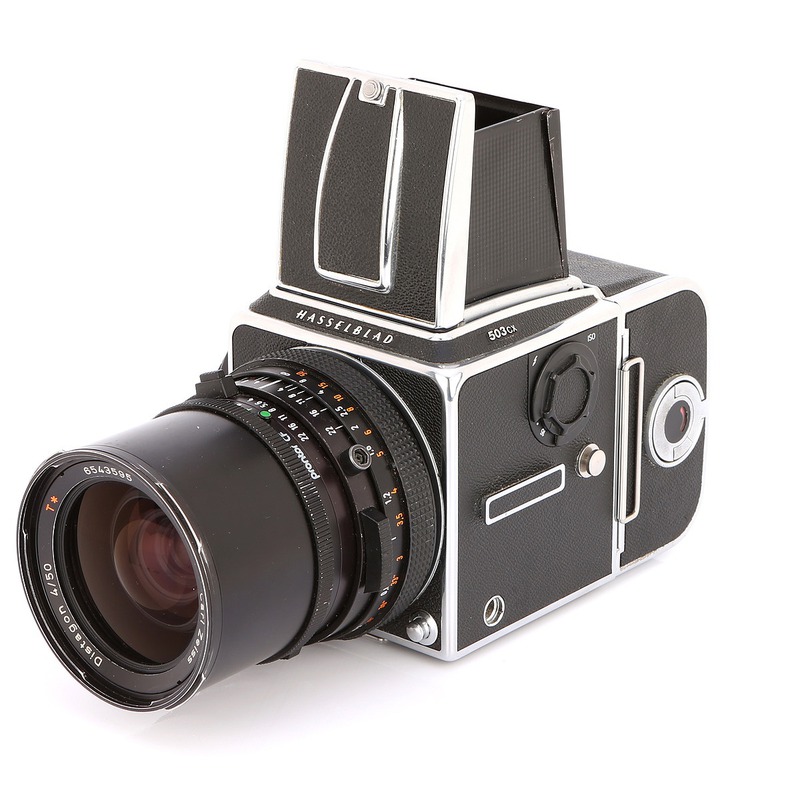
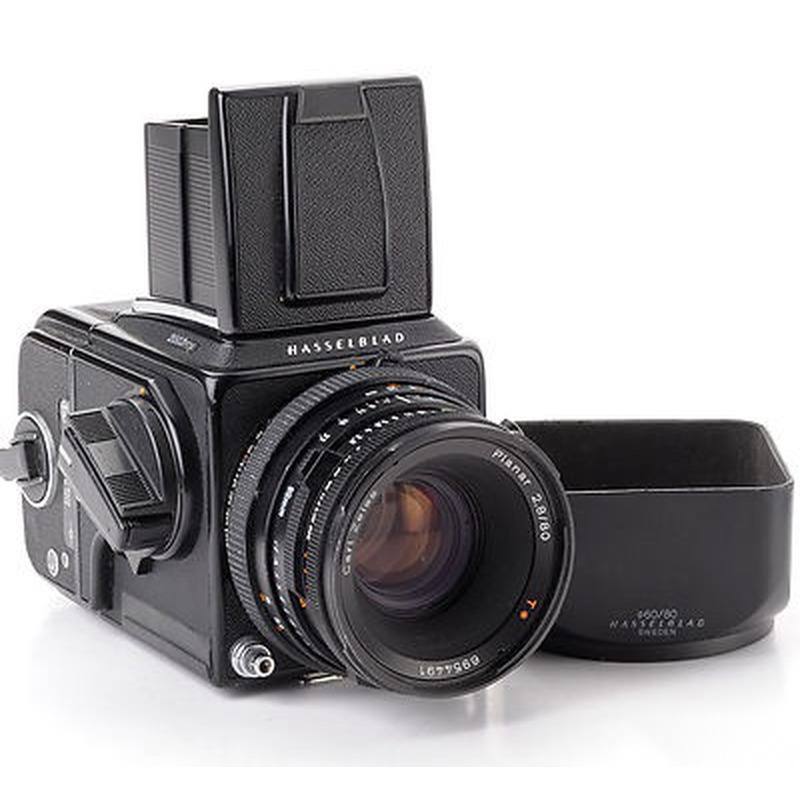
The Hasselblad 503 CX Outfit represents a significant refinement within the company's venerable 500-series line, offering professional photographers a robust and versatile medium format solution during the late 1980s and early 1990s. Building upon the foundation of the iconic 500 C/M, the 503 CX introduced the crucial improvement of an improved central shutter mechanism integrated into its interchangeable lenses. This allowed for flash synchronization at any shutter speed, a major enhancement for studio and location work. Its core design remained centered around the modular concept: a central body with a removable film back, interchangeable lenses (often the standard 80mm f/2.8 Planar), and viewfinders, providing immense flexibility. The camera featured a bright, ground glass focusing screen with a 45-degree prism for comfortable waist-level viewing and easy composition, along with the precision mechanical controls and iconic square film format (6x6cm) that defined the Hasselblad experience. As part of the "500" series, it continued the tradition of exceptional mechanical reliability and ease of repair, cementing its reputation as a dependable workhorse for commercial, portrait, and editorial photographers who valued the superior image quality of medium format.
While not achieving the legendary status of the original Hasselblad 500 C or the revolutionary SWC, the 503 CX Outfit was a highly capable and important professional tool during its production run. Its outfit configuration, typically including the body, standard lens, film back, and prism viewfinder, provided a complete, ready-to-shoot system meeting the demands of serious photography. The 503 CX served as a direct successor to the 500 C/M and predecessor to later models like the 503 CW, maintaining the core strengths of the platform while incorporating the essential leaf shutter flash sync advancement. It occupied a key position between the earlier classics and the eventual integration of electronic features, representing the pinnacle of Hasselblad's purely mechanical, modular professional system for that era. Its enduring appeal lies in its straightforward operation, superb build quality, and the high-resolution negatives characteristic of the 6x6 format.
Specifications
| Film Format | 120 |
/main.jpg)
 Enjoy this museum? Support on Ko-fi