Pricing
Ernemann Multicolore
Ernemann · Germany · 1900–1903 (3 years) · 135 film
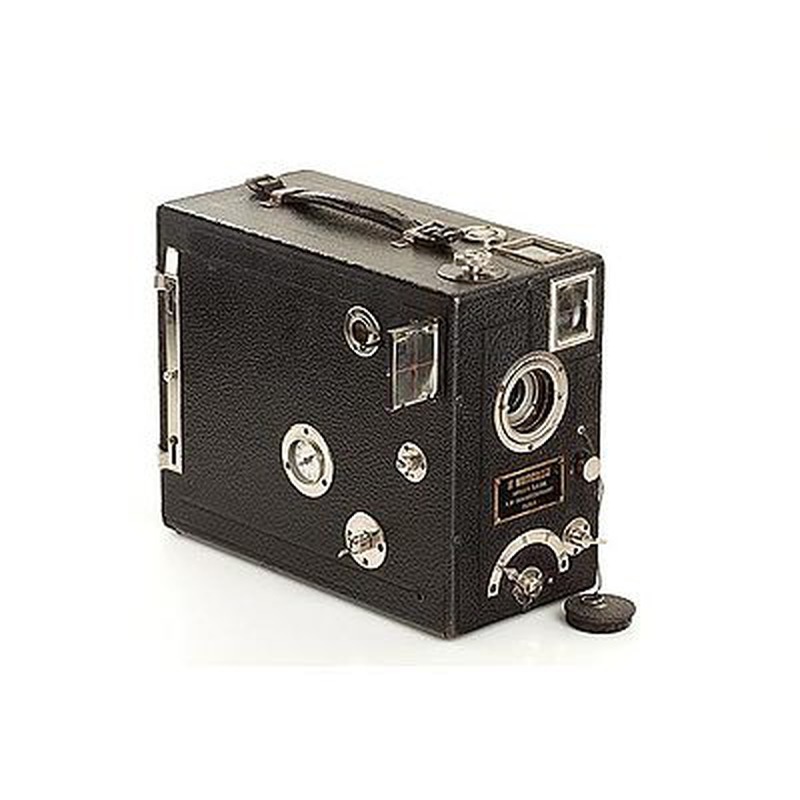
Produced by the respected German manufacturer Ernemann between 1900 and 1903, the Multicolore represents an intriguing early experiment in miniature photography. While Ernemann was renowned for its high-quality medium and large format plate cameras, the Multicolore stands out as one of the very earliest attempts to create a camera utilizing 35mm film, though its exact operational method remains unclear due to the absence of cartridges or cassettes from that era. Its name hints at an intended application, possibly related to color processes or slide projection, though contemporary documentation confirming this is scarce. The camera's existence highlights Ernemann's forward-thinking approach during a period dominated by bulkier plate and sheet film formats, making it a historically significant artifact prefiguring the 35mm revolution.
The Multicolore's design likely prioritized compactness relative to Ernemann's other products, yet its specific features, shutter mechanisms, and focusing systems are not well-documented today. Its primary historical importance lies in its timing: appearing decades before the iconic Leica I (1925) cemented 35mm as the dominant format for miniature photography, this camera demonstrates that the concept was actively explored by established manufacturers around the turn of the 20th century. While its practical impact was limited and its legacy obscured by time and lack of detailed records, the Multicolore serves as a tangible link to the nascent ideas that would ultimately transform photography. Its survival makes it a notable collector's piece, embodying a bold, early step towards the portable, small-format cameras that would dominate the 20th century.
Specifications
| Film Format | 135 |
/main.jpg)
/main.jpg)
/main.jpg)
 Enjoy this museum? Support on Ko-fi