/main.jpg)
Pricing
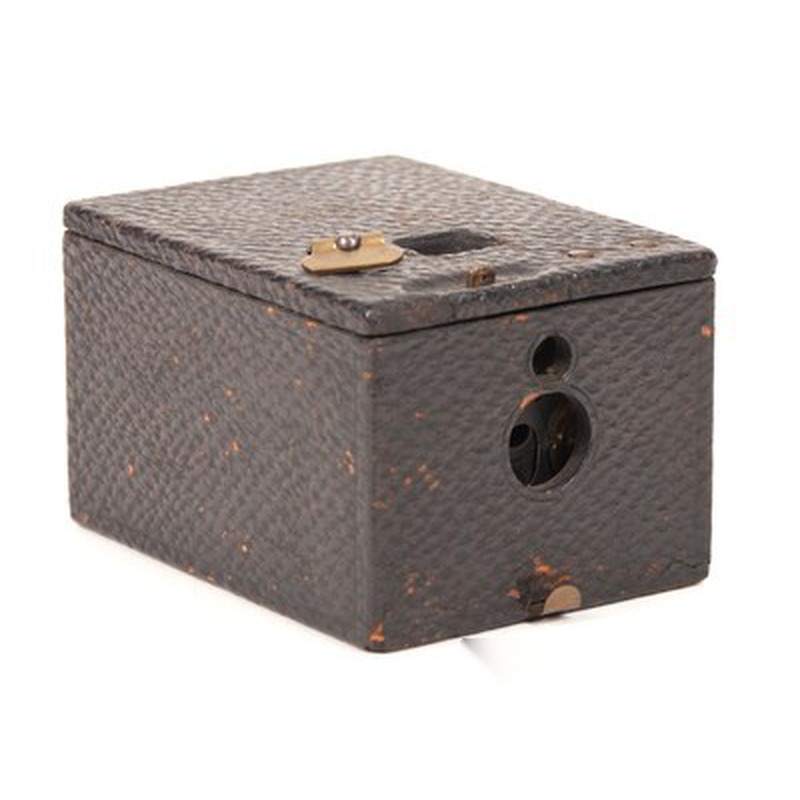
Kodak Brownie (original)
Kodak · USA · 1900 · 135 film
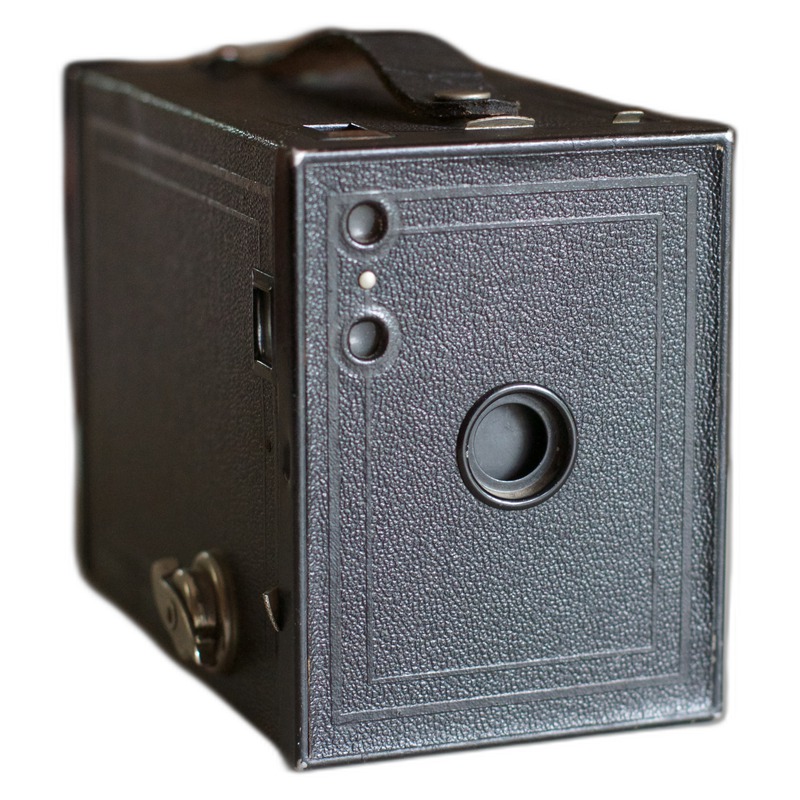
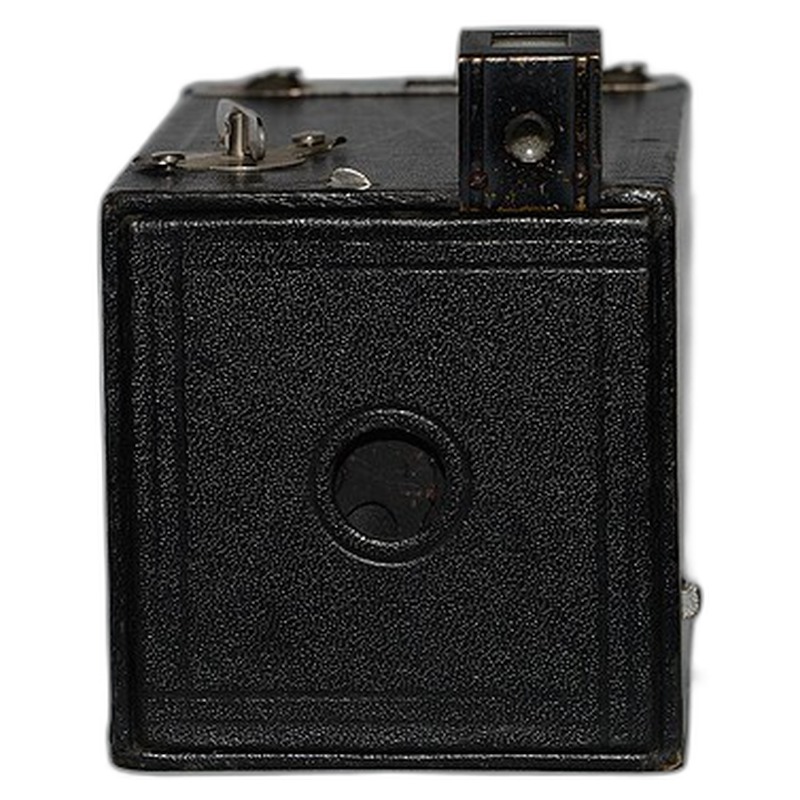
The Kodak Brownie, introduced in 1900, stands as a pivotal artifact in photographic history, embodying George Eastman's revolutionary vision of democratizing photography. Priced at an unprecedentedly low $1 (with film costing 15 cents for six exposures), its genius lay not in sophisticated engineering but in radical accessibility. Constructed primarily from simple cardboard, with a minimal metal front plate, a basic meniscus lens, and a straightforward rotary shutter, the Brownie required no technical knowledge to operate. Users simply aimed through the top viewing frame and pressed the button, sending the entire camera with its 117 roll film back to Kodak for processing and printing, fulfilling Eastman's promise of "You press the button, we do the rest." This vertical integration, combining inexpensive hardware with affordable development services, dismantled the barriers that had confined photography to professionals and the affluent.
The Brownie's immense impact stemmed from its role in popularizing the "snapshot" – a quick, casual image taken by ordinary people, including children. Its simple, almost toy-like construction, intentionally inexpensive and easy to use, encouraged experimentation and frequent picture-taking, transforming photography from a formal pursuit into a ubiquitous household activity and a tool for documenting everyday life. By normalizing image-making for personal memory and social documentation, the Brownie fundamentally altered cultural perceptions of photography. It became an instant global phenomenon, selling millions upon millions of units and establishing Kodak's near-total dominance in the amateur market for decades. The camera's historical significance is undeniable; it laid the groundwork for the entire mass-market camera industry and the subsequent explosion of photographic imagery that continues to shape our world.
Specifications
| Film Format | 135 |
 Enjoy this museum? Support on Ko-fi