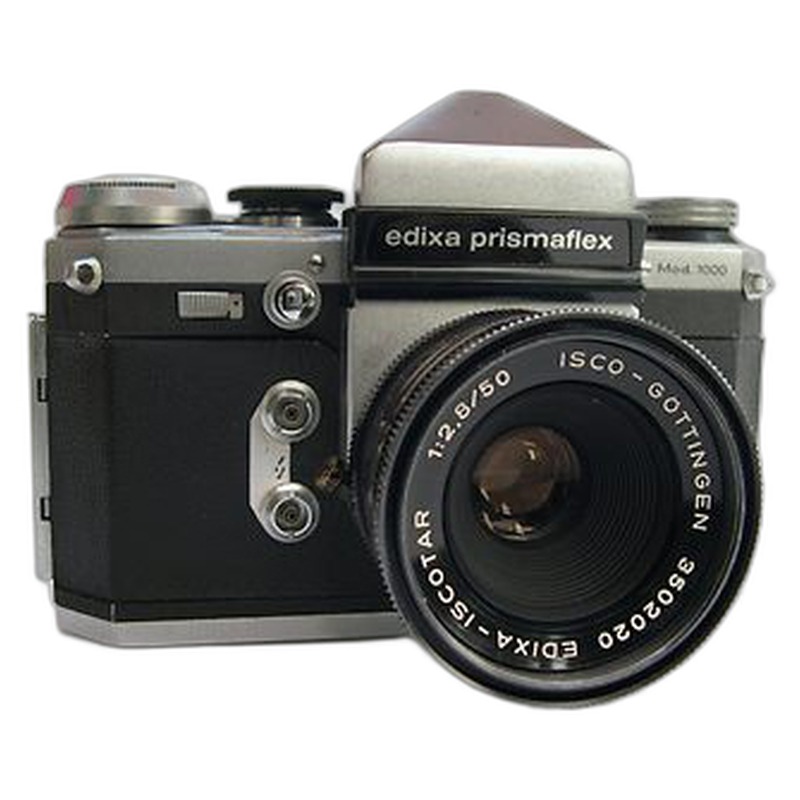
Wirgin Edixa Prismaflex 1000
Wirgin · Germany · 1967 · 135 film
The Edixa Prismaflex 1000 is a 35mm single-lens reflex (SLR) camera launched by Wirgin in 1967, positioned as part of the Prismaflex series aimed at the enthusiast amateur market. Sharing the M42 screw mount common to many contemporary SLRs, it offered photographers access to a wide range of lenses. Key features included a cloth focal-plane shutter with speeds likely up to 1/1000th second, a pentaprism finder for eye-level viewing, and built-in exposure metering, making it a relatively capable and affordable camera for its time within the German camera industry. Wirgin, based in Wiesbaden, was a significant player in the pre-war German optical market and successfully transitioned to post-war SLR production with models like this, competing against offerings from Japanese manufacturers as they gained dominance.
As a representative product of Wirgin's final major SLR phase before the company's decline, the Prismaflex 1000 exemplifies the effort to provide functional, specification-driven cameras at accessible prices. It featured typical sturdy, all-metal construction characteristic of German mid-range cameras of the era, though perhaps less refined than flagship models. Its primary historical context lies within the evolution of the consumer SLR market, demonstrating Wirgin's attempt to maintain relevance with a feature set (including the 1000 designation suggesting a 1/1000s top speed) and form factor similar to contemporaries from Pentax or Asahi Pentax, cementing its place as a solid, if not revolutionary, offering for photographers entering the SLR world during the late 1960s.
Specifications
| Film Format | 135 |
 Enjoy this museum? Support on Ko-fi