/main.jpg)
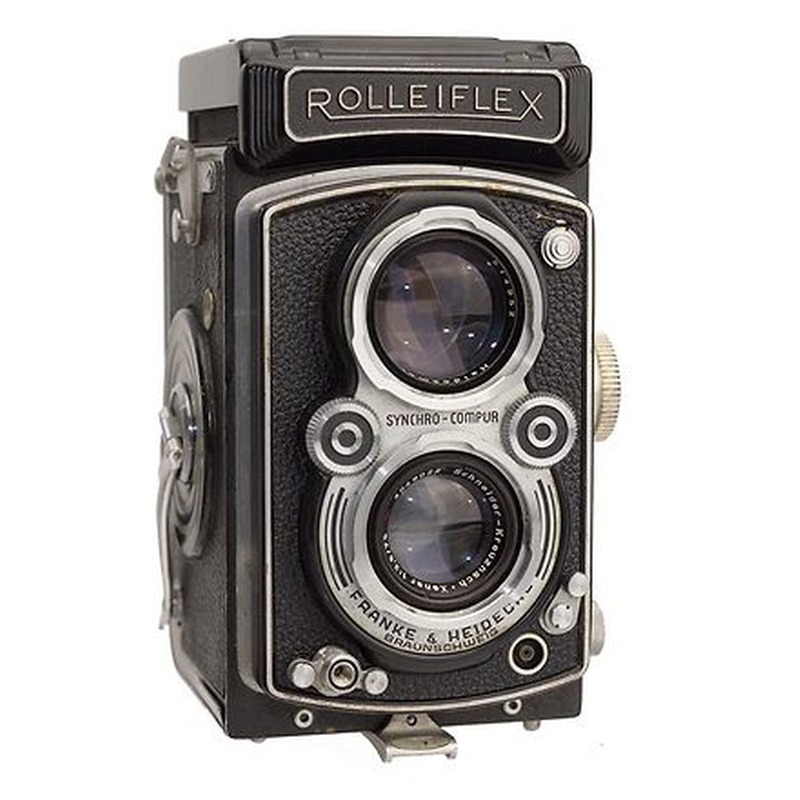
Rolleiflex 2.8 A (Automat 2.8A)
Rollei · Germany · 1950–1951 (1 years) · 120 film
The Rolleiflex 2.8 A (Automat 2.8A) was Rollei's premium twin-lens reflex (TLR) camera introduced in 1950, representing the company's commitment to precision engineering and optical excellence in the medium format realm. Building upon the successful Rolleiflex legacy, the 2.8 A featured a faster 2.8 aperture lens system compared to earlier models, enabling better low-light performance and more creative control over depth of field. The camera maintained Rollei's distinctive design language, including the waist-level viewfinder, twin-lens system, and robust metal construction that made Rolleiflex cameras favorites among professional photographers, portraitists, and documentary photographers seeking the superior image quality of medium format.
The Automat 2.8A incorporated advanced features for its time, such as the film winding system that automatically stopped at the next exposure and reset the counter, streamlining the photographic process. Its precision-ground focusing screen, coupled with Carl Zeiss or Schneider Kreuznach lenses (depending on the specific version), contributed to its reputation as a reliable professional tool. While not achieving the iconic status of some landmark cameras, the Rolleiflex 2.8 A stands as a significant example of mid-20th century precision camera manufacturing, representing a high point in the evolution of TLR design and its enduring appeal among photographers who valued both functionality and aesthetics.
Specifications
| Film Format | 120 |
/main.jpg)
_(Type_1)/main.jpg)
/main.jpg)
/main.jpg)
/main.jpg)
 Enjoy this museum? Support on Ko-fi