Pricing
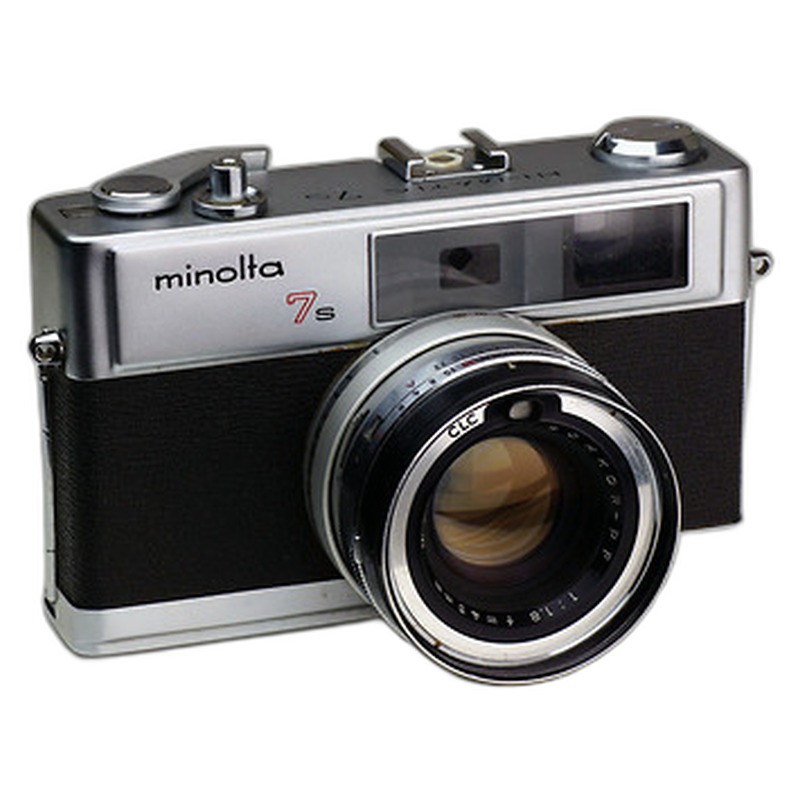
Minolta Hi-matic 7 S
Minolta · Japan · 1966 · 135 film
Introduced in 1966, the Minolta Hi-matic 7 S was a sophisticated step-up in the popular Hi-matic line of 35mm rangefinder cameras, positioned between basic point-and-shoot models and professional SLRs. It featured a 45mm f/1.8 Minolta Rokkor lens paired with a Seikosha-MXL shutter offering speeds from 1 second to 1/500th, plus B. Key to its appeal was shutter-priority automation: the photographer selected an aperture, and the camera automatically set the correct shutter speed based on its CdS light meter, located within the accessory shoe. This combination provided significant ease of use and accurate exposure for serious amateurs seeking more control than simple fixed-focus box cameras but without the complexity of fully manual operation. The camera incorporated a rangefinder focusing system integrated into the viewfinder for sharpness, along with a depth-of-field preview button, reflecting Minolta's engineering focus on accessible automation.
The Hi-matic 7 S represented Minolta's mid-century strategy to make advanced photographic features more attainable for enthusiasts. It built upon the success of earlier Hi-matic models by introducing improvements like a faster maximum aperture lens and the refined light meter system. While not groundbreaking in itself, it exemplified the trend towards increasingly automated exposure control in the 1960s, paving the way for even more sophisticated consumer cameras. Its design was functional and relatively robust for the era, featuring a metal body with leatherette covering and controls laid out logically for its target audience of photographers wanting reliable, automated performance without stepping up to SLR costs and complexity. It occupied a significant niche in Minolta's lineup during the mid-to-late 1960s.
Specifications
| Film Format | 135 |
/main.jpg)
/main.jpg)
/main.jpg)
 Enjoy this museum? Support on Ko-fi