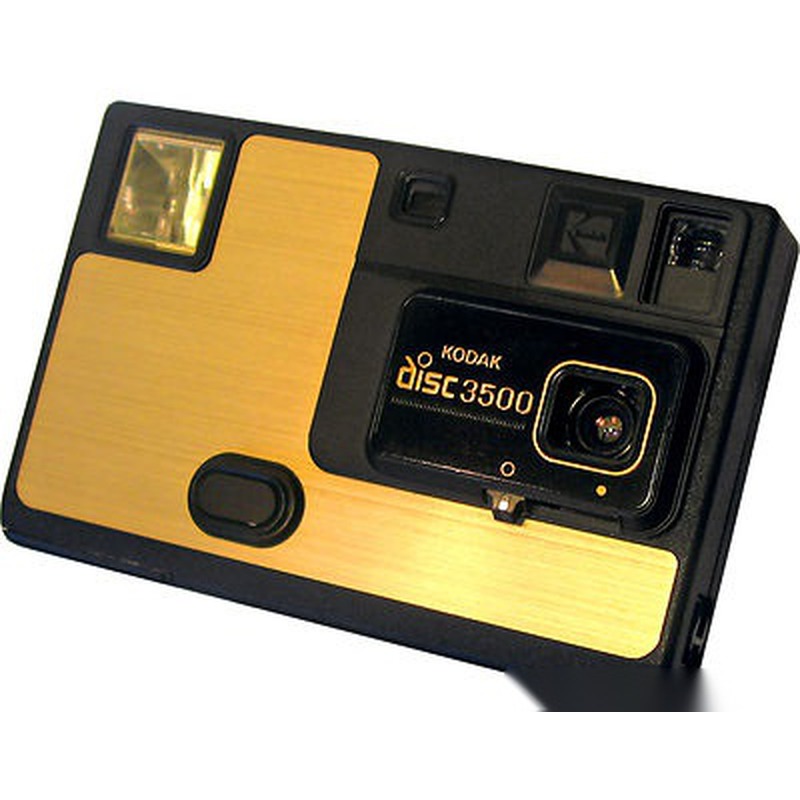
Kodak Disc 3500
Kodak · USA · 1980 · Disc film
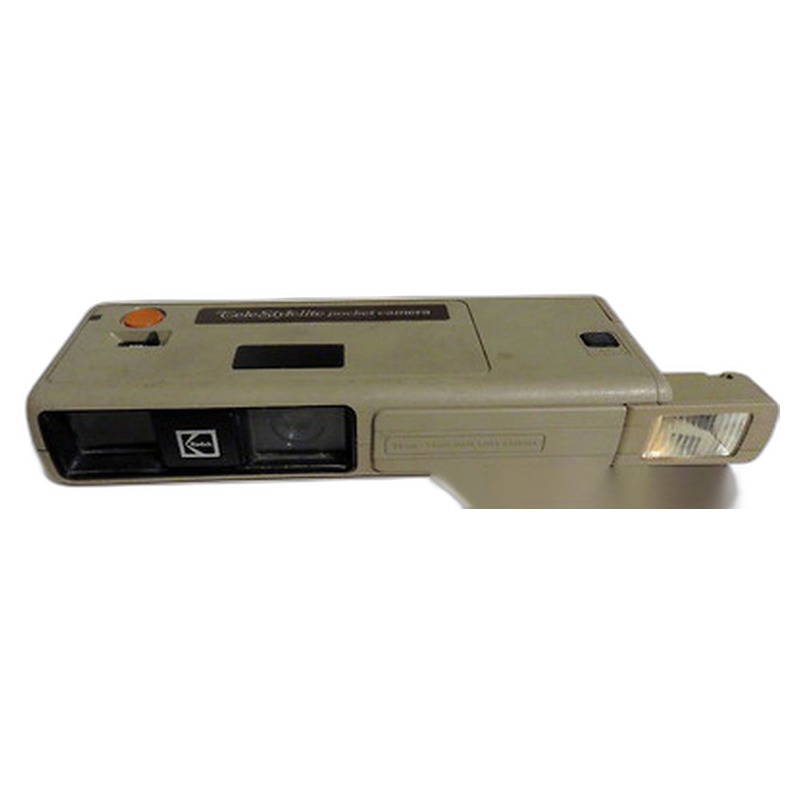
The Kodak Disc 3500, introduced in 1980, represented Kodak's entry into the compact disc camera market, utilizing a unique circular film disc that contained 15 exposures measuring 8×11mm each. The camera featured a distinctive rounded, flat profile that made it highly portable, appealing to consumers seeking a simple point-and-shoot experience. Its basic automatic exposure system and fixed-focus lens were designed for maximum ease of use, requiring minimal technical knowledge. The Disc 3500 was part of Kodak's broader strategy to maintain relevance in the amateur photography market as 35mm cameras became increasingly sophisticated.
Despite its innovative form factor, the Disc format faced significant limitations that prevented it from achieving widespread success or historical significance. The tiny negative size resulted in noticeably grainy images with reduced detail, especially when enlarged, making it unsuitable for serious photography. The format offered virtually no creative control with fixed lenses and minimal manual adjustments. The Disc 3500, along with other models in the series, had a relatively brief commercial lifespan as Kodak soon shifted focus toward more advanced film formats and eventually digital imaging technologies. While notable as a curious chapter in photography history, the Disc 3500 ultimately represents an interesting but ultimately unsuccessful attempt to redefine consumer camera design.
Specifications
| Film Format | Disc |
/main.jpg)
/main.jpg)
 Enjoy this museum? Support on Ko-fi