Pricing
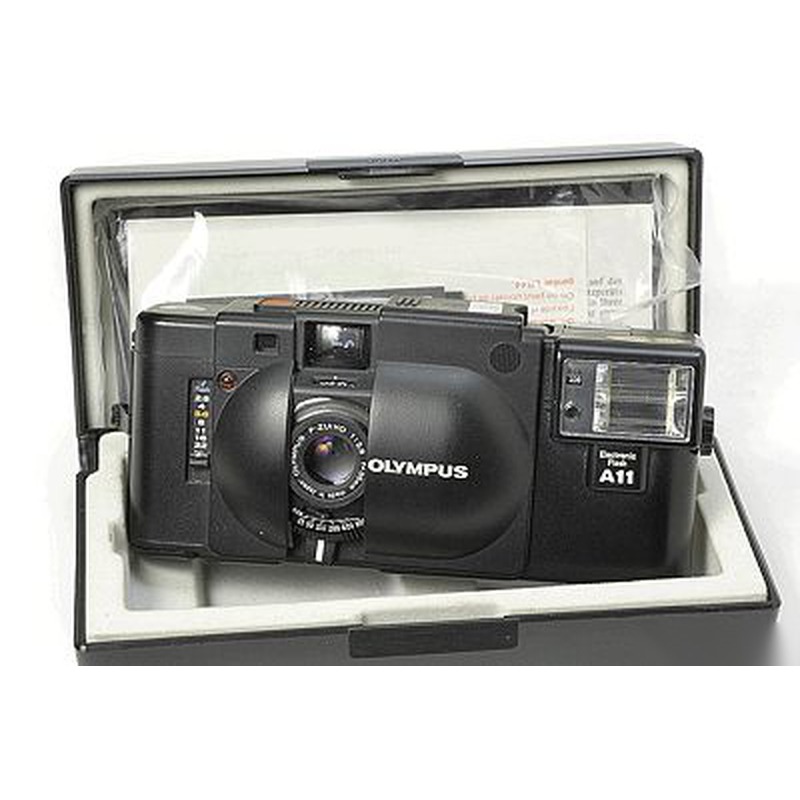
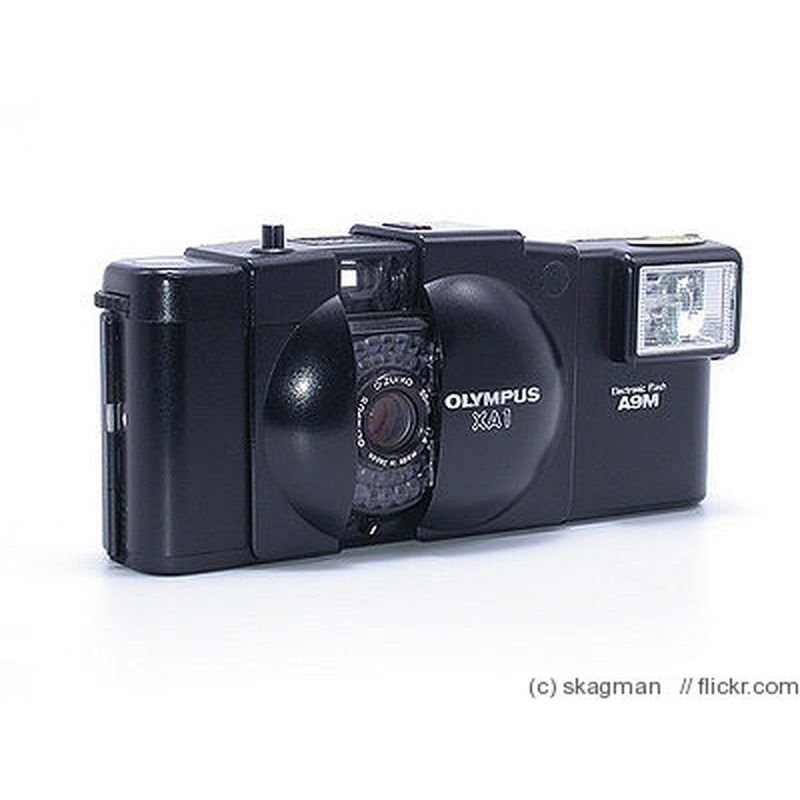
Olympus XA
Olympus · Japan · 1979 · 135 film
The Olympus XA, introduced in 1979, represents a significant achievement in compact 35mm camera design. It is a fully manual rangefinder camera renowned for its remarkable portability, packing high-quality optics and precise mechanics into a pocket-sized form factor. Its defining feature is the sliding lens cover, which simultaneously protects the lens and acts as the power switch, showcasing Olympus's commitment to minimalist engineering. The camera utilizes a sharp, coated 35mm f/2.8 lens and incorporates a sophisticated CdS meter with match-needle display integrated into the viewfinder, allowing for accurate exposure control despite its diminutive size. The XA was produced primarily with metal construction, contributing to its robust feel relative to its size. It became widely respected among photographers who demanded high-quality negatives in an unobtrusive package, finding particular favor among street photographers and travelers.
While not achieving the legendary status of contemporaries like the Nikon F or Leica M3, the Olympus XA holds a crucial place in photography history as the archetypal high-quality compact 35mm camera. It successfully bridged the gap between cumbersome SLRs and simple, lens-shutter compacts by offering rangefinder focusing precision, excellent optics, and full manual control in an unprecedentedly small body. Its design philosophy directly influenced countless subsequent compact and point-and-shoot cameras for decades, prioritizing size without sacrificing essential performance and image quality. The XA remains a highly desirable example of 1970s Japanese engineering and design, admired for its functional elegance and lasting image-making capability.
Specifications
| Film Format | 135 |
/main.jpg)
 Enjoy this museum? Support on Ko-fi