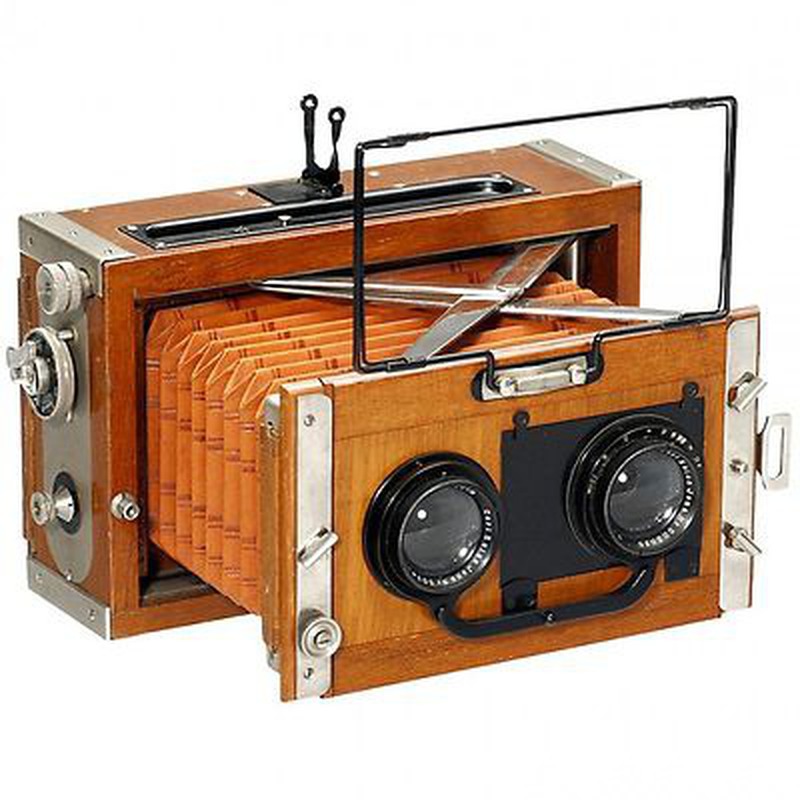
Zeiss Deckrullo Stereo Tropical
Zeiss · Germany · 1926 · 135 film
The Deckrullo Stereo Tropical is a specialized stereo camera introduced by Zeiss Ikon in 1926, utilizing the emerging 35mm film format (135). As a stereo device, its primary function was to capture paired images designed for viewing through a stereoscope, creating a three-dimensional effect. The "Tropical" designation strongly suggests its construction was engineered for enhanced durability and reliability in challenging environments, likely featuring sealed components and robust materials to withstand heat, humidity, and dust – a significant consideration for scientific, expeditional, or tropical field work during that era. Zeiss, renowned for its precision optical engineering, applied its expertise to the camera's stereo base and lens design, ensuring the necessary image separation and sharpness for effective stereo viewing. It represents a specific application of 35mm technology within the broader context of stereo photography's early 20th-century popularity, particularly for scientific and documentary purposes where depth perception was crucial.
While sharing the foundational 35mm format cameras like the Leica I introduced just a year prior were starting to revolutionize amateur and professional photography, the Deckrullo Stereo Tropical catered to a distinct niche. Its significance lies primarily within the realm of stereo photography as a tool and as a testament to Zeiss's commitment to building specialized, robust equipment. It exemplifies the brand's capability to adapt the new, compact 35mm platform to specialized photographic techniques beyond single-image capture, catering to researchers, adventurers, and enthusiasts requiring stereo documentation. Its introduction in 1926 places it firmly within the formative years of miniature photography, though its specialized nature limited its mass-market appeal compared to contemporary general-purpose 35mm cameras.
Specifications
| Film Format | 135 |
 Enjoy this museum? Support on Ko-fi